
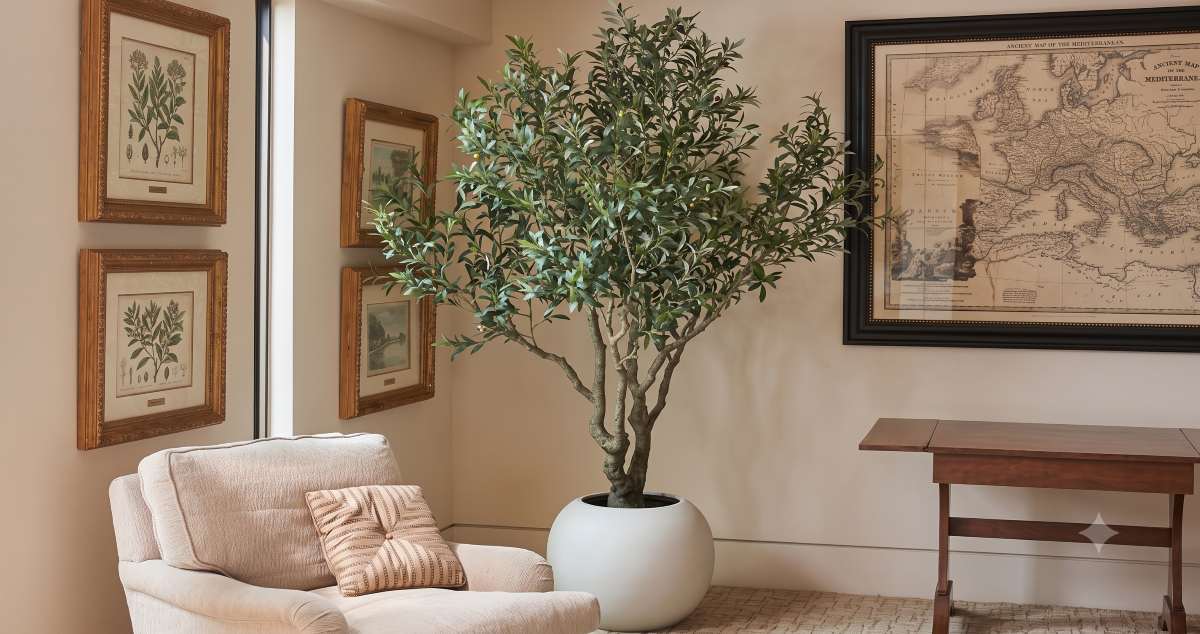
Decorating with artificial plants in Australia usually starts with one simple design rule: every interior needs an element that breathes. Greenery does that better than anything else — it adds height, softness and a real sense of life to rooms that would otherwise feel flat and unfinished. The catch is that the most photogenic species are also the fussiest, demanding bright filtered light, steady humidity and a watering routine most people abandon by week three. Realistic replicas solve that problem entirely, which is why designers now specify home décor artificial plants in projects where a living specimen simply would not survive.
The Faux Fiddle Leaf Fig Still Leads
No plant has shaped modern interiors more than the fiddle leaf fig, and no plant is more temperamental. A Faux Fidle leaf fig tree delivers those broad, sculptural leaves and that architectural silhouette without the brown edges, sudden leaf drop or draught sensitivity that frustrate real owners. Look for pieces with variation in leaf tone, visible veining and a trunk that tapers naturally rather than sitting perfectly straight. Placed beside a sofa or in a bright corner, it anchors a room instantly.
Why an Artificial Ficus Tree Works Anywhere
If the fiddle leaf is the statement piece, the ficus is the workhorse. An artificial ficus tree brings a lighter, finer canopy that suits hallways, dining rooms, reception areas and offices where you want greenery without visual weight. The small overlapping leaves catch light beautifully, and because the shape is naturally full, a single specimen fills an empty corner that would otherwise need three or four smaller pots. It also handles dim rooms, air conditioning and long holidays without a single change in appearance.
Adding a Faux Palm Tree for Warmth
For coastal, resort or Mediterranean-inspired interiors, nothing does the job faster than a Faux palm tree. Kentia, areca and fan varieties all fan outward at the top, drawing the eye upward and making low ceilings feel taller. Palms also work brilliantly in covered outdoor areas, bathrooms and stairwells — places where humidity swings or zero natural light would kill the real thing within a season. Choose UV-treated foliage if the piece will sit anywhere near direct afternoon sun.
Scale Matters in Open-Plan Rooms
The most common styling mistake is buying too small. tall artificial plants for living room spaces should reach at least chest height, and ideally taller, so they read as furniture rather than decoration. A 1.8-metre specimen beside a bookshelf, in the gap behind a lounge, or flanking a media unit fills negative space that no cushion or artwork can. In double-height or open-plan homes, go taller again — a piece that looks generous in a showroom often disappears at home.
Never Overlook the Pot
The single fastest way to make faux greenery look convincing is to upgrade the container. Well-chosen plant pots indoor — ceramic, stone, concrete, rattan or aged terracotta — signal permanence and quality in a way plastic nursery pots never will. Match the pot’s diameter to roughly one-third of the plant’s height, and finish the surface with moss, bark chips or river stones so the base of the trunk is concealed. At The Plants Corner, this one detail is what most often separates a convincing display from an obvious one.
Regional Styling Notes
Climate shapes what people need. Buyers searching for artificial plants adelaide wide are often working around dry summers and heritage homes with deep, shaded interiors, where low-light corners benefit most from a full ficus or palm. Demand for artificial plants perth reflects a very different problem — relentless sun, strong coastal light and outdoor living areas that fade colour quickly, making UV-stable foliage essential. Meanwhile artificial plants Melbourne shoppers contend with long grey winters and heated rooms, so greenery is often chosen to inject colour and texture through months when nothing outside is growing.
Building a Cohesive Look
Treat faux greenery like any other layer of a scheme. Vary the leaf shapes so nothing looks repeated, keep the tones within one family — deep greens together, silvery greens together — and place each piece where a real one would plausibly thrive. Dust every few weeks with a microfibre cloth, reshape bent leaves gently by hand, and rotate smaller arrangements seasonally so the room feels current.
Whether you are styling a single living room or fitting out an entire property, The Plants Corner supplies realistic, low-maintenance greenery built to look effortless in Australian homes.