
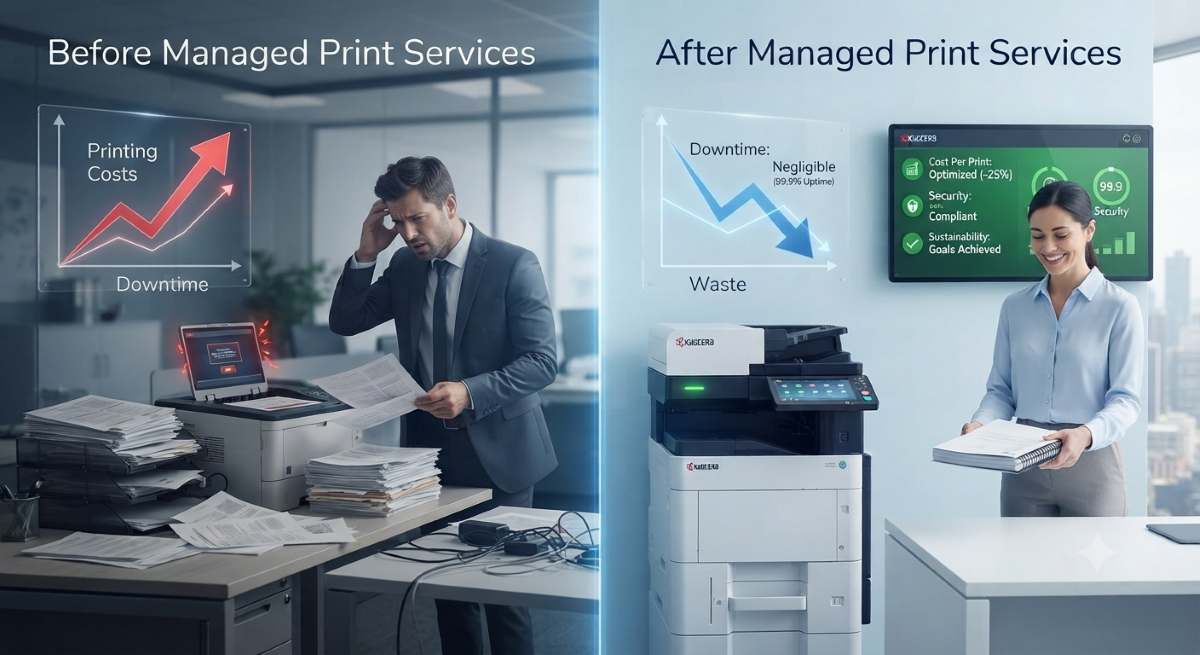
Printing is frequently disregarded in day-to-day business operations until persistent problems start to impact workflow efficiency, budgets, or productivity. Document management gets more complicated as businesses grow, which makes it more difficult to keep expenses under control and maintain equipment. Early detection of these warning indicators enables companies to increase operational effectiveness before minor issues turn into major interruptions. Therefore, knowing when to think about using managed print services is a crucial first step in improving resource management.
Printing Costs Keep Increasing
The best way to spot this issue is to look for continually increasing printing costs with no apparent reason. Companies could see more expenses being made on paper, ink, maintenance, repairs, and even new equipment. Unpredictable printing costs usually mean that there are no controls over the process.
Frequent Equipment Downtime
Printers that fail to function properly can cause interruptions in the daily operations of work and hinder important processes. Instead of concentrating on their main duties, employees frequently waste time troubleshooting equipment or waiting for repairs. Additionally, frequent malfunctions lower overall workplace efficiency and raise maintenance expenses.
No Visibility into Print Usage
Many organisations don’t know who prints what, how frequently documents are produced, or which departments generate the most printing. Reducing waste is challenging in the absence of precise usage data. Increased visibility promotes appropriate printing practices throughout the workplace and helps make well-informed decisions.
Multiple Devices Are Difficult to Manage
Inconsistent maintenance schedules and fluctuating supply needs are common problems for companies that run multiple printers in various departments. Managing many devices one at a time results in needless administrative effort and raises the possibility of problems being missed. A more structured approach enhances uniformity and makes oversight easier.
Security Concerns Are Growing
Confidential information, such as financial records, contracts, client information, and employee data, is often contained in printed papers. Sensitive data may be left unattended in output trays or become available to unauthorised parties in the absence of appropriate precautions. Stronger print security protocols are becoming more and more crucial as businesses manage more sensitive documents.
Sustainability Goals Need Greater Support
Many organisations are working towards being environmentally friendly. Overprinting, wastage, and inefficient machines may make it difficult to meet environmental goals. Print behaviour tracking, promoting proper print practices, and cutting down unnecessary printing will not only help in meeting environmental goals but also save costs.
Supporting Smarter Document Management with Kyocera
Many organisations evaluate established technology providers when reviewing their document infrastructure. Kyocera is one such company that is recognised for its long-standing expertise in printing solutions and document management technologies. Businesses often explore their approach while assessing ways to improve workflow efficiency, reduce unnecessary printing, and support long-term operational reliability without compromising everyday productivity.
Conclusion
Every organisation eventually reaches a point when the efficiency of current procedures is outweighed by the need for printing. Increasing expenses, faulty machinery, poor visibility, security issues, and sustainability goals all suggest that changes might be required. Early detection of these indicators enables companies to boost productivity, cut wasteful spending, and provide a more structured document environment. Investing in managed print services at the appropriate time can facilitate more efficient operations and provide companies with the confidence to develop in the future.