
Airport Lounge Access in Australia: Complete Guide
A delayed flight in a crowded terminal is miserable. The same delay in a lounge — with decent coffee, wifi, food and a shower — is almost pleasant. This complete guide to airport lounge access Australia covers every entry method — and it is easier to get than most travellers think, with no business class ticket required: airline status, paid memberships, credit cards, Priority Pass and pay-per-visit lounges — with honest maths on what each one is worth.
Why Lounges Are Worth It (Sometimes)
Value a lounge visit at what you would otherwise spend: airport food and coffee easily runs $30-$50, wifi is often paid or painful, and comfort has real value on long layovers or early starts. If a visit saves you $40 of terminal spending and 2 hours of misery, that is the benchmark. Any access method costing less than ~$50 per visit (all-in) is reasonable value; much more than that needs frequent use to justify.
Method 1: Airline Status
The classic route. Qantas Frequent Flyer Gold and above gets Qantas lounge access; Velocity Gold and above gets Virgin lounge access. Status requires significant flying (and spend) — realistic only for regular travellers. But the perks compound: priority check-in, extra baggage, priority boarding. If you fly 20+ times a year with one carrier, status is the goal; everything below is a stepping stone.
Method 2: Paid Airline Lounge Memberships
Qantas Club
Qantas Club membership buys access to Qantas domestic lounges (and international business lounges where available) without needing status. It suits travellers who fly Qantas regularly but not enough for Gold. Membership is sold in 1-4 year terms with a joining fee — check current pricing on the Qantas site, as it changes. Do the maths: divide the annual cost by your realistic number of visits. Under ~$60/visit is fair value.
Virgin Australia Lounge membership
Virgin’s equivalent: access to Virgin lounges across Australia. Similar deal — worth it for regular Virgin flyers below Gold status. Compare the lounge locations against the airports you actually use; a membership is useless if your home airport’s lounge is the other airline’s.
Method 3: Credit Cards with Lounge Access
This is the best value for most travellers. Premium cards bundle lounge access — either a set number of visits per year or a Priority Pass membership — alongside travel insurance and points. Two to four international trips a year can justify a $300-$450 annual fee when you count lounge visits ($50-$70 value each at the door), insurance and points together. Our guide to the best travel credit cards in Australia for 2026 breaks down which cards offer what.
The catch: card-linked lounge access usually covers just the cardholder, sometimes plus a guest allowance. A family of four needs a different plan — see pay-per-visit below.
Method 4: Priority Pass (Direct Membership)
Priority Pass is the largest independent lounge network, with hundreds of lounges worldwide including locations in Australian international terminals. You can buy membership directly (tiered: a set number of visits, or unlimited) or get it bundled with premium credit cards. In Australia, Priority Pass lounges are mostly in international terminals — domestic coverage is thin, so it suits international travellers far more than domestic ones.
Before buying direct, check which lounges you would actually use on your routes — the Priority Pass website lists locations. A membership is only as good as the lounges on your itinerary.
Method 5: Pay-Per-Visit Lounges
The simplest option: pay at the door. Independent lounges (such as Plaza Premium, which operates in Sydney, Melbourne and Brisbane international terminals) sell single visits — typically in the $60-$80 range for a few hours, including food, drinks, wifi and showers. No membership, no commitment.
This is the smart choice for: occasional travellers (1-2 trips a year), families (pay per person only when you need it), and anyone with a long layover where $70 for 4 hours of comfort is obviously worth it. Book online in advance where possible — walk-in spots during peak periods are not guaranteed.
What Australian Lounges Actually Offer
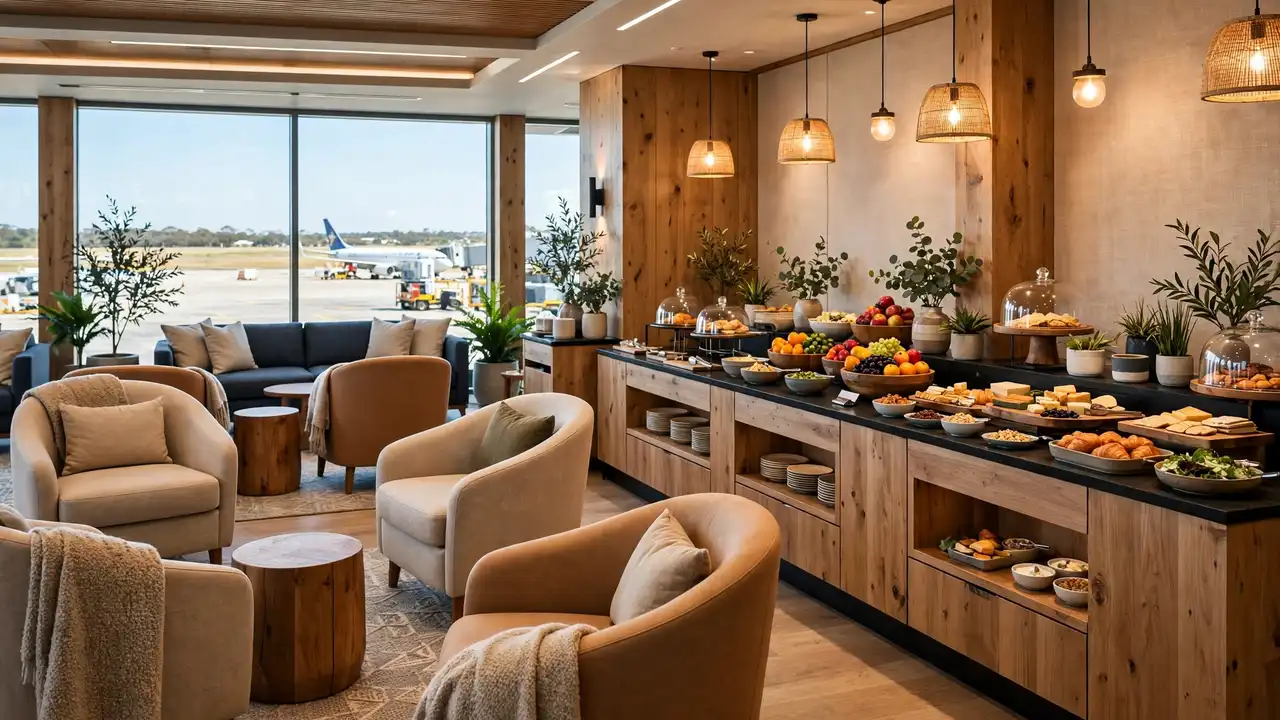
- Food and drinks: hot and cold buffet, barista coffee in airline lounges, beer/wine/spirits (airline lounges include alcohol; some pay-per-visit lounges charge extra for premium drinks)
- Wifi and work space: fast wifi, desks, charging — genuinely useful for business travellers
- Showers: the killer feature on long-haul layovers — arriving fresh changes the whole trip
- Quiet: underrated and priceless during school holidays
Lounges by Airport: Where to Find Them
Sydney (SYD)
Qantas lounges in T1 (international) and T3 (domestic Qantas); Virgin lounge in T2; independent pay-per-visit options in T1. See our Sydney Airport guide for terminal details.
Melbourne (MEL)
Qantas lounges in T1, Virgin in T3, plus independent lounges in T2 (international). Melbourne’s international terminal has the best pay-per-visit options of any Australian airport.
Brisbane, Perth, Adelaide
All have Qantas and Virgin domestic lounges; international terminals have a smaller selection of airline and independent lounges. Perth’s international terminal is the thinnest — manage expectations on long layovers there.
The Honest Maths: Which Method for You?
- 1-2 trips/year: pay-per-visit. Total cost ~$120-$160/year. Do not buy memberships.
- 3-6 trips/year: a premium credit card with lounge access usually wins — the fee is offset by visits + insurance + points.
- 10+ trips/year on one airline: chase status, or buy the airline’s lounge membership as a bridge.
- 20+ trips/year: status is the answer; everything else is a stopgap.
Whatever method you choose, the usual airport advice still applies: arrive with time to spare, and check Smartraveller’s pre-flight guidance at smartraveller.gov.au for security and customs tips.
Australia’s Best Lounges (Worth Seeking Out)
- Qantas First Lounge, Sydney T1: the gold standard — à la carte dining, spa treatments, arguably the best airport lounge in the southern hemisphere. Access via First class, top-tier status or invitation.
- Qantas Business Lounges (Sydney, Melbourne, Brisbane): the workhorses — hot food, barista coffee, showers, reliable wifi. The benchmark domestic lounge experience.
- Virgin Australia Lounges: fewer locations but a relaxed, modern feel and good coffee. Melbourne and Sydney are the standouts.
- Independent lounges (T1 Sydney, T2 Melbourne): pay-per-visit options with solid buffets and showers — the best choice for travellers without airline status.
Lounge Etiquette: The Unwritten Rules
- Showers: book on arrival if there is a waitlist; keep it to 15-20 minutes at peak times.
- Food: it is a lounge, not a restaurant — take what you will eat, not a buffet for the plane.
- Noise: calls on speakerphone are the fastest way to become everyone’s enemy. Use headphones, take calls in designated areas.
- Alcohol: free does not mean unlimited. Staff can and do cut people off.
- Guests: know your guest allowance before arriving with three friends — most entry methods cover 1-2 guests max.
When Lounges Are Not Worth It
Be honest: if you arrive 45 minutes before a domestic flight, you will use the lounge for 20 minutes — not worth $70. If you do not drink and eat lightly, half the value proposition vanishes. And at small regional airports, the “lounge” may be a quiet room with a coffee machine — manage expectations. Lounges pay off on long layovers (3+ hours), early starts, delays and international departures. For a quick domestic hop, the terminal is fine.
Credit Card Lounge Access: The Fine Print
Card-linked lounge access varies more than the marketing suggests. Check: which network (Priority Pass, the card’s own lounges, or airline lounges); how many visits per year (2, 4, 6 or unlimited — and whether unused visits roll over, which they usually do not); guest policy (most cover the cardholder only; some allow 1-2 guests; extra guests pay ~$50 each); which card (supplementary cardholders often get reduced or no access); and enrolment (some cards require you to activate the Priority Pass membership separately — it is not automatic). The most common disappointment: assuming “lounge access” means unlimited Qantas Club entry. Read the card’s lounge terms before counting on it.
Lounges for Families
Lounges with kids work well — until they do not. The realities: most lounges welcome children but few have play areas; food options suit adults more than fussy eaters; and your lounge entry method probably covers 1-2 guests, meaning a family of four needs two eligible cards or paid entries for the kids. The maths for families: 2 adults + 2 kids at $65 each pay-per-visit = $260. Suddenly the terminal playground and a $60 cafe lunch looks rational. Families get the best lounge value from premium cards with generous guest allowances or from airline status.
The Layover Survival Kit (Lounge or Not)
For layovers over 4 hours, pack: noise-cancelling headphones, an eye mask, a change of shirt and basic toiletries in your carry-on, snacks, a water bottle, and downloaded entertainment. With a lounge, add a shower booking on arrival. Without one, know the terminal: quiet corners, charging stations and — at major airports — pay-per-use shower facilities. A 6-hour layover with the right kit is restful; without it, it is purgatory. Preparation, not money, is the difference.
Pay-Per-Visit: Booking Ahead vs Walking In
Independent lounges sell visits online in advance — and pre-booking is usually $5-$15 cheaper than the walk-in rate. More importantly, it guarantees entry: during peak periods (school holidays, Friday evenings), popular lounges hit capacity and turn away walk-ins. Book the visit for your travel day when you book your flights; most allow free cancellation up to 24 hours ahead. For very early or late flights, check the lounge’s hours — independent lounges often close earlier than airline lounges, and arriving to a closed door is an expensive disappointment.
Status Matches and Challenges: The Shortcut
Airlines occasionally offer status matches (your status with airline A gets you equivalent status with airline B) or status challenges (fly X segments in 90 days to earn status). These are the fastest legitimate route to lounge access — a Virgin status match, for example, can deliver a year of lounge access for a handful of flights. Watch frequent flyer communities for match opportunities; they appear irregularly and often with short application windows. If you hold status with a foreign airline, check whether Australian carriers will match it before assuming you start from zero.
Regional Airports: The Lounge Desert
Outside the capitals, lounge options thin out fast. Canberra, Hobart, Darwin and Alice Springs have Qantas lounges; Virgin’s regional presence is smaller; independent pay-per-visit lounges are rare. If your itinerary starts at a regional airport, do not count on lounge access at that end — plan for the capital-city connection instead. The practical move: premium credit card lounge benefits still shine on the return leg and during interstate connections, even if your home airport has nothing. And regional terminals are small enough that a 60-minute wait is genuinely painless — the lounge matters less when the gate is a 3-minute walk.
Frequently Asked Questions
How can I get airport lounge access in Australia?
Five main ways: airline status (Qantas Gold+/Velocity Gold+), paid airline lounge memberships (Qantas Club, Virgin Lounge), premium credit cards with lounge benefits, Priority Pass membership, or pay-per-visit at independent lounges ($60-$80 per visit). Credit cards offer the best value for most travellers.
How much does airport lounge access cost in Australia?
Pay-per-visit lounges cost roughly $60-$80. Airline lounge memberships run several hundred dollars per year. Premium credit cards ($300-$450/year) bundle lounge access with insurance and points. Value each visit at ~$50 to judge whether a method is worth it for your travel frequency.
Can economy passengers use airport lounges in Australia?
Yes. Economy passengers can enter via paid memberships, eligible credit cards, Priority Pass, or pay-per-visit lounges. You do not need a business class ticket — though business class tickets include lounge access automatically.
Is Priority Pass worth it in Australia?
For international travellers, often yes — Priority Pass has good coverage in Australian international terminals and worldwide. For domestic-only travellers it is weak, since Australian domestic terminals have few Priority Pass lounges. Check the lounge list for your actual routes first.
Do Australian airport lounges have showers?
Most major airline lounges (Qantas, Virgin) and many independent lounges have showers — the standout feature for long-haul layovers. Towels and basic toiletries are provided. Smaller regional lounges may not have them.