
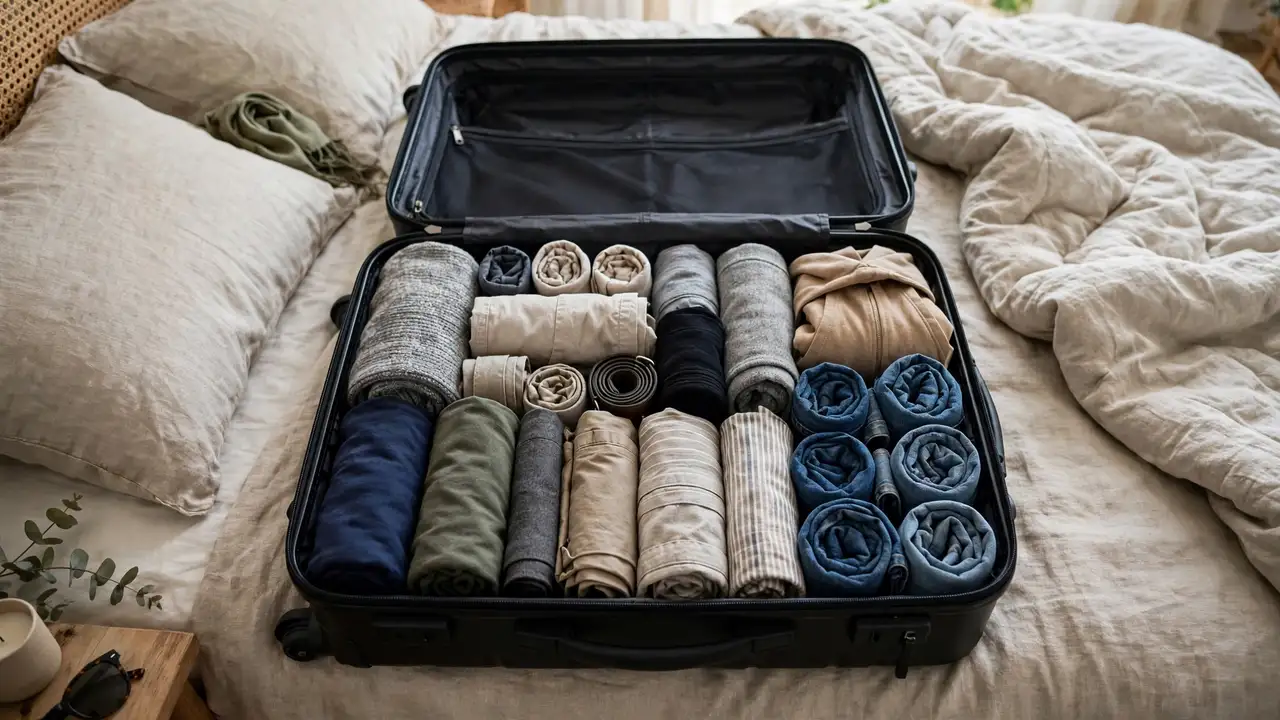
Carry-On Only: How to Pack Light for 2 Weeks
Two weeks of travel in a single carry-on sounds impossible until you see someone do it — then it looks obvious. The payoff is real: no checked-baggage fees (budget airlines charge $60-$120 per flight), no waiting at carousels, no lost luggage, and total mobility. This guide shows you exactly how carry-on packing for two weeks works: the weight limits you must respect, the wardrobe formula, and the packing techniques that make it all fit.
Know Your Airline’s Limits First
Australian airlines enforce cabin baggage rules strictly — especially Jetstar, which is famous for gate weigh-ins. Here are the 2026 economy allowances:
- Jetstar: 7kg total across your main bag plus a small personal item. Main bag max 56 × 36 × 23cm. You can buy extra allowance up to 14kg on eligible fares.
- Virgin Australia: one overhead bag up to 8kg plus a small personal item (under-seat), since February 2026. Max size 56 × 36 × 23cm.
- Qantas: one bag up to 10kg, or two bags totalling up to 14kg (each max 10kg), plus a personal item on most domestic flights.
The safe target: pack your main bag to 7kg or under and sized at 56 × 36 × 23cm or smaller, and you will clear every Australian airline. If an airline weighs your bag and it is over, you will pay gate fees far higher than pre-booked baggage — the ACCC notes that airlines’ baggage terms are part of the contract you agree to at booking (see accc.gov.au for consumer guidance). For a full airline-by-airline breakdown, see our Qantas vs Jetstar vs Virgin comparison.
The 7kg Formula: Your Bag’s Weight Budget
Think of 7kg as a budget to spend. A typical lightweight cabin case weighs 2.0-2.8kg empty — that is your biggest single “expense”. Here is a realistic breakdown:
- Cabin case: 2.4kg
- 5 t-shirts/tops (merino or synthetic): 0.8kg
- 2 pairs trousers/shorts: 0.7kg
- Underwear and socks for 7 days: 0.5kg
- Light fleece or jumper: 0.4kg
- Packable rain jacket: 0.3kg
- Toiletries (travel sizes): 0.4kg
- Electronics (phone charger, power bank, earbuds): 0.5kg
- Total: ~6.0kg — with 1kg spare for souvenirs
Notice what is missing: the heavy jeans (wear them on the plane), the bulky jumper (wear it), the full-size toiletries (buy at destination), the “just in case” extras. Your personal item — a small backpack or tote — carries the overflow: laptop, book, snacks, water bottle, documents.
The Capsule Wardrobe Method
Pick a colour palette
Choose 2-3 base colours (navy, grey, black, white) where every top matches every bottom. This turns 5 tops and 3 bottoms into 15 outfit combinations instead of 5. It sounds restrictive; in practice nobody notices you are rewearing combinations, because the combinations themselves are different.
The 5-4-3-2-1 rule
A proven formula for two weeks: 5 tops, 4 bottoms, 3 pairs of shoes (worn: 1) — no. Let us be honest about weight: the realistic carry-on formula is 5 tops, 2-3 bottoms, 2 pairs of shoes total (one worn), 7 sets of underwear/socks. Laundry once mid-trip resets the clock. Every hostel, most hotels and many Airbnbs have laundry; a sink wash of merino tops takes 10 minutes and dries overnight.
Fabric matters more than quantity
Merino wool and quality synthetics can be worn 3-4 times without smelling; cotton manages one wear. Three merino t-shirts outperform six cotton ones on a long trip — they weigh less in total, pack smaller, and need less washing. This is the single highest-impact upgrade for light packing.
Packing Techniques That Actually Work
Roll, don’t fold
Rolling clothes saves space and reduces wrinkles for casual fabrics. For structured shirts, the bundle-wrapping method (wrapping clothes around a central core) minimises creases better.
Use packing cubes
Cubes do not magically create space, but they compress soft clothes, organise categories (tops, bottoms, underwear, dirty laundry), and let you unpack and repack in minutes. The compression aspect alone saves 20-30% of volume.
Wear your heaviest items
Jeans, boots, jackets and jumpers go on your body for travel days, not in the bag. This single habit can move 1.5-2kg from your bag to your person — the difference between passing and failing a Jetstar weigh-in.
Decant toiletries ruthlessly
You do not need a full bottle of anything for two weeks. Decant into small containers, take solid shampoo and conditioner bars (no liquid limits, lighter, last for weeks), and plan to buy sunscreen at your destination — it is bulky, heavy and available everywhere.
The Two-Week Carry-On Packing List
- 5 tops (merino/synthetic mix, one long-sleeve)
- 2 bottoms (one trousers, one shorts — plus jeans worn on travel days)
- 1 light fleece or jumper (worn on travel days if bulky)
- 1 packable rain jacket
- 7 underwear, 7 socks (or 4-5 with laundry planned)
- Swimwear
- 1 pair walking shoes (worn), 1 pair thongs/sandals (packed)
- Toiletries in travel sizes + solid shampoo bar
- Phone, charger, power bank, earbuds, adapter
- Passport, cards, insurance details
- Sunglasses, hat, sunscreen (buy full-size at destination)
For the complete item-by-item breakdown with Australia-specific additions (stinger suits, Outback gear, adapters), see our ultimate packing list for Australia travel.
Common Mistakes (and Fixes)
“Just in case” packing
Every “just in case” item is dead weight you carry for 14 days for a scenario that will not happen. The test: have you needed it on your last three trips? If not, leave it. Almost everything is buyable at your destination — often cheaper than the baggage fee you avoided.
Packing for the coldest possible moment
One warm layer plus a rain shell handles 95% of cold surprises. A bulky winter coat “in case it gets cold” in Queensland is 1.5kg of regret. Check the forecast the night before and layer with what you are wearing.
Ignoring the personal item
Your small personal item is free capacity — typically a backpack or tote that fits under the seat. Use it strategically: heavy dense items (books, laptop, power bank, camera) go here, because airlines rarely weigh personal items. But keep it genuinely small — an overstuffed “personal item” gets flagged.
Forgetting the return trip
Souvenirs add weight. Leave 0.5-1kg of headroom in your weight budget, or plan to wear purchases home. The gate weigh-in on the way back is just as strict.
Carry-On vs Checked: When to Break the Rule
Carry-on only is not always the answer. Check a bag when: you are travelling with specialist gear (diving, skiing, photography), you need liquids over 100ml for medical reasons in quantity, your trip involves multiple climates requiring bulky clothing, or you are travelling with kids (their gear alone defeats the system — see our tips for travelling with kids in Australia). The skill is knowing when the rule serves you, not following it blindly.
Security and Liquids: The Rules
On international flights from Australia: liquids, aerosols and gels in carry-on must be in containers of 100ml or less, all fitting in one transparent resealable 1-litre bag. Laptops and large electronics come out at screening. On domestic flights within Australia, these liquid restrictions do not apply — but they kick in the moment you connect to an international flight. Pack with the strictest leg of your journey in mind.
The Personal Item: Your Secret Weapon
Your small personal item — a backpack, tote or large handbag that fits under the seat — is the most underused capacity in carry-on travel. Airlines publish size guidance (roughly 40 × 30 × 15cm) but rarely weigh it. Strategic loading: dense, heavy items go here — laptop, camera, books, power bank, headphones case, water bottle (empty through security). A well-packed personal item carries 3-5kg, effectively raising your total carry-on capacity to 10-12kg while your main bag stays at a compliant 7kg. Keep it genuinely under-seat sized; an overstuffed bag that clearly belongs overhead will be flagged.
Compression Bags vs Packing Cubes
Packing cubes organise; compression bags (or compression cubes) actually shrink volume by squeezing air out. For maximum space saving, use compression cubes for bulky soft items — jumpers, fleeces, jeans. Standard cubes for everything else. The combination typically frees 25-35% more space than loose packing. One caution: compression makes bags denser, not lighter — it helps with space limits, not weight limits. On Jetstar, where 7kg is the binding constraint, compression is less useful than ruthless culling.
The Travel-Day Outfit Formula
What you wear on travel days is free weight allowance. The formula: heaviest jeans or trousers, bulkiest jumper or jacket (tied around your waist if warm), heaviest shoes, and as many pockets loaded as dignity allows (phone, wallet, snacks, earbuds in jacket pockets). This routinely moves 1.5-2.5kg off your bag. Dress in layers you can peel off after boarding — nobody cares what you look like in seat 24C.
Weighing at Home: The Method
Do not trust your instincts — weigh the packed bag. The method: bathroom scales, bag fully packed as you will carry it (including the personal item’s contents if your airline counts combined weight, like Jetstar’s 7kg total). Weigh twice: once a week before departure (time to cull) and once the night before (final check). If you are over, the culling order is: “just in case” items first, then duplicate-function items (two jumpers → one), then full-size toiletries (decant or buy there), then books (e-reader or phone). Most overweight bags shed 1-1.5kg in the first cull without losing anything you will miss.
The Carry-On Laundry Kit
Two weeks in a carry-on requires one laundry session — pack for it. The kit: a universal sink stopper (flat rubber, weighs nothing), a dozen metres of travel clothesline with hooks, concentrated travel detergent sachets (or a small bottle decanted), and a dry bag that doubles as a washing machine (add clothes, water, detergent, agitate, rinse). Total weight: under 300g. Total value: the ability to reset your entire wardrobe anywhere with a sink. Merino and synthetics dry overnight in most climates; in humid tropics, wring well and hang near airflow.
Choosing the Right Carry-On Bag: What Matters
The bag itself is the foundation — and the wrong bag wastes 1kg of your allowance before you pack a thing. What to look for: empty weight under 2.5kg (every 100g matters at 7kg limits); dimensions at or under 56 × 36 × 23cm including wheels and handles (measure — listed sizes sometimes exclude wheels); four spinner wheels for airport sprints (two-wheel bags tip and drag); a front-access pocket for laptop and documents at security; and compression straps inside to keep the load tight. Soft-sided bags flex into sizers more forgivingly than hard shells; hard shells protect better and wipe clean. For Jetstar’s strict 7kg world, a 2kg soft bag beats a 3.5kg hard case every time — the weight saving is an entire outfit.
Frequently Asked Questions
Can you pack for 2 weeks in just a carry-on?
Yes. With a capsule wardrobe (5 tops, 2-3 bottoms in matching colours), quick-dry fabrics, laundry once mid-trip, and wearing your heaviest items on travel days, two weeks fits comfortably in a 7kg carry-on plus a personal item.
What is the carry-on weight limit for Jetstar?
Jetstar allows 7kg total across your main cabin bag and a small personal item in economy (main bag max 56 x 36 x 23cm). Jetstar enforces this with gate weigh-ins, and excess fees at the gate are much higher than pre-booked baggage.
What is Virgin Australia’s carry-on allowance in 2026?
Since February 2026, Virgin Australia economy allows one overhead bag up to 8kg plus a small personal item (max size 56 x 36 x 23cm). Business class and eligible Velocity members get higher allowances.
Should I roll or fold clothes for packing?
Rolling saves space and reduces wrinkles for casual and knit fabrics. For structured shirts, bundle wrapping (wrapping garments around a central core) prevents creases better. Packing cubes add compression and organisation on top of either method.
How do I avoid Jetstar baggage fees?
Keep your main bag at or under 7kg including your personal item’s share, sized within 56 x 36 x 23cm. Weigh your bag at home before leaving, wear your heaviest items, and put dense heavy items (laptop, books, power bank) in your personal item, which is rarely weighed.