
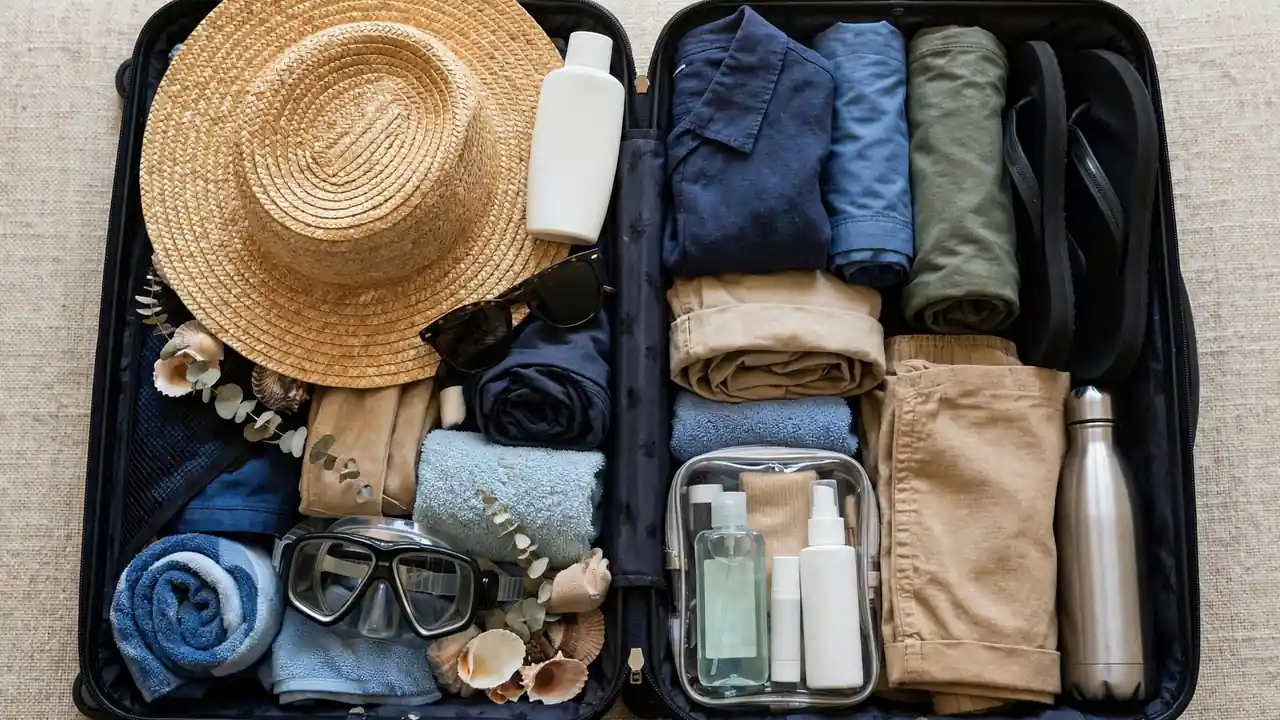
Ultimate Packing List for Australia Travel
Australia is not one climate — it is a continent with tropical north, temperate south, arid centre and everything between. Packing for “Australia” without knowing where you are going is how you end up shivering in Melbourne with only singlets, or melting in Darwin with a winter coat. This packing list for Australia travel covers the essentials for every region and season, plus the Australia-specific items most visitors forget. Adjust the quantities to your trip length — and if you want to fit it all in a cabin bag, see our guide to carry-on packing for two weeks.
Documents and Money
- Passport (with 6+ months validity for international trips) plus a photocopy or phone photo stored separately
- Visa/ETA confirmations — print or save offline; do not rely on airport wifi to find them
- Driver’s licence — if you plan to hire a car; international visitors should carry an International Driving Permit alongside their home licence
- Travel insurance policy details and the 24/7 emergency number, saved in your phone
- Credit/debit cards — at least two, from different providers, in case one is blocked or lost
- A small amount of cash — Australia is overwhelmingly card-friendly, but markets, small towns and tips still favour cash
Clothing: The Layering System
Australian weather changes fast — Melbourne is famous for four seasons in a day, and desert nights in the Red Centre can drop near freezing even when days hit 35°C. Pack layers, not bulk.
Tops and bottoms (for a 2-week trip)
- 5-7 t-shirts or light tops (merino or quick-dry if you can — they resist odour and dry overnight)
- 2-3 long-sleeve shirts (sun protection and cool evenings)
- 1 lightweight fleece or jumper
- 1 packable rain/wind jacket — non-negotiable, even in summer
- 2 pairs of shorts
- 2 pairs of long pants or jeans (one can double as your travel outfit)
- 1 nicer outfit for restaurants — Australians dress casually, but “smart casual” opens doors in city dining
Underwear and sleepwear
- 7 pairs of underwear and socks (or 4-5 if you will do laundry)
- Sleepwear suited to the season — hostels and Outback nights can be cold
- Swimwear — you will use it more than you think
Footwear (the 3-pair rule)
- Comfortable walking shoes or sneakers — your daily workhorse; make sure they are broken in before the trip
- Thongs/flip-flops — for beaches, hostel showers and casual days; this is Australia, after all
- One smarter pair — only if your itinerary includes nice restaurants or events; otherwise skip them
Sun Protection: Non-Negotiable in Australia
Australia has some of the highest UV levels in the world, and skin damage happens fast — even on overcast days. This is the section visitors most often under-pack.
- SPF 50+ sunscreen — bring a full-size bottle; it is expensive in tourist areas and you will use more than you expect
- Wide-brimmed hat — a cap leaves your ears and neck exposed; a proper hat is worth the space
- Sunglasses — polarised if you will be on the water
- Rash vest / swim shirt — essential for the Great Barrier Reef and tropical beaches; also protects against stingers in stinger season (roughly November to May in the north)
- Lip balm with SPF — lips burn too
Health and Toiletries
- Prescription medications in original packaging with a copy of the prescription — plus a few days’ extra supply
- Basic first-aid kit: plasters, antiseptic, painkillers, antihistamines, rehydration sachets, blister treatment
- Insect repellent with DEET or picaridin — mosquitoes in the tropics and bush flies in the Outback are relentless
- Motion sickness tablets if you are prone — reef boats and winding coastal roads claim victims daily
- Toiletries in travel sizes — you can buy everything in Australia, so do not over-pack; a week’s supply is plenty to start
- Contact lens solution and spare glasses if applicable — harder to replace in small towns
Tech and Gear
- Phone and charger — your map, camera, boarding pass and translator in one
- Power adapter: Australia uses Type I plugs (230V). International visitors need an adapter; a multi-USB charger covers all devices with one plug
- Portable power bank — long touring days and patchy charging opportunities make this essential
- Camera gear — only what you will actually carry; a phone plus one lens beats a bag of gear left in the hotel
- Headphones/earbuds — for flights, hostels and long drives
- Dry bag or zip-lock bags — for reef trips, kayaking and sudden tropical downpours
- Head torch — for camping, night walks and power outages in remote stays
Outback and Regional Extras
If your trip goes beyond the cities — the Red Centre, the Kimberley, Tasmania’s wilderness — add these:
- Extra water capacity — a 2-3 litre hydration bladder or bottles; distances between servos can exceed 200km
- Warm layer even in summer — desert nights are cold year-round
- Fly net for your hat — sounds extreme until you meet your first Outback fly swarm
- Paper maps or offline downloads — phone reception vanishes for hours in remote areas; download offline maps before you leave (see our essential travel apps for Australians)
- Snacks and a basic car emergency kit if self-driving remote areas — water, food, first aid and a charged phone
Beach and Reef Kit
- Quick-dry towel or microfibre towel — hostel and camping essential
- Snorkel and mask if you are fussy about hire gear (fins are usually fine to hire)
- Waterproof phone pouch
- Reef-safe sunscreen for the Great Barrier Reef — standard sunscreens harm coral; many reef operators require or sell reef-safe options
What NOT to Pack
- Too many “just in case” outfits — if you have not worn it in the last month at home, you will not wear it on holiday
- Full-size toiletries — buy locally; Australian supermarkets stock everything
- Valuables you do not need — expensive jewellery and extra gadgets are just things to worry about
- Fresh food, plants or animal products (international arrivals) — Australia’s biosecurity laws are strict, with on-the-spot fines for undeclared items. Declare everything or leave it behind
- More than one heavy book — an e-reader or phone holds a library at a fraction of the weight
Packing by Season: Quick Reference
Summer (December-February)
Light clothing, swimwear, maximum sun protection. Add a light jumper for Melbourne evenings and air-conditioned interiors. Tropical north: prepare for humidity, storms and stingers — a rain shell and reef-safe sunscreen are musts.
Autumn (March-May)
The most pleasant season in most of the country. Layers for cool mornings and warm afternoons. Still pack swimwear for Queensland and the north.
Winter (June-August)
The south gets genuinely cold — Melbourne, Sydney, Adelaide and especially Tasmania and the alpine regions need a proper warm jacket, not just a hoodie. The north (Darwin, Cairns, Broome) is in its glorious dry season: t-shirts and shorts weather. If you are doing both, pack for two climates.
Spring (September-November)
Variable everywhere. Layers, a rain jacket and sun protection cover all bases. Wildflower season in Western Australia is spectacular — and a reason to pack the camera.
The Carry-On Challenge
Everything above fits in a checked bag comfortably — but with budget airlines charging $60-$120 for checked luggage, fitting it in a carry-on saves real money. The trick is ruthless editing: halve the “maybe” pile, choose quick-dry fabrics, wear your bulkiest items on the plane, and remember that Australia has shops. Our step-by-step guide to packing light for two weeks in just a carry-on shows exactly how to do it.
Before you zip the bag, do a final check against Smartraveller’s pre-departure advice at smartraveller.gov.au — particularly around medications, biosecurity and destination-specific health gear.
Packing for Specific Trip Types
Beach holiday (Queensland, Whitsundays)
Double the swimwear, halve everything else. Add: reef-safe sunscreen, a second rash vest (one is always wet), water shoes for coral beaches, and a proper beach bag. Leave the jeans at home.
City break (Sydney, Melbourne)
One smart-casual outfit for restaurants, comfortable walking shoes (you will walk 15,000+ steps daily), a compact umbrella, and layers — Melbourne especially. A small daypack beats a handbag for sightseeing days.
Outback adventure (Red Centre, Kimberley)
Add: 3+ litres water capacity, warm layers even in summer, fly net, head torch, comprehensive first aid, paper maps, and twice the sunscreen you think you need. This is the trip where over-packing the safety gear is correct.
Winter south (Tasmania, alpine)
Proper warm jacket (not a hoodie), thermal base layers, waterproof outer shell, warm hat and gloves. Tasmanian weather turns fast — hypothermia is a real risk for underprepared hikers.
Laundry on the Road: Pack Half, Wash Twice
The secret to packing light for any trip length is laundry, not more clothes. Options across Australia: hostel laundries ($4-$6 per load), laundromats in every decent-sized town (often with same-day service), hotel laundry (expensive — emergency only), and the sink method for quick-dry fabrics (10 minutes, dry by morning in most climates). Merino and synthetic fabrics make sink-washing genuinely viable; cotton does not. Plan one laundry stop per week and you can halve the clothing list above.
Toiletries: The Full Breakdown
Toiletries are where bags gain secret weight. The disciplined kit: solid shampoo and conditioner bars (no leaks, no liquid limits, last weeks), a small soap bar or body wash decanted, toothbrush and small toothpaste, deodorant, razor plus a few blades, small sunscreen for day one (buy full-size at destination), insect repellent (small bottle — buy more locally if needed), basic medications, and minimal makeup/skincare decanted into small containers. Everything else — extra skincare, full-size anything, “salon” hair products — is available in Australia. The test: if you can buy it at Coles in 5 minutes, do not carry it across the world.
Documents Backup Strategy
Losing your passport is bad; losing it with no backup is a crisis. The system: physical copies of passport, visa, insurance and bookings in a separate bag from the originals; digital copies in cloud storage and emailed to yourself; key numbers (insurance emergency line, bank’s overseas number, embassy contacts) saved in your phone and written on paper. If your phone is stolen too, the paper copies and cloud access from any computer get you to the embassy. Register your trip with Smartraveller before departure so the government can contact you in a crisis.
The 10 Most Forgotten Items (Pack These First)
Experienced travellers forget the same things: 1. Power adapter (the trip-ruiner — buy before the airport, where they cost triple). 2. Prescription medications in original packaging. 3. Sunglasses (Australian UV punishes the unprepared). 4. Swimwear (you will want it even on “non-beach” trips). 5. A warm layer (desert nights, Melbourne evenings, air-conditioned everything). 6. Reusable water bottle. 7. Headphones. 8. Pen (for arrival cards — they never have enough on the plane). 9. Copies of documents separate from originals. 10. Insect repellent for the tropics. Run this list the night before every trip and you will never do the airport chemist panic-buy again.
Frequently Asked Questions
What should I pack for a trip to Australia?
Pack layers for variable weather, strong sun protection (SPF 50+, hat, sunglasses), comfortable broken-in walking shoes, swimwear, insect repellent, a rain jacket, a Type I power adapter (230V) for international visitors, and copies of your documents. Adjust for region — the tropical north and temperate south are different climates.
What power adapter do I need for Australia?
Australia uses Type I plugs at 230V. International visitors need a Type I adapter. A multi-USB charger with one adapter covers phones, cameras and laptops with a single wall plug.
Can I bring food into Australia?
Australia has strict biosecurity laws. Fresh fruit, vegetables, meat, dairy, plants and many packaged foods must be declared or are prohibited, with on-the-spot fines for undeclared items. When in doubt, declare it or leave it behind.
Do I need warm clothes for Australia?
Yes, depending on where and when. Melbourne, Sydney, Adelaide, Tasmania and alpine areas get genuinely cold in winter (June-August). Desert nights in the Red Centre drop near freezing year-round. Pack at least one proper warm layer even on summer trips that include the south or the Outback.
What is stinger season in Australia?
Stinger season (marine stingers including box jellyfish and Irukandji) runs roughly November to May in tropical northern waters. Wear a stinger suit or rash vest, swim at patrolled beaches with stinger nets, and carry vinegar as first aid.