
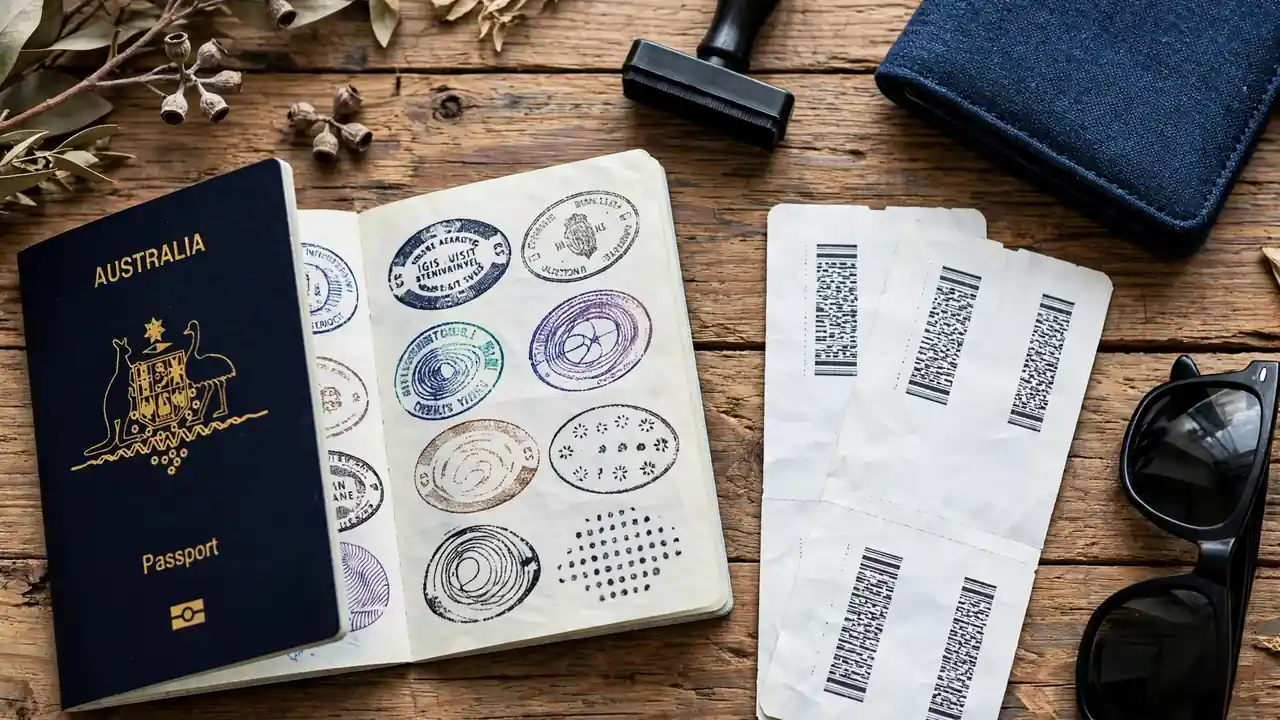
Visa Guide for Australians: 20 Easiest Countries to Visit
The Australian passport is one of the strongest in the world — Australians can enter well over 180 destinations visa-free or with a visa on arrival. But “visa-free” does not mean “paperwork-free”: electronic travel authorisations, eVisas and entry fees are quietly becoming the norm. This visa guide for Australians lists 20 of the easiest countries to visit, explains the different entry systems you will encounter, and flags the rule changes to know for 2026. Entry rules change — always confirm on Smartraveller or the destination’s official immigration site before you book.
Visa-Free vs Visa on Arrival vs eVisa vs ETA: What’s the Difference?
- Visa-free: just turn up with your passport. No application, no fee. Example: New Zealand, Japan, Singapore.
- Visa on arrival (VOA): you get the visa at the airport when you land, usually for a fee. Example: Indonesia (Bali), ~IDR 500,000 (about AUD 50).
- eVisa: apply online before you travel and receive approval electronically. Example: Vietnam, India.
- ETA / electronic authorisation: not a visa but a mandatory pre-travel registration linked to your passport. Examples: USA (ESTA), Canada (eTA), UK (ETA).
The trend is clear: more countries are moving from “just turn up” to “register online first”. The registrations are usually quick and cheap, but they must be done before you fly — airlines can deny boarding if you do not have one.
20 Easiest Countries for Australian Passport Holders
1. New Zealand — no visa, no ETA
Australians are exempt from New Zealand’s NZeTA and can live and work there indefinitely under the Trans-Tasman arrangement. The easiest international trip you will ever take.
2. Japan — visa-free, 90 days
Ninety days visa-free on arrival. Japan remains one of the smoothest entries in Asia for Australians — no forms, no fees, just a landing card.
3. Singapore — visa-free, 90 days
Ninety days visa-free. Changi Airport’s automated lanes make arrival genuinely pleasant.
4. Malaysia — visa-free, 90 days
Ninety days visa-free for most of Malaysia. Note that Sarawak and Sabah (Malaysian Borneo) have their own immigration checks on arrival from peninsular Malaysia.
5. Thailand — visa exemption, 60 days
Thailand’s visa exemption currently allows 60 days (extended from 30). Enough for a proper holiday without any paperwork. Overstaying is punished severely — do not risk it.
6. Fiji — visa-free, 4 months
Four months visa-free on arrival — one of the most generous allowances anywhere. A return ticket and proof of accommodation are usually all that is asked.
7. Indonesia (Bali) — visa on arrival, 30 days
A 30-day visa on arrival costs IDR 500,000 (roughly AUD 50) and can be extended once for another 30 days. An electronic VOA can be bought online before departure to skip the airport queue. Remember the 6-month passport validity rule — Indonesia enforces it strictly.
8. Vietnam — eVisa, 90 days
Vietnam’s eVisa allows up to 90 days, single or multiple entry (approximately USD 25-50 depending on type). Apply through the official Vietnamese immigration portal a week or two before travel — it is straightforward but not instant.
9. South Korea — visa-free, 90 days
Ninety days visa-free. Note that Korea’s K-ETA electronic authorisation system has applied to Australians at various times — check the current requirement before you fly, as it has changed more than once.
10. United Kingdom — ETA required, ~£20
Since February 2026, Australians need a UK Electronic Travel Authorisation before travelling. It costs around £20 (roughly AUD 40), is valid for two years or until your passport expires, and covers multiple visits of up to six months. Apply via the official UK government site or app — it is quick, but do not leave it to the airport.
11. USA — ESTA required, ~USD 21
The US ESTA (Electronic System for Travel Authorization) costs around USD 21, lasts two years, and allows 90-day visits under the Visa Waiver Program. Apply at least 72 hours before departure through the official US Customs site — beware of copycat sites charging inflated “processing fees”.
12. Canada — eTA required, ~CAD 7
Canada’s eTA costs about CAD 7, is valid for five years, and is approved in minutes in most cases. You need it before boarding your flight to Canada.
13-15. France, Italy, Spain — visa-free (Schengen), 90 days in 180
The Schengen Area allows 90 days visa-free in any 180-day period. The big change on the horizon is ETIAS, the EU’s new pre-travel authorisation (about €20, valid 3 years). As of late 2026 it has not launched — the EU removed its 2026 target and now points to around 2027 — so you do not need it yet. Do not pay any website claiming to process ETIAS applications today; only the official EU portal will ever issue it.
16. Hong Kong — visa-free, 90 days
Ninety days visa-free. Arrival is fast and efficient.
17. Taiwan — visa-free, 90 days
Ninety days visa-free. An underrated easy destination from Australia’s east coast.
18. Philippines — visa-free, 30 days
Thirty days visa-free, extendable. You may be asked for an onward ticket.
19. Sri Lanka — ETA/eVisa
Sri Lanka’s ETA is quick and cheap online (around USD 50 for 30 days, though fees and exemptions have changed — check current rules). Approval usually arrives within a day or two.
20. South Africa — visa-free, 90 days
Ninety days visa-free. You will need at least two blank passport pages — South Africa is strict about this.
Countries That Need More Planning
Not everywhere is easy. China now offers visa-free entry for Australians for short stays (up to 30 days under its current unilateral policy — confirm it is still in force before relying on it). India requires an eVisa applied for in advance. Russia, most of the Middle East beyond the Gulf tourist visas, and much of Africa need proper visa applications with lead times of weeks. For these, start the process the moment you book — not the month before.
5 Rules That Apply Everywhere
- Passport validity: the 6-month rule catches more travellers than visas do. Renew early — see our Australian passport renewal guide for 2026 costs and times.
- Blank pages: some countries require 1-2 blank pages. A full passport is a useless passport.
- Onward tickets: many countries can ask for proof you will leave. A cheap onward booking or a refundable ticket solves this.
- Apply through official sites only: for ETAs and eVisas, copycat sites charge multiples of the real fee. If the URL is not the government’s, close the tab.
- Check Smartraveller: entry requirements, advice levels and health requirements for every destination are at smartraveller.gov.au.
Once your documents are sorted, timing is the next lever — the cheapest months to fly from Australia can halve the cost of getting to these destinations in the first place.
Transit Visas and Stopovers: The Hidden Paperwork
Transiting through a country can require paperwork even if you never leave the airport. The USA requires an ESTA even for transit. Canada requires an eTA for transit. The UK generally allows airside transit without a visa for Australians, but leaving the airport (even for a long layover) brings normal entry rules into play. China offers 144-hour transit visa exemptions at major airports — useful for stopovers, but the conditions are specific. Always check transit requirements separately from destination requirements; “I’m only changing planes” has stranded many travellers.
Dual Citizens: Which Passport Do You Use?
If you hold Australian citizenship plus another nationality, Australian law requires you to enter and leave Australia on your Australian passport — airlines face fines for carrying you otherwise, and you can be denied boarding. For the rest of the trip, use whichever passport gives the easier entry: your EU passport for Europe, your Australian for most of Asia. Carry both, keep track of which one you entered each country on (immigration stamps must match on exit), and never show border officers a confusing handful of documents at once.
Applying for ETAs and eVisas: Practical Walkthrough Tips
- Use the official site only. For the US ESTA it is the Customs and Border Protection site; for Canada the Government of Canada site; for the UK the gov.uk site or official app. Copycat sites charge $50-$100 “service fees” for a $7-$21 authorisation.
- Apply early. Most ETAs approve in minutes, but “most” is not “all” — allow 72 hours minimum, a week for eVisas like Vietnam’s.
- Match your passport exactly. Name, number, expiry — one typo can invalidate the authorisation. A new passport means a new ETA/ESTA.
- Save the confirmation. Most are electronically linked to your passport, but keep the approval email accessible offline in case systems disagree at check-in.
- Check the cost in AUD. Fees are set in foreign currency; your card’s exchange rate and any foreign transaction fee apply — another reason for a no-foreign-fee card (see our travel credit cards guide).
The 90/180 Rule: Europe’s Invisible Fence
The Schengen Area’s 90-days-in-any-180-day rule is the most misunderstood entry rule Australians face. It is not 90 days per country and it is not 90 days per trip — it is 90 days total across all Schengen countries within any rolling 180-day window. Days in non-Schengen countries (the UK, Ireland, Croatia is now Schengen — check current membership) do not count. Overstaying, even by a day, can mean fines, deportation and multi-year entry bans. Use the EU’s official 90/180 calculator before planning long European trips, and keep boarding passes and stamps as proof of your movements. When ETIAS eventually launches (expected around 2027, ~€20, valid 3 years), it will not change this rule — it is an authorisation, not extra days.
Health and Character Requirements
Most tourist entries need nothing beyond a passport, but longer stays and some destinations ask more. Health: yellow fever certificates are required for entry to some African and South American countries if arriving from an endemic zone; routine vaccinations should be current for Southeast Asia and the Pacific. Character: the USA’s ESTA asks about criminal history — a record does not automatically disqualify you, but lying on the application does. Canada is strict: certain offences can make you inadmissible without rehabilitation paperwork. If you have any criminal history, research the destination’s rules months ahead — waivers and rehabilitation applications take time.
Visa Processes Ranked: Easiest to Most Effort
For trip planning, it helps to think in tiers. Tier 1 — just go: New Zealand, Japan, Singapore, Malaysia, Fiji, Hong Kong, Taiwan (visa-free, no paperwork). Tier 2 — quick online form: USA (ESTA), Canada (eTA), UK (ETA), South Korea (check K-ETA status), Sri Lanka (ETA) — minutes of effort, small fees. Tier 3 — eVisa with lead time: Vietnam, India — apply 1-2 weeks ahead through official portals. Tier 4 — visa on arrival: Indonesia, Philippines extensions — no advance work but airport queues and cash fees. Tier 5 — proper application: China (check current visa-free terms), Russia, most of Africa — weeks of lead time, consulate visits, supporting documents. When choosing between two destinations, a tier difference is a real factor: a Tier 1 trip can be booked tonight; a Tier 5 trip needs a month of admin.
Frequently Asked Questions
Which countries can Australians visit without a visa?
Australians enjoy visa-free or visa-on-arrival access to 180+ destinations, including New Zealand, Japan, Singapore, Malaysia, Thailand, Fiji, the UK (with ETA), the Schengen Area, South Korea and South Africa. Always check current entry requirements before booking.
Do Australians need ETIAS for Europe in 2026?
No. As of late 2026, ETIAS has not launched — the EU removed its 2026 target and now points to around 2027. When it does launch it will cost about €20 and be valid for 3 years. Do not pay any website claiming to process ETIAS applications today.
Do Australians need a visa for Bali?
Australians get a 30-day visa on arrival in Indonesia for IDR 500,000 (about AUD 50), extendable once for another 30 days. An electronic VOA can be purchased online before departure. Your passport must have at least 6 months validity.
What is the UK ETA and do Australians need one?
Yes — since February 2026, Australians need a UK Electronic Travel Authorisation before travelling. It costs around £20, is valid for two years or until your passport expires, and covers multiple visits of up to six months each.
How long can Australians stay in the Schengen Area?
90 days in any 180-day period, visa-free. The 90/180 rule applies across the whole Schengen Area combined — not 90 days per country. Overstaying can lead to fines and future entry bans.