
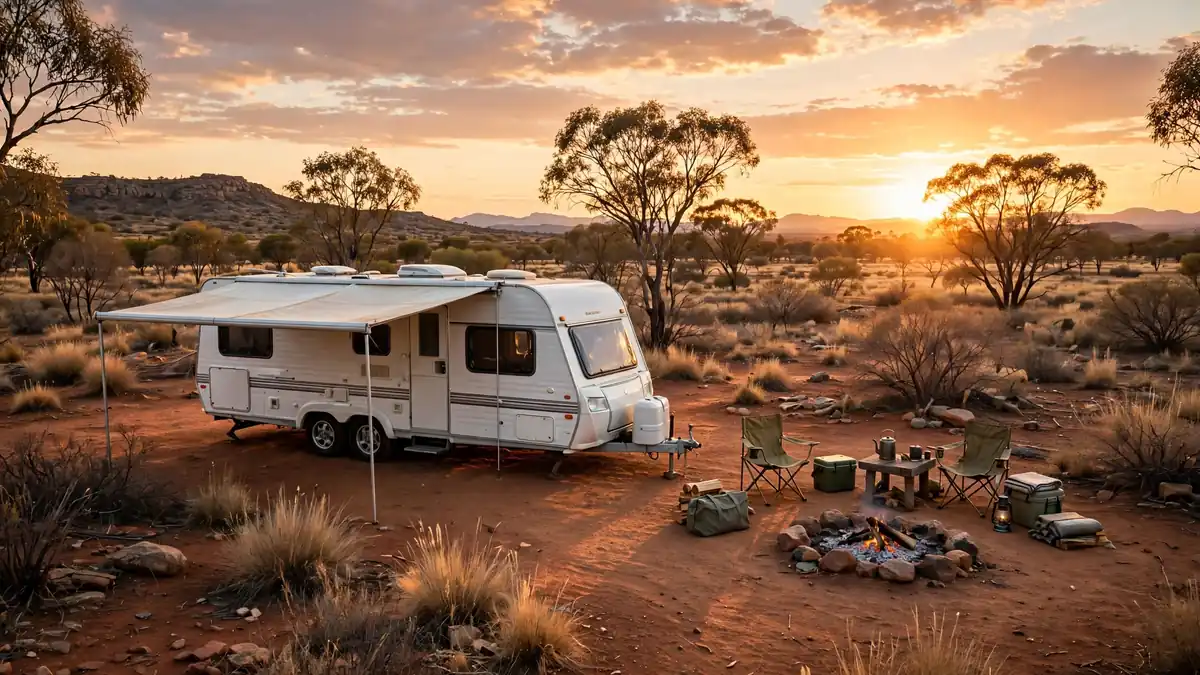
Grey Nomad Guide: Caravanning Australia After 60
Every year, tens of thousands of Australians over 60 hitch up the van and head off — some for months, some for years, some for good. The grey nomad life is one of the great Australian traditions: the Big Lap, the winter migration north, the community of travellers who share campfires from Broome to Bermagui. This grey nomad Australia guide covers what it really costs, how to plan the rig and route, staying healthy on the road, and the hard-won wisdom of those who have done the lap.
What Does the Grey Nomad Life Cost?
The honest answer: it varies enormously, but a comfortable travelling couple typically spends $800-$1,500 per week all-in, while careful budget travellers manage on $500-$800. The big three costs:
- Fuel: the largest variable cost. A Big Lap is 15,000km+; at 15L/100km and $1.80/L, that is 2,250 litres and ~$4,000 in fuel for the lap alone. Fuel apps that show live prices save hundreds.
- Accommodation: caravan parks run $30-$60/night for a powered site. Mix in free camps (see below) and the average drops sharply — many nomads aim for a 50/50 split.
- Food: cooking in the van keeps this to supermarket levels; the “pub dinner every night” habit is what breaks budgets.
The setup cost is the real barrier: a reliable tow vehicle plus a decent caravan or motorhome. Buy quality second-hand, get an independent inspection, and budget 10-15% of the purchase price for the inevitable first-year fixes. Our budget travel tips for Australia apply on the road too — most of the savings are in fuel, food and free camps.
The Rig: Caravan, Motorhome or Camper Trailer?
Caravan
The classic choice: unhitch at camp and use the car for day trips. Best for long stays and the full Big Lap. Needs a capable tow vehicle — check your car’s towing capacity against the van’s ATM (aggregate trailer mass) with margin to spare, not exactly at the limit.
Motorhome
All-in-one convenience, no towing. Best for couples who move often and do not need a separate runabout. More expensive per metre of living space, and servicing means the whole house goes to the mechanic.
Camper trailer
Light, cheap, towable by smaller vehicles. Best for the adventurous who do not mind canvas. Less comfortable for months-long travel in variable weather.
Whatever you choose: get a weighbridge check fully loaded. Overweight rigs are dangerous, illegal and void insurance — and most first-timers are overweight without realising it.
Planning the Big Lap
Direction and timing
The classic lap goes anticlockwise from the east coast: up through Queensland in winter, across the top end in the dry season (May-October), down the west coast in spring, across the Nullarbor in the milder months, and back up the east coast. The golden rule: follow the good weather — north in winter, south in summer. Doing the Kimberley in the wet season or Tasmania in July is possible but punishing.
How long does it take?
The driving alone is 3-4 weeks of solid travel. Most nomads take 6-12 months to do it properly, with multi-week stops at the highlights. Rushing the lap is the most common regret — the travellers having the most fun are the ones who stayed an extra week in the good spots.
Free and low-cost camping
Apps like WikiCamps list thousands of free camps, low-cost station stays and budget caravan parks with reviews and photos. Free camps save $30-$60/night and are often in spectacular locations — but they have no power or water, so you need to be self-sufficient (solar, water tanks, toilet). The etiquette: leave it cleaner than you found it, take all rubbish, and respect stay limits.
Health on the Road After 60
- Medications: carry repeats and a medication list; most scripts can be filled at any pharmacy nationally, but allow lead time in remote towns.
- My Health Record: keep it up to date so any doctor or hospital can see your history.
- GP strategy: many nomads keep their regular GP for phone consults and use local clinics for acute issues. Know where the hospitals are on your route.
- Travel insurance: domestic travel insurance is cheap and covers cancellation, baggage and hire-car excess — Medicare handles medical. Our insurance cover guide explains what is worth buying.
- Fitness: the lap is physical — hitching, levelling, walking. Stay active and the trip stays enjoyable.
Safety on the Road
- Do not drive tired: plan 300-400km days maximum, less in the heat. The 2-hour break rule saves lives.
- Fuel discipline: in remote areas, fill up at every opportunity and never pass a servo with less than half a tank.
- Communications: Telstra has the best regional coverage; carry a UHF radio for road trains and emergencies; consider a satellite communicator for truly remote stretches.
- Road trains: give them room, do not overtake unless you have clear sight for a kilometre, and expect the wind blast.
- Secure the van: hitch locks, wheel clamps and common-sense parking. Theft is rare in the nomad community, but opportunists exist.
- Weather: check forecasts and road conditions daily in the north (floods close roads for weeks) and fire danger ratings in the south in summer.
The Nomad Community
One of the best parts of the lifestyle is the community. Caravan parks and free camps are social places — campfire conversations, shared travel tips, impromptu dinners. Many nomads travel in loose convoys with people they met on the road. Online groups and forums are active with route advice, buy/sell listings and meetups. The unwritten rules: help with reversing, share local knowledge, respect quiet hours, and never leave rubbish.
Money-Saving Wisdom from the Road
- Seniors cards: state seniors cards unlock transport concessions and attraction discounts — apply in your home state before leaving.
- Workamping: caretaking, camp hosting and seasonal work (harvest, tourism) in exchange for a free site plus pay. Many nomads fund months of travel this way.
- Cook 90% of meals: the van kitchen is the budget’s best friend. The pub is for occasions, not every night.
- Slow down: fewer kilometres = less fuel = more money for experiences. The cheapest lap is the slowest one.
- Maintain the rig: a $200 service prevents a $5,000 breakdown in the middle of nowhere. Join a roadside assistance program that covers your rig’s weight and length.
Common Mistakes First-Timers Make
- Too big a van: bigger is not better — it is harder to tow, park and power. Buy the smallest rig you are comfortable in, not the biggest you can afford.
- Overweight: get weighed. Then remove 200kg of “essentials”. Then get weighed again.
- Rushing: the lap is not a race. Plan rest days the way you plan driving days.
- No contingency fund: keep $5,000-$10,000 accessible for the breakdown, the medical issue or the change of plans. The road rewards the prepared.
- Ignoring the seasons: weather determines everything. Plan around it, not against it.
Navigation and connectivity make the modern lap far easier than it used to be — download offline maps and the essential apps before remote stretches (see our travel apps every Australian needs). And for official travel safety resources, see smartraveller.gov.au.
Staying Connected on the Road
Connectivity is the modern nomad’s lifeline — for banking, health, navigation and staying in touch. Telstra has the widest regional coverage by a clear margin; if you are going remote, it is worth switching. A signal booster (legal, installed properly) extends range meaningfully in fringe areas. For truly remote stretches, a satellite communicator (Garmin inReach or similar) provides SOS and messaging beyond mobile range — grey nomads doing the Gibb River Road or the Tanami consider it essential. Download offline maps for every region before leaving coverage, and manage expectations: you will have days with no signal, and that is part of the point.
Mail, Banking and Admin on the Move
Life admin does not stop because you are mobile. Set up: mail redirection to a family member or a mail scanning service; online banking with transaction notifications; MyGov for tax, Medicare and Centrelink; and digital copies of every important document stored securely online. For vehicle registration and insurance, check your state’s rules for travellers — some states are friendlier to nomads than others. And keep a physical folder with rego, insurance and roadside assistance details in the glovebox.
Nomading with Grandkids or Pets
Grandkids: school-holiday trips with grandchildren are a beloved nomad tradition. The keys: a van layout that sleeps extras comfortably (bunk caravans exist for this), planned activities (fishing, junior ranger programs, beaches), and agreed routines with the parents. Pets: dogs are welcome at most caravan parks and many free camps, but national parks ban them — plan dog-sitting swaps with fellow nomads for park days. The nomad community is famously dog-friendly; your dog will have a better social life than you do.
Vehicle Maintenance on the Road
A breakdown in Birdsville costs triple what it costs in Brisbane — prevention is everything. The nomad maintenance rhythm: check oil, coolant, tyre pressures (including the van) and wheel bearings regularly; service every 10,000km or 6 months, whichever comes first; carry spares (fan belt, hoses, fuses, tyre repair kit, spare wheel for both car and van); and learn the basics — changing a tyre, checking fluids, jump-starting. Join a roadside assistance program that explicitly covers your combined rig length and weight (standard car cover often excludes long caravans). And get the van serviced by a caravan specialist annually — wheel bearings, brakes and suspension take a beating on outback roads.
Cooking in the Van: The Setup That Works
The van kitchen determines whether you eat well or eat expensively. The setup experienced nomads swear by: a 12V fridge (not an esky — the ice bill alone justifies it), a two-burner gas stove plus a portable BBQ for outside cooking, a basic spice and staple kit that lives in the van permanently, and a slow cooker or thermal cooker for set-and-forget meals on driving days. The meal rhythm: big breakfast in the van, packed lunch, and dinner at camp — restaurant meals as treats, not defaults. A $15 camp dinner beats a $60 pub meal five nights a week, and the food is often better.
Exercise on the Road: Staying Active After 60
The Big Lap is more physical than it looks — hitching, levelling, walking towns, climbing lookouts. Travellers who stay active enjoy it more and hurt less. The nomad exercise kit: walking (the default — every town has a walk), swimming (caravan park pools are everywhere), resistance bands (full-body workout in 2 square metres), and a bike if you have the payload (electric bikes have revolutionised nomad mobility). The non-negotiable: keep moving on driving days — stop every 2 hours, walk, stretch. Stiff bodies make bad decisions, and bad decisions on outback roads have consequences. Many nomads report the lap as the fittest period of their later years — the lifestyle rewards the active.
Frequently Asked Questions
How much does it cost to do the Big Lap of Australia?
A travelling couple typically spends $800-$1,500 per week all-in; careful budget travellers manage $500-$800. Fuel is the biggest variable cost — a 15,000km+ lap uses 2,000+ litres. Mixing free camps with caravan parks ($30-$60/night) is the main lever on accommodation costs.
How long does the Big Lap of Australia take?
The driving alone is 3-4 weeks, but most grey nomads take 6-12 months to do it properly with multi-week stops. Rushing is the most common regret — plan rest days like driving days and follow the good weather (north in winter, south in summer).
What is the best rig for grey nomads?
Caravans suit long stays (unhitch and explore by car); motorhomes suit frequent movers; camper trailers suit the budget-conscious and adventurous. Whatever you choose, get a weighbridge check fully loaded — most first-timers are overweight without realising it.
Are there free campsites in Australia?
Yes — thousands, listed on apps like WikiCamps with reviews and facility details. Free camps have no power or water, so you need to be self-sufficient (solar, water, toilet). Follow the etiquette: take all rubbish, respect stay limits, leave sites cleaner than you found them.
Can you do the Big Lap on the pension?
Many do. The keys are a paid-off rig, free camping most nights, cooking in the van, slow travel (less fuel), and supplementing with workamping or seasonal work. A realistic pension-funded lap runs $500-$700 per week for a careful couple.