
Pacific Coast Drive: Sydney to Brisbane Itinerary
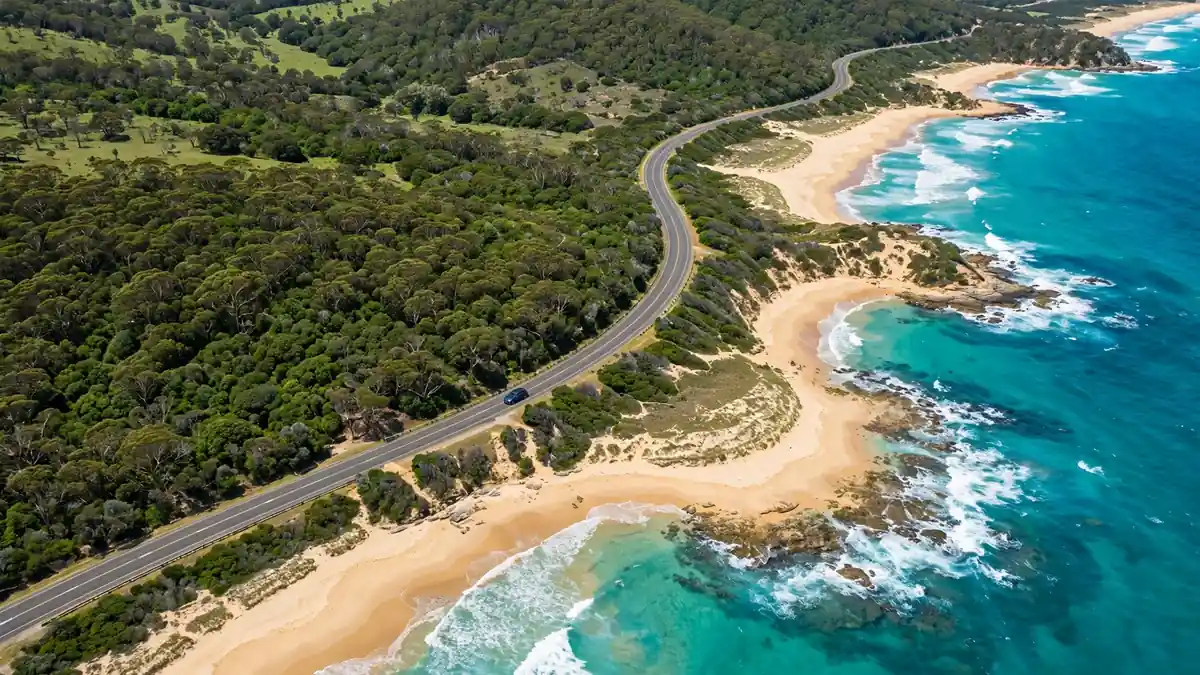
The Pacific Coast Drive from Sydney to Brisbane is one of Australia’s great coastal journeys. Roughly 900 kilometres of the Pacific Highway (A1/M1) threads through surf towns, national parks, rainforest hinterland and some of the most loved beaches in the country. This guide gives you a day-by-day itinerary, the best stops, and the planning tips you need.
The classic trip takes five to seven days. You could hammer it in two long days, but that misses the point entirely — this route is about the stops, not the speed.
Day 1: Sydney to Port Stephens (200 km)
Leave Sydney via the M1 and the Hawkesbury River, then head for Port Stephens. The Stockton sand dunes — the largest coastal sand mass in the Southern Hemisphere — are the highlight; sandboarding and 4WD tours run daily. Nelson Bay’s waterfront is a lovely base for the night, and dolphin cruises depart regularly.
Day 2: Port Stephens to Port Macquarie (230 km)
Continue north along the coast to Port Macquarie. The Koala Hospital is a must-visit — it’s a genuine rehabilitation facility where you can see the work being done (entry by donation, tours at set times). The town’s coastal walk from Tacking Point Lighthouse is a beautiful late-afternoon stretch, and the riverfront restaurants are excellent.
Day 3: Port Macquarie to Coffs Harbour (180 km)
A shorter drive today. In Coffs Harbour, the Solitary Islands Marine Park offers superb snorkelling and diving, and the hinterland’s Dorrigo National Park is one of the finest rainforest experiences in NSW. The Big Banana is a kitsch icon worth the obligatory photo. If you’re travelling this coast, our guide to the best national parks in New South Wales covers Dorrigo and the region’s other standouts.
Day 4: Coffs Harbour to Byron Bay (250 km)
Byron Bay needs little introduction: the lighthouse walk (Australia’s easternmost point), surf breaks, alternative markets and a food scene that punches far above its weight. Arrive early enough to do the lighthouse walk at sunset — it’s one of the great free experiences on the east coast. Byron is busy year-round now, so book accommodation ahead.
Day 5: Byron Bay (rest day)
Take the day off driving. Surf lesson at The Pass or Wategos, kayak with dolphins, explore the Crystal Castle in the hinterland, or just work through the café scene. If you need a break from the crowds, the small towns of Brunswick Heads and Mullumbimby are charming alternatives.
Day 6: Byron Bay to the Gold Coast (90 km)
A short hop across the border into Queensland. The Gold Coast’s surf beaches — Burleigh Heads, Currumbin, Snapper Rocks — are genuinely world-class, and the hinterland’s Springbrook National Park (part of the Gondwana Rainforests World Heritage Area) has superb waterfalls and lookouts.
Day 7: Gold Coast to Brisbane (80 km)
The final stretch into Brisbane. End your trip properly: wander South Bank’s riverside precinct, take the ferry across the river, and climb Mount Coot-tha for the view back over where you’ve come from. If you’ve got a spare day, Stradbroke Island’s beaches are an easy ferry ride from the city.
Best Detours Along the Way
Inland rainforest and waterfall country
The Pacific Highway runs close to the Great Dividing Range for much of its length, and the hinterland detours are where the best surprises live. Dorrigo, the Border Ranges and Springbrook are all World Heritage rainforest with waterfalls that run year-round. See our top 20 Australian waterfalls for the highlights on this coast.
Beach hopping
Some of the east coast’s finest beaches sit just off the highway: Seal Rocks, Crescent Head, Yamba’s Angourie Point and the beaches of Lennox Head. If you’re arriving in warmer months, our ranked list of Australia’s best beaches will help you pick your swimming stops.
Practical Tips
When to go
The Pacific Coast Drive works year-round, but autumn (March to May) and spring (September to November) are the sweet spots — warm enough to swim, without the summer crowds and holiday-season prices. Winter is still mild, though the water gets cool south of Coffs Harbour.
Fuel, food and phone coverage
This is not a remote route — fuel and food are plentiful along the whole highway. Phone coverage is generally good, though it drops out in the national park hinterlands. Download offline maps before the Dorrigo or Border Ranges detours.
Accommodation
The coast is well served by caravan parks, motels and holiday rentals. Byron Bay and the Gold Coast book out in school holidays and on long weekends, so reserve early. Caravan parks are the budget-friendly classic for this route — powered sites typically run well under what a motel costs.
Tolls and road notes
Leaving Sydney northbound you’ll hit the Harbour Tunnel/Bridge toll. The M1 motorway sections are free-flowing dual carriageway; once you drop onto the older Pacific Highway sections, slow down and enjoy it — and watch for speed cameras, which are plentiful in NSW.
Extending the Trip
Got more time? Head west from Brisbane into the Scenic Rim and Granite Belt wine country, or keep going north past Brisbane toward the Sunshine Coast and Noosa. And if the big coastal drive has whetted your appetite, our roundup of the best road trips in Australia has 14 more routes to add to the list.
Where to Stay: Accommodation Options
The Pacific Coast is one of the easiest routes in Australia for accommodation — there’s something at every budget in every overnight town. Caravan parks are the classic choice: powered sites with camp kitchens and pools, typically the cheapest roofed option after your own tent. Port Macquarie, Coffs Harbour, Byron Bay and the Gold Coast all have excellent big-4-style parks close to the beach.
Motels are plentiful and good value in the smaller towns (Kempsey, Grafton, Ballina), while Byron Bay and Noosa lean boutique and pricey — book well ahead in school holidays. Holiday rentals (houses and apartments) make sense for groups and longer stays, especially around Port Stephens and the Gold Coast. And if you’re in a campervan, the highway is lined with rest areas and showgrounds for budget overnights — just check the signs, as not all allow overnight stays.
Budget: What the Trip Costs
A week-long Pacific Coast Drive for two is very manageable on a mid-range budget. Fuel for the ~1,000 km (plus detours) in an average car runs to a modest sum at current prices; accommodation is the big variable — caravan park cabins and motels in smaller towns are far cheaper than Byron Bay in January. Food costs drop dramatically if you use camp kitchens and pack picnic supplies from supermarkets rather than eating out three times a day.
The paid attractions (dolphin cruises, surf lessons, national park entries) are where discretionary spending goes — pick two or three splurges rather than saying yes to everything. The best experiences on this route are free: the beaches, the headland walks, the hinterland waterfalls and the sunsets.
The Inland Alternative: New England Highway
If you’ve driven the coast before — or want to avoid holiday traffic — the inland New England Highway (via Tamworth, Armidale and Tenterfield) is a worthy alternative. It’s hillier, quieter and rich in country-town character: Tamworth’s country music heritage, Armidale’s autumn colours and cathedrals, and the granite country around Tenterfield and Stanthorpe (Queensland’s wine region, just over the border). The inland route is roughly the same distance but faster, with less traffic. Some travellers do the coast one way and the inland the other — the perfect loop.
What to Pack
Beach gear is the priority: swimmers, beach towel, reef-safe sunscreen, hat and a rashie. A cooler bag or esky transforms the trip — stock it with drinks and picnic supplies and you’ll eat well for half the price. Bring a headlamp, a basic first-aid kit, and offline maps downloaded for the hinterland detours where coverage drops. If you’re camping, add warm layers — coastal nights can be surprisingly cool outside summer, and the hinterland gets genuinely cold. A dry bag is useful for the waterfall and gorge swims, and binoculars earn their place for the headland whale watching in season.
Northern NSW: The Best Stretch of the Drive
Ask seasoned travellers and most will say the northern NSW section — from Coffs Harbour to the Queensland border — is the finest part of the Pacific Coast Drive. This is where the hinterland closes in on the coast: the Big Scrub remnants around Byron, the Border Ranges’ lookouts, and beach towns that still feel like towns rather than resorts. Yamba (and nearby Angourie Point’s surf), the villages of Brunswick Heads and Mullumbimby, and the Cape Byron lighthouse walk are the highlights. If you’re short on time and must compress the trip, prioritise this section — it concentrates the coast’s best scenery, surf and food into 250 kilometres.
Crossing into Queensland
The border crossing at Tweed Heads/Coolangatta is seamless — one moment you’re in NSW, the next in Queensland, with only a time-zone change (in daylight saving months) to mark it. Coolangatta and Kirra are the Gold Coast’s quieter southern beaches and a gentler introduction than Surfers Paradise. From here the Gold Coast’s high-rises rise ahead — a striking contrast after the low-key NSW towns. If the Gold Coast’s glitz isn’t your style, turn inland to the Springbrook and Tamborine Mountain hinterlands instead: rainforest, waterfalls and mountain villages 30 minutes from the beach.
Byron Bay Beyond the Hype
Byron Bay deserves honest treatment: it’s busy, expensive and no longer the sleepy surf town of legend — but it’s still worth a full day, ideally two. The lighthouse walk at sunrise (before the crowds) is genuinely world-class; the Pass surf break, the markets (first Sunday of the month), and the hinterland villages of Bangalow and Newrybar (excellent food) round it out. If Byron’s crowds put you off, base yourself in Brunswick Heads or Lennox Head instead — quieter, cheaper, and 15 minutes away. And whatever you do, don’t skip the lighthouse walk: it’s the single best free experience on the NSW north coast.
Detour: The Hinterland’s Small Towns
The Pacific Coast Drive’s secret is its hinterland towns — the ones 20 minutes inland that most drivers never see. Bellingen (behind Coffs Harbour): alternative, arty, with the Never Never Creek swimming holes nearby. Bangalow (behind Byron): heritage streetscape, superb food, Saturday farmers’ market. Mullumbimby: the “biggest little town in Australia”, all counterculture charm. Uki (behind Murwillumbah): beneath Mount Warning, with excellent cafés. Each is an easy half-day detour off the highway — and each shows you a side of the north coast the beach towns don’t.
Frequently Asked Questions
How many days do you need for the Sydney to Brisbane drive?
The Sydney to Brisbane drive can be done in two long days of driving (about 9–10 hours each), but five to seven days is the sweet spot for actually enjoying the coast — one stop per night with a rest day in Byron Bay.
Is the Pacific Highway or the inland New England Highway better?
The Pacific Highway (coastal) is the classic tourist route with beaches and surf towns. The New England Highway (inland) is quieter and faster, passing through country towns and granite country. For a first trip, the coastal route wins every time.
What is the best time of year to drive from Sydney to Brisbane?
Autumn (March–May) and spring (September–November) are ideal — warm swimming weather, smaller crowds and better prices than the summer school holidays. Winter is mild on the coast but the water cools down south of Coffs Harbour.
Is the drive from Sydney to Brisbane safe at night?
It’s legal and the road is good, but night driving on the Pacific Highway increases wildlife risk — kangaroos and wallabies are active at dawn and dusk. Plan to be off the road by dark, especially on the older single-lane sections.
For official travel information, road conditions and national park alerts along the route, visit Destination NSW, the state’s official tourism site.