
Adelaide Travel Guide: Wine Regions & City Highlights
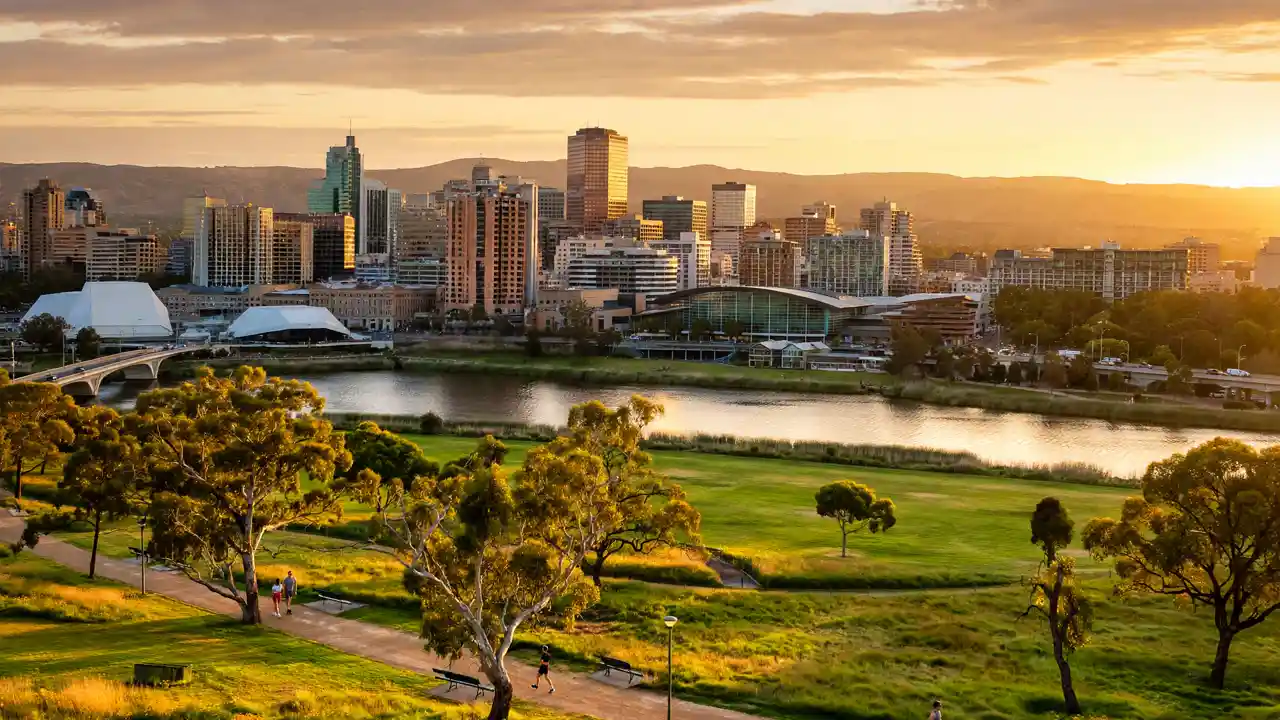
This Adelaide travel guide is for travellers who have heard the rumour — that South Australia’s capital is Australia’s most underrated city break — and want to test it. Adelaide is a “20-minute city”: parklands wrap the centre, the beach at Glenelg is a 25-minute tram ride away, and three world-class wine regions sit within an hour’s drive. Nowhere else in Australia puts this much good wine, good food and coastline this close together.
Adelaide’s pitch is simple: a graceful, affordable city with a festival calendar that punches far above its weight (the Fringe, WOMADelaide, Gather Round), a Central Market that locals treat as a place of worship, and wine regions — Barossa, McLaren Vale, Adelaide Hills, Clare Valley — that produce some of the finest bottles in the country. This guide covers the city highlights first, then the wine regions that are the real reason most visitors come.
Best Time to Visit Adelaide
March to May and September to November are ideal: mild days (20–25°C), vintage season in the wine regions (March–April), and thinner crowds. Summer (December to February) is hot and dry — 35°C+ days are common — but the beaches are at their best. March is festival season: the Adelaide Fringe, WOMADelaide and Adelaide Festival transform the city, but book accommodation months ahead as prices spike.
Winter (June to August) is cool and the cheapest time to visit, with cosy cellar-door fireplaces in the wine regions. Whale watching runs May to October along the Fleurieu Peninsula.
City Highlights
Adelaide Central Market
The beating heart of the city since 1869. The Central Market’s 70+ stalls sell everything from Barossa smallgoods to Kangaroo Island produce, and the surrounding Chinatown and Gouger Street precinct is Adelaide’s restaurant row. Go hungry on a Friday or Saturday morning, graze your way through, and take the free tram back. It is closed Sundays and Mondays — plan around it.
North Terrace Cultural Precinct
Adelaide’s grand boulevard lines up the Art Gallery of South Australia, the South Australian Museum (with the world’s largest Aboriginal cultural collection), the State Library and the Migration Museum — all free to enter. Allow a full morning; the museum’s natural history and Aboriginal galleries alone deserve hours.
Glenelg
Adelaide’s beloved beach suburb, reached by a heritage tram from the city centre in about 25 minutes. Glenelg has a calm, swimmable bay (dolphins cruise past regularly), the Moseley Square dining precinct, and a jetty made for sunset walks. In summer, book a dolphin swim or watch cruise from the marina.
Adelaide Oval and the Riverbank
Even non-sports fans should see Adelaide Oval — regularly voted the world’s most beautiful cricket ground, with its heritage scoreboard and Moreton Bay fig trees. Stadium tours run most days. The adjacent Riverbank precinct and the footbridge to the Oval are lovely at dusk.
Himeji Garden and the Park Lands
Adelaide is ringed by 760 hectares of Park Lands. The Himeji Garden (a Japanese sister-city garden), the Adelaide Botanic Garden with its Palm House and rainforest conservatory, and the Veale Gardens are all free and all worth an hour.
Wine Region 1: Barossa Valley
The Barossa, an hour north-east of Adelaide, is Australia’s most famous wine region — home to the world’s oldest continuously producing Shiraz vines (some planted in the 1840s) and legendary names like Penfolds, Henschke and Seppeltsfield. The valley’s German-settler heritage shows in the villages of Tanunda, Angaston and Nuriootpa, the bakeries, and the butchers.
Cellar-door experiences range from the grand (Seppeltsfield’s Centennial Cellar tasting of your birth-year Tawny) to the intimate (small family producers in the Eden Valley). Tastings typically run A$15–30, often redeemable against purchase. Our Barossa Valley wine tour guide has the full cellar-door shortlist, tour options and a two-day itinerary.
Wine Region 2: McLaren Vale
Just 45 minutes south of the city, McLaren Vale pairs world-class Shiraz and Grenache with a coastline — you can taste wine in the morning and swim at Port Willunga in the afternoon. The region’s showpiece is the d’Arenberg Cube, a five-storey glass cube housing tasting rooms, a restaurant and an art gallery, with views across the vines to the sea (entry around A$20, approximately).
The Shiraz Trail rail-trail runs 8 km through the vineyards from McLaren Vale to Willunga — hire a bike and ride between cellar doors. Willunga’s Saturday farmers’ market is one of the best in the state.
Wine Region 3: Adelaide Hills
Twenty minutes east of the city, the Adelaide Hills is cool-climate country: Sauvignon Blanc, Chardonnay and Pinot Noir, plus the region’s famous German village of Hahndorf — Australia’s oldest surviving German settlement, all pubs, bakeries, smallgoods and craft shops. Combine Hahndorf’s main street with cellar doors at Shaw + Smith, The Lane or Bird in Hand.
The Hills are also home to Cleland Wildlife Park, where you can hand-feed kangaroos and hold a koala in a natural bush setting — many visitors rate it above the city zoos for native-animal encounters.
Wine Region 4: Clare Valley
Two hours north, the Clare Valley is Riesling country — Australia’s benchmark for the variety. The Riesling Trail (35 km of rail trail through the valley) is the classic way to visit: ride or walk between cellar doors at your own pace. It is quieter and cheaper than the Barossa, and the locals like it that way.
Where to Eat in Adelaide
- Gouger Street: Adelaide’s restaurant row — everything from fine dining to late-night dumplings.
- Peel Street and Leigh Street: the small-bar laneways — wine bars pouring local drops, gin bars, hidden restaurants.
- Central Market: breakfast and lunch grazing — the market’s eateries are a destination in themselves.
- Henley Beach Road, Torrensville: the “eat street” of the inner west — multicultural and excellent value.
- Pub classics: order a schnitzel and a Coopers Pale Ale (brewed in Adelaide since 1862) in any front bar.
Adelaide is one of Australia’s most affordable capital cities for dining: A$20–28 buys a great casual lunch, A$35–55 per person a good dinner. The wine lists, obviously, are outstanding and fairly priced.
Where to Stay
The CBD and North Terrace area puts the cultural precinct, Central Market and tram to Glenelg within easy reach. Glenelg itself suits beach-first trips. The Adelaide Hills and Barossa have excellent B&Bs and cottages for wine-focused stays. Expect around A$160–250 per night for a mid-range city hotel in 2026 — noticeably cheaper than Sydney or Melbourne.
Day Trips Beyond Wine
Kangaroo Island is South Australia’s wildlife crown jewel — ferries from Cape Jervis (2 hours from Adelaide) plus the island’s Remarkable Rocks, Admirals Arch and sea lion colonies. It deserves 2–3 days; see our Kangaroo Island travel guide. The Fleurieu Peninsula offers Victor Harbor’s horse-drawn tram, Granite Island penguins and whale watching in season. Hahndorf and the Hills make an easy half-day from the city.
Getting Around
Adelaide’s centre is flat, compact and walkable, with free tram travel within the city centre and to the entertainment precincts. The metroCARD (or contactless) covers buses, trains and trams, including the Glenelg tram. For wine regions, you need a car, a guided tour, or a mix: many visitors self-drive the Barossa and take guided tours in McLaren Vale. Distances are short — nothing in this guide is more than 2 hours from the CBD.
Practical Tips
- Festival season: March accommodation books out — reserve 3–4 months ahead for Fringe/WOMADelaide.
- Market days: the Central Market is closed Sunday and Monday; plan your food pilgrimage accordingly.
- Cellar doors: most close by 5 pm and many smaller ones need bookings on weekends — check ahead.
- Water: Adelaide tap water is safe but famously ordinary-tasting; bottled or filtered is common.
- Sun: South Australian UV is fierce — the wine regions offer little shade in summer.
Adelaide is the wine lover’s capital, full stop. For the deep dive, read our Barossa Valley wine tour guide, and if you are comparing wine weekends, our Hunter Valley weekend guide covers NSW’s premier region. For official events and trip ideas, see southaustralia.com, the official site of the South Australian Tourism Commission.
Adelaide’s Festival Calendar
Adelaide calls itself the Festival State, and March is when it earns the name. The big three run back-to-back:
- Adelaide Fringe (February–March): the Southern Hemisphere’s largest open-access arts festival — 1,500+ shows across comedy, circus, cabaret, theatre and music. The Garden of Unearthly Delights and Gluttony hubs in the East End parklands are the late-night heart.
- WOMADelaide (March): the world-music festival in Botanic Park — 4 days of global sounds under the Moreton Bay figs. Book the moment tickets release.
- Adelaide Festival (March): the curated international arts festival — opera, theatre, dance and visual art.
Through the year: Gather Round (April — the AFL’s festival of footy, all 18 clubs in SA), Tasting Australia (May — the food and drink festival), OzAsia Festival (October–November), and the Christmas Pageant (November). Festival season accommodation books out months ahead — plan accordingly.
Adelaide’s Hidden Gems
- Adelaide Himeji Garden: the Japanese sister-city garden in the South Park Lands — raked gravel, koi pond, perfect autumn colour.
- The Piccadilly: the restored 1940s art-deco cinema in North Adelaide — films, live music, and the famous Piccadilly popcorn.
- Peel Street: the city’s original small-bar laneway — start here for the bar crawl.
- Norwood’s The Parade: the village high-street feel — cafés, pubs, and the Norwood Concert Hall.
- Morialta Conservation Park: 20 minutes north-east — Morialta Falls, gorge walks, and wild koalas (genuinely wild, in the city fringe).
- Port Adelaide: the historic port — the SA Maritime Museum, dolphin cruises (the Port River dolphin sanctuary), and the Fisherman’s Wharf Markets (Sundays).
- Belair National Park: the state’s oldest national park — kangaroos, Old Government House, and bush walks 20 minutes from the CBD.
Adelaide’s Best Free Experiences
Adelaide is generous with free experiences — the budget traveller’s capital:
- North Terrace cultural precinct: the Art Gallery of SA, the SA Museum, the State Library (the Mortlock Wing — the Victorian reading room is breathtaking), the Migration Museum — all free.
- Adelaide Botanic Garden: the Palm House (the 1877 glasshouse), the rainforest conservatory (the Bicentennial Conservatory — the largest single-span glasshouse in the Southern Hemisphere), the First Creek wetlands — all free.
- Glenelg tram: the heritage tram — the ride is cheap (the metro fare), the experience is priceless.
- Adelaide Park Lands: the 760 hectares — cycling, picnics, the River Torrens (the Popeye boats are cheap).
- Henley Beach sunset: the jetty, the square, the fish and chips — the free sunset.
- Central Market: free to browse (the tastings are the breakfast).
- Mount Lofty Botanic Garden: the Hills garden — autumn colour (April–May), rhododendrons (spring), free.
Adelaide Travel FAQs
How many days do you need in Adelaide?
Three to four days is ideal: one to two for the city (Central Market, North Terrace, Glenelg), one for the Barossa Valley, and one for McLaren Vale or the Adelaide Hills. Add two to three more days for Kangaroo Island.
Which wine region near Adelaide is best?
The Barossa Valley is the most famous for Shiraz and heritage; McLaren Vale pairs wine with beaches and the d’Arenberg Cube; the Adelaide Hills offers cool-climate wines and Hahndorf village; the Clare Valley is best for Riesling. All are within two hours of the city.
What is the best month to visit Adelaide?
March to May and September to November offer mild weather and vintage season. March is festival season (Fringe, WOMADelaide) — book early. Summer is hot; winter is cool and cheapest.
Is Adelaide worth visiting?
Yes — Adelaide offers world-class wine regions within an hour, an excellent food and festival scene, beautiful beaches at Glenelg, and easy access to Kangaroo Island, all at lower prices than Sydney or Melbourne.
Do I need a car in Adelaide?
Not for the city centre — it is walkable with free central trams, and the Glenelg tram covers the beach. You will need a car or guided tour for the Barossa, McLaren Vale, Adelaide Hills and Clare Valley wine regions.