
Kangaroo Island Travel Guide 2026
This Kangaroo Island travel guide covers Australia’s third-largest island — 155 km of wildlife, wilderness coastline, and food and wine that rivals the mainland’s best regions. “KI” (as everyone calls it) is where you go to see Australia’s animals behaving like Australia’s animals: kangaroos grazing at dusk, koalas dozing in the manna gums, sea lions hauled out on the sand, and echidnas shuffling through the undergrowth. Add the Remarkable Rocks, Admirals Arch, and a thriving gin-distillery and cellar-door scene, and you have one of the country’s great island escapes.
Kangaroo Island sits 13 km off the South Australian coast, south-west of Adelaide. It is big — 4,400 km², bigger than many visitors expect — and the sights are spread out: plan on 2–3 days minimum, 4 if you want it slow. The island recovered remarkably from the devastating 2019–20 bushfires, and visiting now supports the regeneration story. This guide covers getting there, the wildlife, the sights, where to stay and eat, and what it all costs in 2026.
Getting to Kangaroo Island (2026 Ferry Prices)
SeaLink Ferry from Cape Jervis
The SeaLink ferry runs daily (except Christmas Day) from Cape Jervis — about 2 hours’ drive from Adelaide — to Penneshaw on the island (45-minute crossing). Standard visitor fares in 2026: adult from $49 one-way, child (3–14) from $25.50, and vehicles up to 5 m from $99 one-way (variable pricing applies in peak periods). Return fares are roughly double. Book online in advance — peak-season sailings sell out, and vehicle spots go first.
Flying from Adelaide
QantasLink and Rex fly Adelaide to Kingscote Airport (30 minutes). Flights are pricier than the ferry but save half a day each way. You’ll still need a car on the island — hire cars are available at Kingscote Airport (book ahead; island fleets are small).
Do You Need a Car?
Yes — absolutely. Kangaroo Island has no usable public transport for visitors, and the sights are 50–100 km apart. Bring your car on the ferry (book the vehicle spot early) or hire on the island. Distances: Penneshaw to Flinders Chase is ~110 km (1.5 hours); the island rewards drivers who start early.
The Wildlife: What You’ll See
Seal Bay Conservation Park
The island’s signature wildlife experience: a colony of Australian sea lions hauled out on the beach, viewed on a guided tour (around A$40 per adult, approximately) that takes you onto the sand among them — one of the only places in the world you can do this. Book the first tour of the day for the most active animals.
Flinders Chase National Park
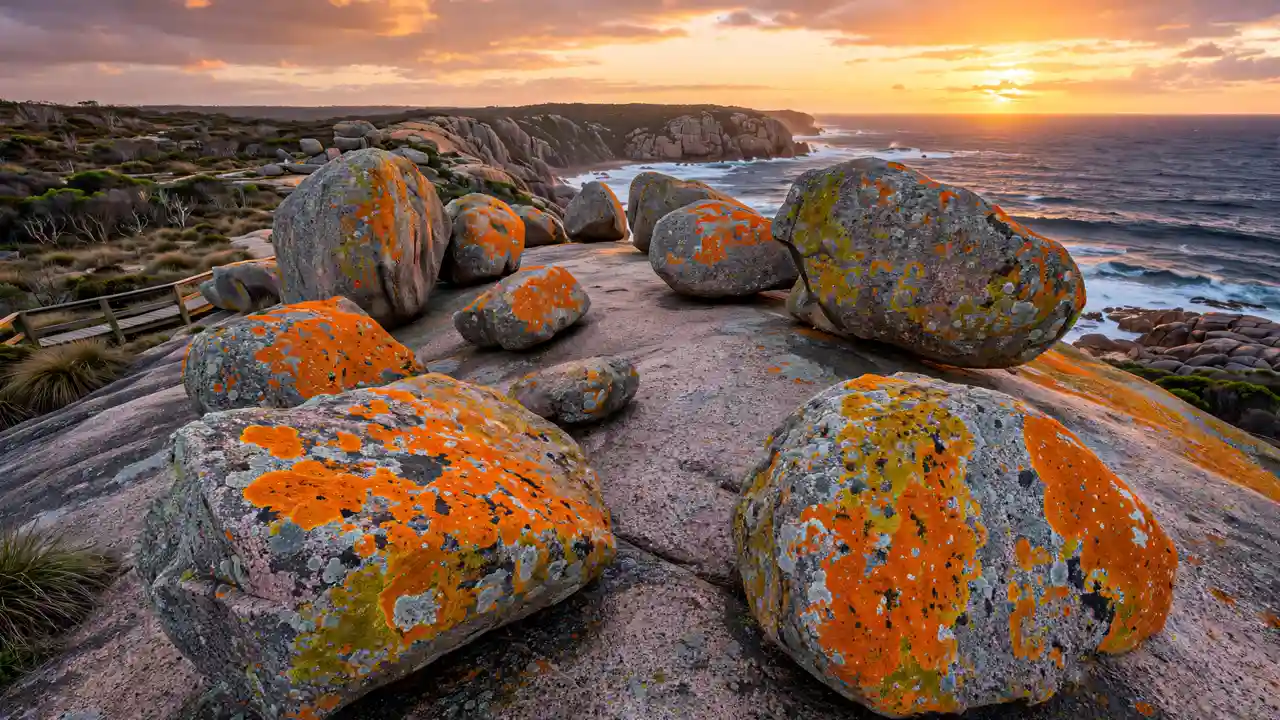
The island’s wild western end: Remarkable Rocks (giant granite boulders sculpted by 500 million years of weather, covered in orange lichen — best at sunrise or sunset), Admirals Arch (a rock arch with a boardwalk through a New Zealand fur seal colony), and the Cape du Couedic lighthouse. Park entry is around A$13 per adult (approximately; check the SA parks site for current fees).
Koalas, Kangaroos and Echidnas
Hanson Bay Wildlife Sanctuary offers guided koala walks (around A$30, approximately) — the island’s koalas are disease-free and famously approachable. Kangaroos graze at dusk along virtually every road (drive carefully). Echidnas are common in the Flinders Chase area. The Kangaroo Island Wildlife Park at Parndana covers everything in one stop, including penguin feeding.
Little Penguins and Birds
Penneshaw’s Penguin Centre runs evening little penguin tours (around A$25, approximately) — the island’s colony comes ashore at dusk. Birders should visit Murray Lagoon and the Duck Lagoon hides for waterbirds and raptors.
The Beaches
- Stokes Bay: the island’s prettiest swim — a hidden rockpool-fringed beach reached through a rock passage. Sheltered and magical.
- Emu Bay: a long, calm, family-friendly beach near Kingscote — you can drive onto the sand (check conditions).
- Vivonne Bay: repeatedly voted among Australia’s best beaches — a huge arc of white sand with good surf.
- Pennington Bay: dramatic surf beach on the south coast — great for experienced surfers, not for swimming.
- Snelling Beach: the north coast’s wild beauty — often deserted.
Food, Wine and Gin
Kangaroo Island’s produce scene is a destination in itself:
- Wineries: Dudley Wines (clifftop views at Penneshaw), Bay of Shoals, The Islander Estate (French-style reds) — tastings from around A$15–20.
- Kangaroo Island Spirits: the island’s pioneering gin distillery — tastings and the famous gin garden.
- Kangaroo Island Brewery: craft beers in Kingscote.
- Emu Ridge Eucalyptus Distillery: the only commercial eucalyptus distillery in SA — tours and tastings.
- Produce: Clifford’s Honey Farm (Ligurian bees — the world’s purest strain), Kangaroo Island Fresh Garlic, Island Pure Sheep Dairy, and the Fairy Penguin-adjacent Oyster leases at American River (book the oyster farm tour).
Where to Stay
Penneshaw (ferry terminal end): convenient for arrival/departure, the Seafront Hotel and B&Bs. Kingscote (the island’s main town): the most dining and services, the Ozone Hotel. American River: quiet, oysters, pelicans. Flinders Chase area: wilderness lodges near the sights (book far ahead). Self-contained cottages across the island suit multi-day stays. Expect A$180–350 per night in 2026; luxury lodges (Southern Ocean Lodge and its peers) run A$1,000+.
Sample 3-Day Itinerary
- Day 1: Ferry to Penneshaw → Dudley Wines → American River oysters → Kingscote → evening penguin tour at Penneshaw.
- Day 2: Seal Bay (morning tour) → Flinders Chase: Remarkable Rocks, Admirals Arch → Vivonne Bay → Hanson Bay koala walk → sunset at Remarkable Rocks.
- Day 3: Stokes Bay swim → Emu Ridge distillery → Clifford’s Honey Farm → Kingscote → ferry home.
What It Costs (2026)
Approximate per-person for 3 days: ferry return ~$100 (adult passenger) or ~$200 with car; accommodation A$200–350/night; car hire (if not bringing your own) A$100–150/day; tours (Seal Bay, koala walk, penguins) ~A$100 total; food A$80–120/day. Budget roughly A$900–1,400 per person for 3 days excluding mainland travel — KI is a premium destination, but the wildlife is unmatched.
Practical Tips
- Book the ferry vehicle spot first — then build the trip around it.
- Drive carefully at dusk/dawn — kangaroos and wallabies are everywhere; collisions are common and dangerous.
- Supplies: Kingscote has a good supermarket; smaller towns have limited options. Stock up on arrival.
- Phone coverage: patchy outside towns — download offline maps.
- Bushfire recovery: much of the west end is regenerating — stay on tracks and respect revegetation areas.
- Seasons: spring (Sep–Nov) for wildflowers and newborn wildlife; summer for beaches; winter for whale watching (southern right whales, May–October).
Kangaroo Island is South Australia’s crown jewel — pair it with our Adelaide travel guide for the full state trip. For island wildlife comparisons, see our Phillip Island guide and Tasmania road trip. For official ferry fares and bookings, see SeaLink’s official fare page.
Flinders Chase Deep Dive: Beyond the Icons
Remarkable Rocks and Admirals Arch get the photos, but Flinders Chase National Park (the island’s 74,000-hectare western wilderness) offers more:
- Cape du Couedic Lighthouse: the 1909 lighthouse — the keepers’ cottages now house luxury accommodation (book far ahead). The clifftop walk to Admirals Arch passes the fur seal colony (thousands of New Zealand fur seals on the rocks below).
- Remarkable Rocks at sunrise: the orange lichen glows in the morning light — arrive by 7 am to have it to yourself. The boardwalk loops the formation; the granite is 500 million years old.
- Snake Lagoon hike: the 4-km return walk through sugar gum forest to a secluded beach — koalas, echidnas, and white-bellied sea eagles.
- Platypus Waterholes: the evening walk (near the park entrance) — platypus at dusk in the permanent waterholes.
- West Bay: the remote beach at the park’s western end — 4WD track, camping, and utter isolation.
The Bushfire Recovery Story
The 2019–20 bushfires burned 211,000 hectares — nearly half the island, including much of Flinders Chase. Visiting now means witnessing regeneration: the Xanthorrhoea (grass trees) resprouting, the wildlife returning, the seedlings pushing through the ash. The Hanson Bay Wildlife Sanctuary (badly burned) has rebuilt its koala walks — the koalas are back. The Raptor Domain (free-flight bird shows) and the Kangaroo Island Wildlife Park both run conservation programs. Your visit directly supports the recovery — the island’s economy is tourism-dependent, and the locals will tell you: come, spend, and see the regrowth.
Kangaroo Island Stargazing
KI has some of Australia’s darkest skies — the western end (Flinders Chase) has zero light pollution. The Milky Way is vivid on moonless nights; the Southern Cross, Magellanic Clouds, and aurora australis (rare, but photographed from the island) are all visible. The Remarkable Rocks under the stars is the shot. No tours needed — just drive west, turn off the headlights, and look up. Winter (June–August) offers the longest nights.
KI’s Best Kept Secrets
- Stokes Bay rockpool: the hidden beach — follow the rock passage (signposted, but easy to miss) to the sheltered cove.
- American River oyster leases: the oyster farm tour (book ahead) — shuck your own in the pelican-filled bay.
- Dudley Peninsula: the eastern end — Cape Willoughby Lighthouse (the 1852 lighthouse, tours available), Porky Beach, and the Dudley Wines clifftop.
- Vivonne Bay General Store: the whiting burgers — the island’s cult food.
- Kelly Hill Caves: the show caves (tours available) — limestone chambers in the island’s south-west.
KI’s Food Trail: The Producer Map
Kangaroo Island’s produce is a destination — the trail:
- Clifford’s Honey Farm (MacGillivray): the Ligurian bees (the world’s purest strain — isolated on KI since 1881) — the honey tastings, the honey ice cream, the live hive viewing.
- Emu Ridge Eucalyptus Distillery (MacGillivray): the only commercial eucalyptus distillery in SA — the tours, the tastings (the eucalyptus oil, the gin).
- Island Pure Sheep Dairy (Parndana): the sheep cheese — the farm tours, the tastings (the halloumi is famous).
- Kangaroo Island Fresh Garlic (Wisanger): the garlic — the black garlic (the umami bomb), the farm shop.
- Kangaroo Island Spirits (Cygnet River): the gin distillery — the tastings, the gin garden (the botanicals grown on-site).
- Dudley Wines (Penneshaw): the clifftop winery — the pizza, the views, the sparkling.
- The Islander Estate (Cygnet River): the French-style reds — the cellar door in the shearing shed.
- Falconer’s: the smokehouse — the smoked meats, the smallgoods.
KI in a Day? The Honest Answer
Day tours from Adelaide (around A$300–400 per person, approximately — ferry, coach, Seal Bay, Remarkable Rocks, lunch) make KI possible in a day — but it’s a long day (5 am–10 pm) and you skim the island. The honest answer: KI deserves 2–3 days. The day trip works if you’re time-poor and the wildlife is the priority (the Seal Bay tour + Remarkable Rocks + Admirals Arch is the core experience). But you’ll miss the beaches, the distilleries, the penguins, and the slow island rhythm. Stay overnight if you possibly can.
Kangaroo Island FAQs
How much is the ferry to Kangaroo Island?
SeaLink’s standard 2026 visitor fares start from $49 one-way per adult and $99 one-way for vehicles up to 5 m (variable pricing in peak periods). Return fares are roughly double. Book vehicle spots well in advance.
How many days do you need on Kangaroo Island?
Two to three days minimum: one for the east (Penneshaw, American River, Kingscote), one for the west (Seal Bay, Flinders Chase, Remarkable Rocks), and a third for beaches, distilleries and a slower pace. Four days is ideal.
Do I need a car on Kangaroo Island?
Yes — absolutely. There is no visitor public transport and sights are 50–100 km apart. Bring your car on the ferry (book the vehicle spot early) or hire one on the island.
What is the best month to visit Kangaroo Island?
September to November offers wildflowers, newborn wildlife and mild weather. December to February is best for beaches. May to October brings southern right whale watching. Winter is quietest and cheapest.
Is Kangaroo Island worth it?
Yes — KI offers Australia’s most accessible wildlife (sea lions, koalas, kangaroos, echidnas, penguins), the Remarkable Rocks and Admirals Arch, excellent produce and gin/wine, and far fewer crowds than mainland equivalents.