
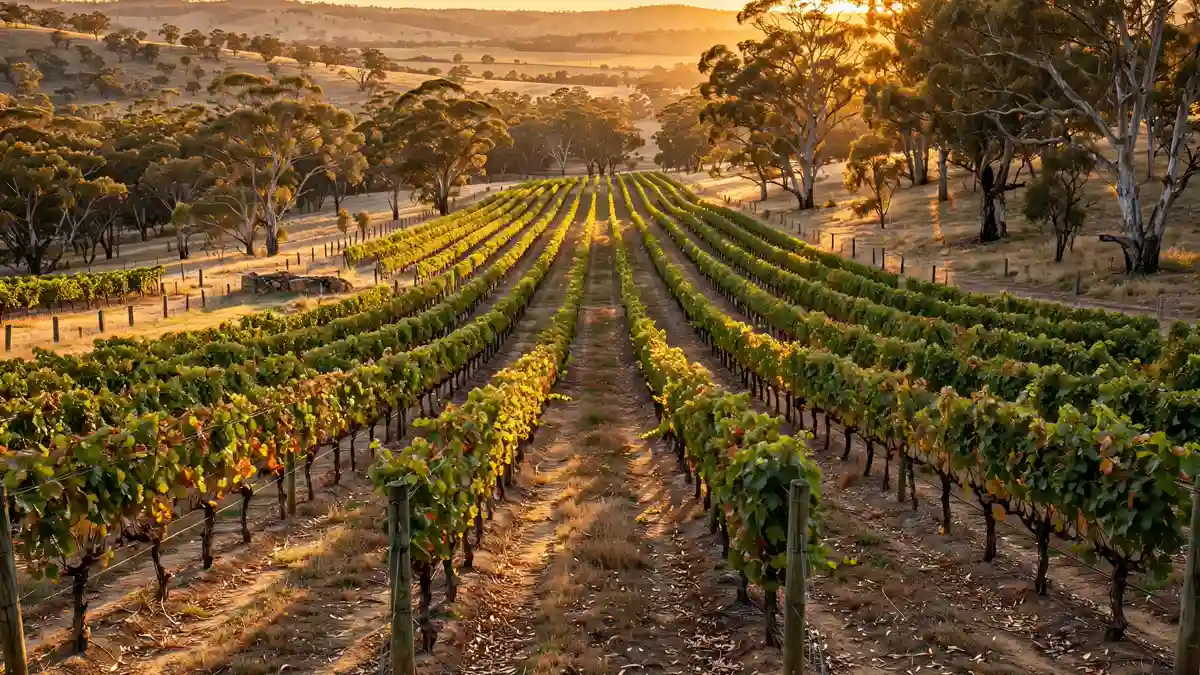
Barossa Valley Wine Tour Guide
This Barossa Valley wine tour guide covers Australia’s most famous wine region — the valley of 150+ wineries, 80+ cellar doors, and some of the oldest Shiraz vines on earth. The Barossa, an hour north-east of Adelaide, is where Australian wine grew up: German settlers planted vines in the 1840s, and their descendants still make the Barossa Shiraz that defines the country’s wine identity. Names like Penfolds Grange, Henschke Hill of Grace and Seppeltsfield were born here. This guide covers the best cellar doors, guided tours vs self-driving, where to eat and stay, costs, and a 2-day itinerary for 2026.
The Barossa is really two valleys: the Barossa Valley floor (Tanunda, Nuriootpa, Angaston — warm-climate Shiraz country) and the Eden Valley (higher, cooler — Riesling and elegant Shiraz). The region’s German heritage shows everywhere: the villages, the bakeries, the butchers, the Lutheran churches. Allow 2 days minimum — one for the valley floor icons, one for Eden Valley and the villages.
Best Time to Visit the Barossa
March–April (vintage) is the most exciting time — harvest in full swing, wineries buzzing, the Barossa Vintage Festival (biennial, next in 2027 — check dates) in full flight. September–November brings spring growth and mild weather. Summer (December–February) is hot — tastings start early and cellar doors close by 5 pm. Winter (June–August) is quiet, cosy (open fires in the cellar doors), and cheapest. Avoid the 40°C+ heatwave days — the valley bakes.
The Icon Cellar Doors
Seppeltsfield
The Barossa’s grand dame (est. 1851): the Centennial Cellar — the world’s only unbroken lineage of Tawny back to 1878 — offers the famous “taste your birth year” Tawny experience (around A$150+ per person, approximately; book ahead). The estate also has the FINO restaurant, galleries, and the JamFactory craft studios. Allow half a day.
Penfolds Barossa (Nuriootpa)
The home of Grange: the “Make Your Own Blend” experience and the Grange tasting are bucket-list wine moments (premium tastings from around A$100–400+, approximately). Book well ahead — the top experiences sell out.
Henschke (Keyneton, Eden Valley)
The Hill of Grace producer: intimate, appointment-only tastings at the historic winery — the “Henschke Family Winemakers” tasting is the connoisseur’s choice. Book weeks ahead.
Jacob’s Creek (Rowland Flat)
The big, beautiful visitor centre — great for first-timers: guided tastings, the picnic grounds on the river, and consistently good wines. The “Jacob’s Table” food-and-wine matching lunch is excellent value.
Smaller Stars
- Rockford Wines (Tanunda): the traditionalist — basket-press reds, no-nonsense cellar door, the Stonewell Shiraz is legendary. Cash-only tastings, old-school charm.
- Charles Melton (Tanunda): “the Barossa’s answer to Châteauneuf” — the Nine Popes Grenache blend is iconic.
- Torbreck (Marananga): the Rhône-style powerhouse — RunRig Shiraz, the stunning new cellar door.
- Grant Burge, Wolf Blass, St Hallett: the big names with polished visitor experiences.
- Eden Valley: Pewsey Vale (Australia’s first Riesling specialist), Hill-Smith Estate/Yalumba (Australia’s oldest family winery), Sons of Eden.
Guided Tour vs Self-Drive
Guided Wine Tours
Full-day guided tours from Adelaide or the Barossa (around A$180–250 per person, approximately) typically include 4–5 wineries, lunch, and a driver — the safe, social, zero-planning option. Small-group tours (max 10–12) are far better than the big coaches — more cellar doors, better access. Private tours (from around A$500+ per couple) suit special occasions and serious collectors.
Self-Drive
The Barossa is easy to self-drive — the villages are 10 minutes apart and the roads are good. Nominate a designated driver (SA’s limit is 0.05, strictly enforced) or use the Barossa’s hop-on hop-off wine bus services. Tastings run A$15–30, often redeemable against purchase. Book the premium experiences (Seppeltsfield birth-year Tawny, Penfolds Grange tasting, Henschke) ahead regardless.
The Villages: Beyond the Cellar Doors
- Tanunda: the German heart — Tanunda Bakery, Ziegenmarkt butchers, the Barossa Regional Gallery, Château Tanunda (the grand 1890s winery).
- Angaston: the prettiest village — Collingrove Homestead, the Barossa Farmers’ Market (Saturday mornings — the region’s produce showcase), Yalumba’s cooperage.
- Nuriootpa: the commercial centre — Penfolds, the Coulthard House, Elderton Wines.
- Greenock and Marananga: the western ridge — Murray Street Vineyards, Torbreck, stunning valley views.
- Williamstown and the Eden Valley: higher, cooler, quieter — Pewsey Vale, Henschke, the Mt Crawford Forest walks.
Where to Eat
- Winery restaurants: FINO at Seppeltsfield, Hentley Farm (the region’s fine-dining star — book months ahead), St Hugo, Jacob’s Table.
- Tanunda: 1918 Bistro & Grill, Tanunda Bakery (the pie pilgrimage), Kalleske-adjacent cafés.
- Angaston: Vintners Bar & Grill (the local institution), Angaston Bakery.
- Produce: Maggie Beer’s Farm Shop (Nuriootpa — the pheasant farm, tastings, the lake) is the Barossa’s most-visited attraction after the wineries. The Barossa Farmers’ Market (Saturday) is essential.
Budget A$25–35 for a café/bakery lunch, A$60–100+ per person for winery restaurant dining. The Barossa Gourmet Weekend (August) is the food event of the year.
Where to Stay
Tanunda: the best base — central, characterful, most dining. Angaston: prettier, quieter. Nuriootpa: practical, more motels. Vineyard cottages and B&Bs: the romantic option — dozens across the valley. Novotel Barossa Valley Resort (Rowland Flat): the big resort with golf. Expect A$180–350 per night in 2026; book ahead for vintage season and festival weekends.
2-Day Itinerary
- Day 1 (Valley Floor): Seppeltsfield (birth-year Tawny, FINO lunch) → Rockford Wines → Charles Melton → Tanunda village (bakery, Château Tanunda) → dinner at 1918 or Hentley Farm.
- Day 2 (Eden Valley): Barossa Farmers’ Market (Saturday) → Henschke (booked tasting) → Pewsey Vale Riesling → Yalumba cooperage → Maggie Beer’s Farm Shop → sunset from Mengler Hill Lookout (the valley panorama).
What It Costs
Approximate per-person for 2 days (2026): accommodation A$180–350/night; tastings A$15–30 each × 6–8 wineries (many redeemable); premium experiences A$100–400 (optional); food A$100–150/day; guided tour A$180–250/day (alternative to self-drive). Budget roughly A$700–1,200 per person for 2 days self-driving, more with premium tastings and fine dining.
Practical Tips
- Book premium tastings ahead — Seppeltsfield birth-year, Penfolds Grange, Henschke all need advance booking.
- Designated driver or tour — non-negotiable. The wine bus services are the flexible middle ground.
- Spit, don’t swallow — professional tasters spit; you’ll taste more wineries and remember them.
- Cellar door hours: most open 10 am–5 pm; many smaller ones need weekend bookings.
- Buy and ship: most wineries ship interstate — don’t lug cases through airports.
The Barossa is the essential Australian wine pilgrimage — pair it with our Adelaide travel guide. For comparisons, see our Hunter Valley guide and Margaret River guide. For official cellar-door listings, see barossa.com.
Barossa Beyond Wine: Food, History and Culture
The Barossa is more than cellar doors. The food: Maggie Beer’s Farm Shop (the pheasant farm — tastings, the lake, the cooking school), Barossa Valley Cheese Company (Angaston — washed-rind heaven), Steiny’s Traditional Mettwurst (Tanunda — the German smallgoods), Ziegenmarkt (the butcher), Tanunda Bakery (the pie pilgrimage). The Barossa Farmers’ Market (Saturday mornings, Angaston — 7 am–11:30 am) is the region’s produce showcase: 80+ stalls, breakfast, coffee, the works.
The history: the Barossa is German-settler country — the Lutheran churches (the Langmeil church, est. 1843), the Herbig Family Tree (the 300-year-old gum that housed a family), the Barossa Museum (Tanunda), and the Château Tanunda (the 1890s bluestone winery — the grandest building in the valley). The Barossa Regional Gallery (Tanunda) shows local art. The Kapunda copper mine (20 minutes west) is Australia’s first commercial mine (1844) — the mine tours are fascinating.
The events: Barossa Vintage Festival (biennial — harvest, parades, long lunches), Barossa Gourmet Weekend (August — food and wine), Barossa Under the Stars (the outdoor cinema), Christmas in the Barossa (the villages go all out).
3-Day Extension: The Clare Valley
With a third day, add the Clare Valley — 1 hour north of the Barossa, Australia’s Riesling capital:
- The Riesling Trail: the 35-km rail trail (Clare to Auburn) — ride or walk between cellar doors. Bike hire in Clare (around A$50/day, approximately). The trail passes wineries, pubs, and wildflower verges (spring).
- The wineries: Grosset (the Polish Hill Riesling — Australia’s benchmark), Jim Barry (the Armoury), Skillogalee (the restaurant in the 1860s cottage), Sevenhill Cellars (the 1851 Jesuit winery — Australia’s first).
- The villages: Clare (the main town — pubs, cafés), Mintaro (the heritage village — Martindale Hall, the Picnic at Hanging Rock mansion), Auburn (the southern gateway — Rising Sun Hotel).
- Stay: Clare B&Bs and vineyard cottages (A$180–300/night). The Clare Valley is quieter and cheaper than the Barossa — the locals like it that way.
Barossa’s Best Kept Secrets
- Mengler Hill Lookout at sunrise: the valley panorama — mist in the valley, hot air balloons rising. The sculpture park is the foreground.
- Kaiserstuhl Conservation Park: the bush walks — wildflowers (spring), kangaroos, valley views. The Wallowa and Stringybark loops.
- Whistler Wines: the straw-bale cellar door — natural wines, the art, the vibe.
- Turkey Flat Vineyards: the 1847 Shiraz vines — among the world’s oldest. The cellar door is unpretentious; the wines are extraordinary.
- Elderton Wines: the Command Shiraz — the homestead tastings are personal and superb.
Barossa’s German Heritage Trail
The Barossa’s German story is everywhere — the trail:
- Langmeil Church (Tanunda): est. 1843 — the oldest Lutheran church (the shingle roof, the graveyard).
- Herbig Family Tree (Springton): the 300-year-old gum — the Herbig family lived in the hollow trunk (1855–1860).
- Barossa Museum (Tanunda): the German settlement story — the artifacts, the photographs, the immigration tales.
- Château Tanunda: the 1890s bluestone winery — the grandest building (the cellar door, the tastings).
- Ziegenmarkt (Tanunda): the butcher — the mettwurst, the bratwurst, the German smallgoods (the tastings).
- South Australian Company history: the Barossa was settled by Silesian Lutherans (1839–1842) — the villages (Bethany, Langmeil, Light Pass) retain the Hufendorf (hoof-village) layout.
- Vintage Festival: the biennial festival — the German oompah bands, the traditional dress, the harvest celebrations.
Barossa’s Best Lunch Spots
- FINO (Seppeltsfield): the destination — the regional tasting menu, the historic setting. Book weeks ahead.
- Hentley Farm: the fine-dining star — the degustation, the vineyard views. Book months ahead.
- St Hugo (Rowland Flat): the winery restaurant — the steak, the Shiraz match.
- Jacob’s Table (Rowland Flat): the food-and-wine matching — excellent value.
- Vintners Bar & Grill (Angaston): the local institution — the pub classics, the Barossa wines.
- Tanunda Bakery: the pie pilgrimage — the pie floater (the SA classic).
- Maggie Beer’s Farm Shop: the grazing lunch — the tastings, the vermouth, the lake.
Barossa Packing Checklist
Pack for the Barossa: comfortable walking shoes (the vineyard walks), layers (the mornings are cool, even in summer), hat and sunscreen (the valley sun is fierce), a cooler bag (the cheese, the smallgoods, the wine), and room in the car (you will buy wine — the wineries ship, but the farmers’ market finds need the boot).
Barossa Valley FAQs
How many days do you need in the Barossa Valley?
Two days minimum: one for the valley-floor icons (Seppeltsfield, Rockford, Tanunda), one for Eden Valley (Henschke, Pewsey Vale, Yalumba) and the villages. Three days allows a slower pace with more cellar doors and the farmers’ market.
Should I take a wine tour or self-drive in the Barossa?
Guided tours (A$180–250/day) are the safe, social, zero-planning option. Self-driving is easy and flexible but requires a designated driver — SA’s 0.05 limit is strictly enforced. Hop-on hop-off wine buses offer a middle ground.
What is the Barossa Valley famous for?
Old-vine Shiraz (some vines planted in the 1840s), icons like Penfolds Grange and Henschke Hill of Grace, Seppeltsfield’s birth-year Tawny, German-settler heritage villages, and Maggie Beer’s Farm Shop.
What is the best month to visit the Barossa?
March–April (vintage/harvest) is the most exciting; September–November offers mild spring weather. Summer is hot; winter is quiet and cosy with open fires in cellar doors. Book ahead for vintage season.
How much does wine tasting cost in the Barossa?
Standard tastings run A$15–30, often redeemable against purchase. Premium experiences (Seppeltsfield birth-year Tawny, Penfolds Grange tasting) run A$100–400+. Budget A$700–1,200 per person for a 2-day self-drive trip.