
Best Snorkelling Spots in Australia
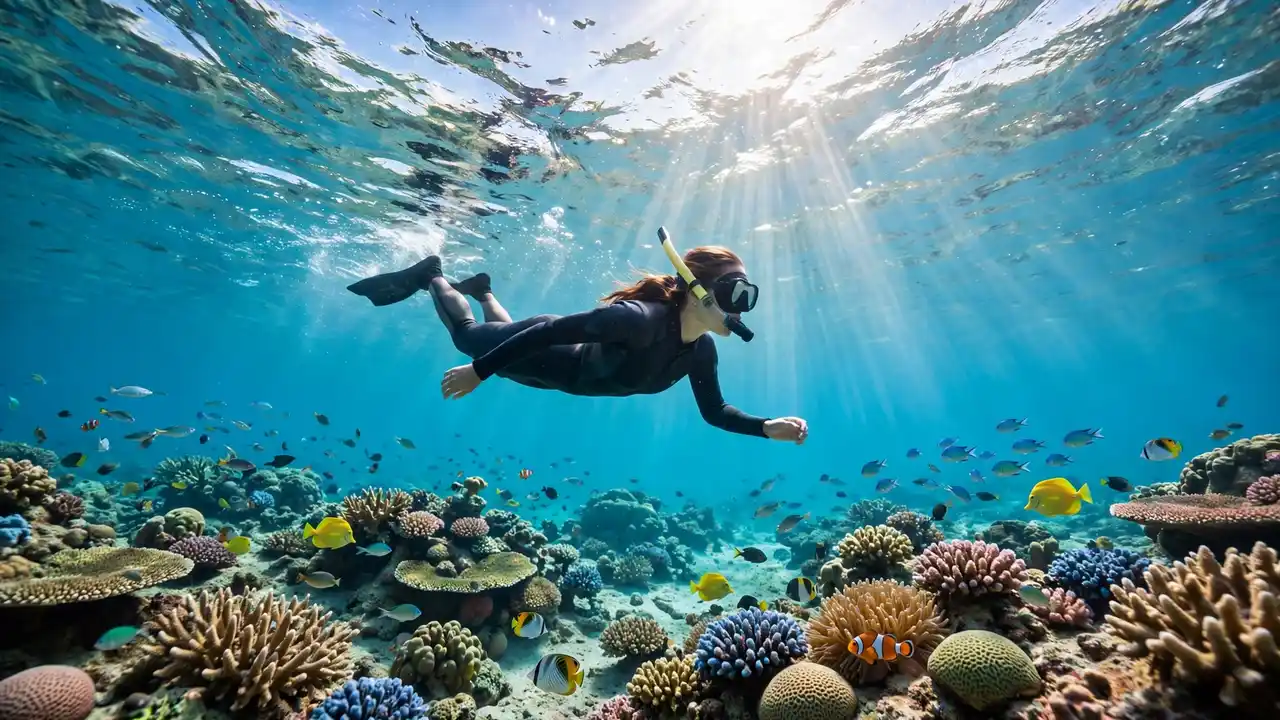
Australia is a snorkelling superpower. Two of the world’s great reef systems — the Great Barrier Reef and Ningaloo — sit off its coast, plus subtropical islands, temperate kelp forests and urban marine reserves where you can snorkel straight off the beach. These are the best snorkelling spots in Australia, from world-famous reefs to local secrets.
We’ve covered reef trips, shore-accessible spots and the practical details (when to go, what you’ll see, how to get there) for each. If you’re planning a dedicated reef holiday, our Great Barrier Reef guide goes deeper on the east coast’s big one.
The Big Two: World-Class Reef Snorkelling
1. Ningaloo Reef, Western Australia
Ningaloo is the snorkeller’s reef. Unlike the Great Barrier Reef, the coral starts metres from the beach — at spots like Turquoise Bay and Oyster Stacks near Exmouth, you simply walk in and drift over coral gardens. From March to July, whale sharks (the world’s largest fish) aggregate here, and snorkelling with them on a licensed tour is one of the great wildlife experiences on the planet. Manta rays are resident year-round, turtles are everywhere, and the reef is in remarkably good condition. For pure ease-of-access snorkelling, nothing in Australia beats it.
2. Outer Great Barrier Reef, Queensland
The Great Barrier Reef needs no introduction — the world’s largest reef system, visible from space, with 1,500 species of fish and 400 types of coral. For snorkelling, the outer reef pontoons and coral cays (from Port Douglas, Cairns or Airlie Beach) offer the best visibility and healthiest coral. Day trips include snorkel gear, and many include a marine biologist guide. The reef has faced serious bleaching events, so choose operators and sites carefully — the outer reef and northern sections are generally in better shape.
Queensland’s Island Snorkelling
3. Lady Elliot Island, Southern Great Barrier Reef
A coral cay at the reef’s southern tip, famous for manta rays (year-round, with peak aggregations in winter), turtles and unspoilt coral. The island is a day trip or overnight stay from Bundaberg or Hervey Bay, and the snorkelling straight off the beach is superb. It’s also one of the best places in Australia to learn to dive.
4. Heron Island, Southern Great Barrier Reef
Another coral cay, smaller and more research-station than resort. The snorkelling off the beach is outstanding — reef sharks, turtles, rays and coral gardens within fin-kicks of the sand. It’s a genuine naturalist’s island, with guided reef walks at low tide.
5. Whitsunday Islands
The fringing reefs around islands like Hayman, Hamilton and the smaller uninhabited cays offer excellent snorkelling, often as part of sailing trips. Combine it with Whitehaven Beach — regularly ranked among the best beaches in Australia — for the ultimate day out.
New South Wales: Temperate Surprises
6. Julian Rocks, Byron Bay
A tiny island two kilometres off Byron Bay where tropical and temperate currents meet, creating an extraordinary mix of marine life: leopard sharks, turtles, manta rays, wobbegongs and clouds of fish. Dive and snorkel boats run from Byron daily, and it’s one of the best-value marine experiences in the country.
7. Shelly Beach, Manly, Sydney
The Cabbage Tree Bay Aquatic Reserve at Shelly Beach is a protected marine reserve with remarkably good snorkelling for a city beach — blue gropers, cuttlefish, rays and 160+ recorded fish species. It’s a 10-minute walk from Manly ferry wharf, free, and perfect for beginners.
8. Gordon’s Bay, Sydney
On the Bondi to Coogee walk, Gordon’s Bay has an underwater nature trail and resident blue gropers. Calm, sheltered and easy — a local favourite.
9. Bushrangers Bay, Shellharbour
South of Wollongong, this aquatic reserve in Bass Point offers clear water, rocky reefs and abundant fish life. It’s less known than the Sydney spots, which means fewer crowds.
South Australia and Victoria: Cool-Water Wonders
10. Rapid Bay Jetty, South Australia
The old jetty pylons at Rapid Bay are encrusted with marine growth and home to the famous leafy seadragon — one of the world’s most extraordinary animals. It’s a shore dive/snorkel on the Fleurieu Peninsula, best in calm conditions. Leafy seadragons are also found at other SA jetties, but Rapid Bay is the classic.
11. Port Phillip Bay, Victoria
Melbourne’s bay hides excellent snorkelling: the Blairgowrie and Portsea piers, Rye Pier (weedy seadragons, seahorses) and the Pope’s Eye marine reserve. Cold water, but a wetsuit fixes that, and the marine life is wonderfully weird.
Tropical Islands Further Afield
12. Lord Howe Island, New South Wales
A two-hour flight from Sydney or Brisbane, Lord Howe is a UNESCO World Heritage island with the world’s southernmost coral reef. Snorkelling at Ned’s Beach (where the fish are hand-fed and fearless) and the lagoon is sublime, and the island caps visitor numbers at 400 — so it never feels crowded. It’s expensive to get to, but it’s the closest thing to a private tropical island in Australia.
When to Snorkel Where
Tropical north (GBR, Whitsundays, Ningaloo)
The dry season (May–October) brings the best visibility and calmest conditions. The wet season (November–April) brings stingers in Queensland — always wear a stinger suit provided by operators, and heed local advice. Ningaloo’s whale shark season runs roughly March–July.
Temperate south (Sydney, Melbourne, Adelaide)
Summer and autumn (December–May) offer the warmest water and best visibility. Winter snorkelling is possible with a good wetsuit (5mm) and brings clearer water and different marine life.
Snorkelling Safety Essentials
Snorkelling is low-risk but not no-risk. Never snorkel alone in remote areas. Check conditions — wind, swell and visibility — before you go. In tropical Queensland and the NT, stinger season (roughly November–May) means stinger suits or enclosed swimming areas; box jellyfish can be lethal. Don’t touch coral or marine life (it’s fragile, and some of it can hurt you). Use reef-safe sunscreen. And if you’re snorkelling from a boat, listen to the briefing — operators know their sites.
What Gear Do You Need?
For casual snorkelling, operators provide mask, snorkel and fins — bring your own if you’re fussy about fit. A rashie or stinger suit adds sun and sting protection. If you’re buying gear, a well-fitting mask matters more than anything else; a leaking mask ruins the experience. Prescription mask inserts exist for glasses wearers. Underwater cameras (even a phone in a waterproof pouch) are worth it at places like Ningaloo — you’ll want proof.
Snorkelling vs Diving: Which Should You Do?
Snorkelling wins for simplicity — no certification, minimal gear, and you see 90% of what divers see in the top 5 metres of a reef. Diving wins for depth: the coral walls, the swim-throughs, the bigger animals that hang deeper. If you’re reef-obsessed, do both: snorkel the shallow gardens, dive the walls. Introductory “resort dives” (no certification needed, instructor-supervised) are offered on most Great Barrier Reef and Ningaloo day trips and are a great taster. But never let anyone tell you snorkelling is the lesser experience — drifting over Turquoise Bay’s coral gardens or Lady Elliot’s manta cleaning stations is as good as underwater gets.
Underwater Photography Tips
Start simple: a phone in a quality waterproof pouch takes surprisingly good snorkel photos in clear, shallow water. For a step up, compact waterproof cameras (Olympus Tough series and similar) handle depth and produce excellent results. Whatever you use: get close (water eats light and colour — within 1–2 metres is ideal), shoot with the sun behind you, and use burst mode for moving fish. Red filters or post-processing restore the colours that water steals. And the golden rule of reef photography: buoyancy and positioning first, camera second — never touch coral to steady yourself for a shot.
Reef Conservation: How Your Visit Helps (or Hurts)
Australia’s reefs face real pressures — marine heatwaves and bleaching on the Great Barrier Reef, coastal development, and crown-of-thorns starfish. As a snorkeller, your choices matter. Choose eco-certified operators who contribute to monitoring and research (the Eye on the Reef program on the GBR, for example). Use reef-safe sunscreen (or better, a stinger suit/rashie instead of sunscreen). Never touch, stand on or feed anything. Take only photos. And consider that reef tourism dollars fund protection — the operators and communities who depend on healthy reefs are among their fiercest defenders. Your visit, done right, is a vote for the reef’s future.
Snorkelling with Kids
Snorkelling is brilliant with kids — with the right setup. Start in calm, shallow spots: Shelly Beach (Manly), the Currumbin Alley shallows, or the lagoon at Lord Howe Island. Full-face snorkel masks (the ones covering eyes and nose) are easier for young kids than traditional mask-and-snorkel combos, though quality varies — buy a reputable brand. Flotation vests or noodles build confidence. Keep sessions short (30–45 minutes), stay in water where they can stand, and make it a game: fish bingo cards, “find the blue groper”, counting species. Many reef operators run family-friendly trips with glass-bottom boats as backup for tired little legs. The single best gift you can give a kid who loves the water is early snorkelling confidence — it lasts a lifetime.
Marine Encounters Calendar
March–July: whale sharks at Ningaloo — the world’s best snorkel-with-giants season. June–September: humpback whales on the east coast (visible from many snorkel sites), dwarf minke whales on Queensland liveaboards. Year-round: manta rays at Ningaloo and Lady Elliot Island, turtles everywhere tropical, leopard sharks at Julian Rocks. November (full moon): coral spawning on the Great Barrier Reef — some operators run special night snorkels. Summer: the warmest water and calmest conditions in the temperate south (Sydney, Melbourne, Adelaide snorkelling peaks December–March).
Night Snorkelling and Unusual Experiences
Once you’ve done the daytime reefs, the unusual snorkelling experiences await. Night snorkelling on the Great Barrier Reef (offered on liveaboards and some pontoons) reveals a different reef: coral polyps feeding, hunting trevally, sleeping turtles and bioluminescence. Snorkelling with whale sharks at Ningaloo (March–July) is the pinnacle — swimming beside a 10-metre filter feeder on a licensed tour. Manta ray snorkelling at Lady Elliot Island and Ningaloo runs year-round. Seal snorkelling at Montague Island (NSW south coast) puts you in the water with playful fur seals. Each of these is a legitimate bucket-list experience — and each is better with a reputable, eco-certified operator.
Snorkelling in the Whitsundays: Sailing and Reef
The Whitsundays deserve special mention for the sailing-snorkelling combination. A 2–3 night sailing trip from Airlie Beach gives you fringing-reef snorkelling at multiple islands, Whitehaven Beach, and nights at anchor — with the reef all to yourself at dawn before the day boats arrive. The fringing reefs around Hook, Hayman and the smaller islands hold turtles, reef sharks and coral gardens that rival the outer reef for snorkelling quality. For many travellers, the Whitsundays sailing trip is the best overall reef holiday in Australia — snorkelling, sailing, beaches and sunsets in one package. See our Great Barrier Reef guide for how to choose.
Frequently Asked Questions
Where is the best snorkelling in Australia?
Ningaloo Reef in Western Australia is the best snorkelling in Australia for most people — the reef is metres from the beach, the coral is in excellent condition, and you can snorkel with whale sharks (Mar–Jul) and manta rays. The outer Great Barrier Reef is the other world-class option, best accessed by day boat from Port Douglas or Cairns.
Can you snorkel the Great Barrier Reef without a tour?
Yes, at fringing-reef locations like Green Island, Fitzroy Island and some Whitsunday beaches, where you can snorkel straight off the beach. But the best Great Barrier Reef snorkelling is on the outer reef, which requires a boat trip — day tours from Cairns, Port Douglas or Airlie Beach.
When is stinger season in Queensland?
Marine stinger season in tropical Queensland runs roughly from November to May. During this time, wear a stinger suit (provided free by most reef operators) and swim in stinger enclosures at mainland beaches. Irukandji and box jellyfish stings can be life-threatening — take the warnings seriously.
Do I need to be a good swimmer to snorkel?
Basic swimming ability and water confidence are enough for guided snorkel tours — you’ll wear a flotation vest or noodle, and guides supervise closely. For independent shore snorkelling, you should be a competent swimmer comfortable in open water.
Learn about reef protection and responsible snorkelling at the Great Barrier Reef Marine Park Authority, the Australian Government agency managing the reef.