
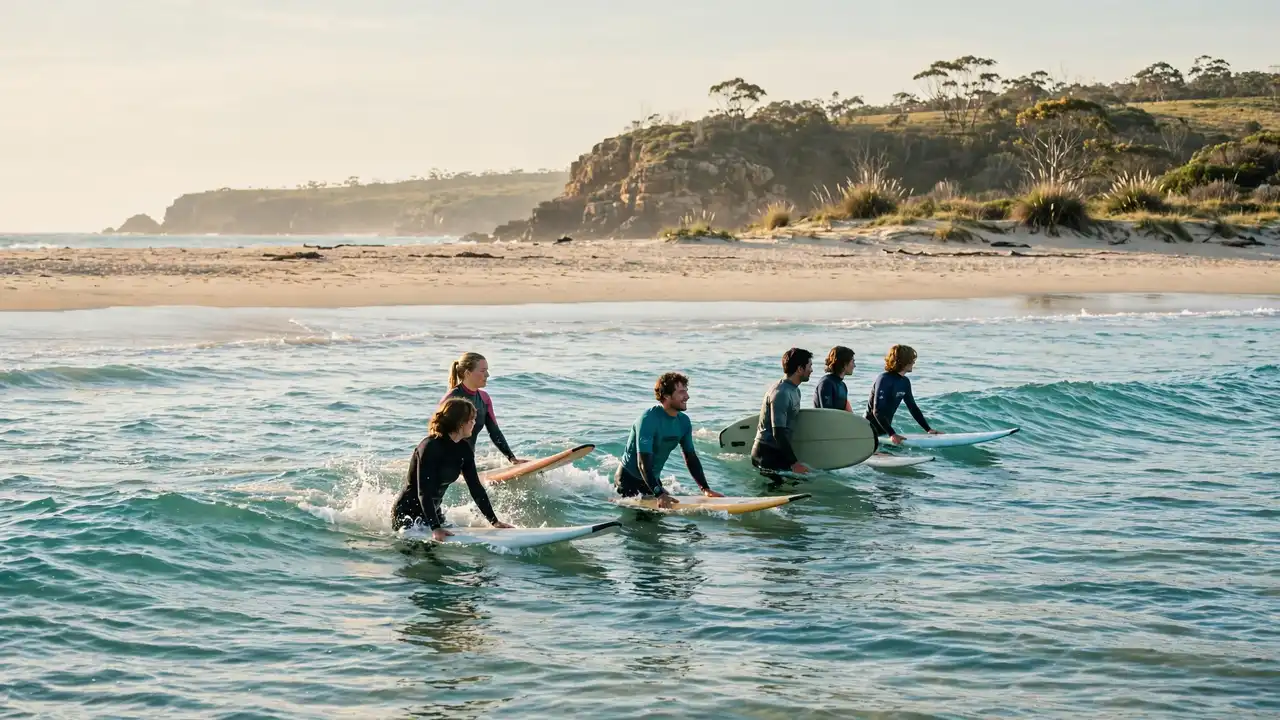
Best Surf Beaches in Australia for Beginners
Australia is one of the best places on Earth to learn to surf — warm water (in the north, at least), thousands of beaches, and a surf-school culture that’s welcoming to total first-timers. The trick is picking the right beach. These are the best surf beaches in Australia for beginners, chosen for gentle, consistent waves, sandy bottoms, surf schools and safe conditions.
A quick note on what makes a beginner beach: slow, crumbly whitewater waves rather than steep, pitching breaks; a sandy bottom with no rocks or reef; manageable crowds; and ideally a surf school on the sand. Every beach on this list ticks those boxes.
New South Wales
1. The Pass, Byron Bay
Byron’s famous longboard wave peels gently across the point in small swell, giving beginners long, mellow rides. It gets crowded — arrive early. Multiple surf schools operate on the beach, and the town’s whole economy basically runs on surf culture.
2. Manly Beach (Queenscliff end), Sydney
The northern end of Manly near Queenscliff offers softer, smaller waves than the main beach, and Manly Surf School has been teaching here for decades. The ferry ride over is a bonus, and the beach is patrolled.
3. Umina Beach, Central Coast
A sheltered, gentle beach break an hour north of Sydney with small, forgiving waves and far fewer crowds than Sydney’s beaches. A local favourite for kids and first-timers.
4. Pambula Beach, Sapphire Coast
Down near the Victorian border, Pambula’s main beach has a mellow beach break and a surf school, with the stunning Ben Boyd National Park as a backdrop. Quieter and cheaper than the big-name spots.
Queensland
5. Noosa Main Beach
Noosa’s north-facing aspect means small, gentle, peeling waves — some of the most beginner-friendly surf in the country, in warm water year-round. Surf schools line the beach, and the national park setting is gorgeous.
6. Currumbin Alley, Gold Coast
The sheltered inside of Currumbin Alley produces soft, rolling waves perfect for learning, while the point proper handles bigger swell for when you progress. Warm water, patrolled beach, great cafés nearby.
7. Burleigh Heads (south end), Gold Coast
While the point is for experienced surfers, the beach break south of the headland offers gentle waves for beginners, with surf schools operating daily. See our best beaches in Australia ranking for why Burleigh makes the top 10.
8. Agnes Water / 1770
Queensland’s northernmost surf beach has a protected, gentle break and a laid-back town with surf schools. It’s a long way from the cities, which means uncrowded line-ups.
Victoria
9. Torquay (Point Impossible / Fishermans Beach), Surf Coast
The start of the Great Ocean Road is also the start of Victoria’s surf coast. Point Impossible’s long, gentle beach break is made for learning, and Torquay’s surf schools are excellent. Bring a wetsuit — the water is cool year-round.
10. Ocean Grove, Bellarine Peninsula
A family-friendly beach with a mellow beach break, surf schools and a patrolled main beach. Less intimidating than the famous Bells Beach down the road (which is for experienced surfers only).
Western Australia
11. Trigg Beach, Perth
Perth’s best learner beach: a soft beach break over sand, surf schools, and a great beachside café strip. The sea breeze picks up in the afternoon, so mornings are best.
12. Middleton Beach, Albany
A sheltered, gentle bay in WA’s south with small waves and a family-friendly vibe. A good option if you’re touring the best road trips in Australia and want a south-coast surf lesson.
What to Expect from a Beginner Surf Lesson
A standard group lesson runs about two hours and costs roughly what you’d pay for a nice dinner — boards and wetsuits (where needed) are included. You’ll start on the sand learning to pop up, then head into the whitewater to catch broken waves to shore. Most people stand up within the first lesson; riding an unbroken green wave takes a few more sessions. Book with an accredited surf school — look for Surfing Australia accreditation, which means qualified instructors and proper safety standards.
Beginner Surf Safety
Surf within your limits and respect the ocean. Key rules: never surf alone as a beginner; stay in the whitewater until you can control your board; always wear a leg rope; learn surf etiquette (the surfer closest to the peak has right of way — as a learner, just stay out of everyone’s way); and check conditions before you go. Avoid river mouths after rain, don’t surf at dawn or dusk in areas with shark activity, and if in doubt, ask the lifeguards. Our beach safety section covers the broader essentials.
Gear: What Beginners Actually Need
For your first dozen sessions, rent — don’t buy. A soft-top foam board (8–9 feet) is the beginner standard: stable, forgiving and safe in crowds. In Queensland and northern NSW, boardshorts or a springsuit suffice most of the year; in Victoria, SA, WA’s south and Tasmania, you’ll want a full wetsuit (3/2mm in summer, 4/3mm in winter). Once you’re hooked and surfing weekly, then consider buying your own foamie — they’re affordable and last for years.
How Long Until You’re Actually Surfing?
Honest answer: most people stand up in lesson one, catch whitewater waves confidently after 3–5 sessions, and start riding small unbroken waves after 10–20 sessions of consistent practice. Progress depends entirely on frequency — one lesson a month won’t do it, but a week of daily sessions at a surf camp will transform you. Surf camps at Byron Bay, Noosa and Torquay offer multi-day packages that fast-track the learning curve.
Surf Etiquette: The Unwritten Rules
Surf line-ups run on etiquette, and beginners who ignore it will cop the locals’ wrath. The core rules: the surfer closest to the breaking peak has right of way — don’t “drop in” on someone else’s wave. Don’t paddle straight through the line-up to the outside; paddle around the break via the channel. As a beginner, stay in the whitewater close to shore, well away from the main peak where experienced surfers sit. Don’t ditch your board — hold onto it, because a loose board is a missile. And never, ever snake (paddle around someone to steal priority). Watch the line-up for 15 minutes before paddling out anywhere new; you’ll learn the pecking order fast.
From Whitewater to Green Waves: Your Progression Path
Here’s the realistic progression. Sessions 1–3: whitewater, popping up and riding straight to shore. Goal: consistent pop-ups and basic balance. Sessions 4–10: catching whitewater waves and beginning to angle across them; learning to turtle-roll or duck-dive through broken waves. Sessions 10–20: paddling out the back, catching small unbroken “green” waves, and learning to trim along the wave face. Beyond: turning, reading waves, and developing style. The jump from whitewater to green waves is the big one — take a lesson specifically for it, and choose a mellow day at a beginner beach. Progression isn’t linear; you’ll have breakthrough sessions and frustrating ones. That’s surfing.
Best Surf Camps for Beginners
If you’re serious about learning, a multi-day surf camp compresses months of trial-and-error into a week. Byron Bay, Noosa, Torquay and the Gold Coast all host well-regarded beginner camps offering 3–7 day packages with accommodation, daily lessons, video analysis and theory sessions. What to look for: Surfing Australia-accredited instructors, small group ratios (1:6 or better), soft-top boards included, and a location with consistent beginner-friendly waves. A week at a good camp will take most people from zero to catching green waves — the single fastest way to learn.
Surfing for Women, Kids and Older Beginners
Surfing is for everyone, and the beginner scene reflects it. Women’s surf programs and girls’ surf clubs run at most major beginner beaches — welcoming, social and excellent instruction. Kids as young as 5–6 can start with lessons in small whitewater (many surf schools run dedicated kids’ programs with extra instructors). And older beginners are common — surfing is low-impact once you’re past the paddling fitness hurdle, and plenty of people start in their 40s, 50s and beyond. The only real prerequisite is water confidence, not age or athleticism.
Best Time of Year to Learn to Surf
Autumn (March–May) is the sweet spot for learning on most of the east coast: consistent small swells, warm water, offshore winds and smaller crowds than summer. Summer brings the warmest water but also the biggest crowds and the most inconsistent conditions (flat spells broken by wind). Winter offers the cleanest, most consistent surf — but cold water in Victoria, SA and southern WA (you’ll need a full wetsuit) and bigger swells that can overwhelm beginners. In Queensland and northern NSW, winter is actually ideal: small, clean waves and warm water. Check the surf forecast (Swellnet, Coastalwatch) before booking lessons — a good school will reschedule if conditions are wrong.
Hiring vs Buying Your First Board
Hire until you’re sure. Most beginner beaches have hire shops renting soft-top foam boards by the hour or day for a modest fee — far cheaper than buying while you’re still deciding if surfing is your thing. When you’re surfing regularly (weekly+) and consistently catching waves, buy your own foamie (8–9 ft soft-top): they’re affordable, durable and hold resale value. Only consider a hard board (minimal or funboard shape) once you’re confidently riding green waves and turning. The classic beginner mistake is buying a shortboard too early — it will slow your progression and frustrate you. Foam is your friend for the first year.
Reading the Surf: A Beginner’s Guide to Conditions
Learning to read conditions will improve your surfing faster than any technique tip. Swell: 1–3 ft is ideal for learning; over 4 ft and most beginner beaches get too powerful. Wind: offshore (blowing from land to sea) grooms the waves clean; onshore wind makes them choppy and messy — mornings are usually calmer. Tide: many beach breaks are best on a rising tide; some go fat and full at high tide. Banks: sandbanks shift constantly — the good bank this month might be gone next month, which is why local knowledge matters. Check the surf cams and forecasts (Swellnet, Coastalwatch) before you go, and when in doubt, ask the surf school — they’d rather reschedule you than teach in junk conditions.
Surf Fitness: Preparing Your Body
Surfing is brutally physical for beginners — paddling uses muscles you didn’t know you had. Prepare with swimming (twice a week for a month before a surf trip makes an enormous difference), push-ups and core work for the pop-up, and shoulder mobility exercises. On the day: warm up on the beach, stay hydrated, and expect your arms to be jelly after 90 minutes — that’s normal. The fitness builds fast: by day three of a surf camp, you’ll paddle twice as long. And the post-surf appetite is legendary — plan a big meal. The fitter you arrive, the more waves you’ll catch, and the faster you’ll progress.
Frequently Asked Questions
What is the best beach in Australia to learn to surf?
Noosa Main Beach in Queensland is arguably the best beginner surf beach in Australia — gentle, consistent small waves, warm water year-round, a sandy bottom and plenty of accredited surf schools. Byron Bay’s The Pass and Currumbin Alley are close contenders.
How much do surf lessons cost in Australia?
Group beginner surf lessons in Australia typically cost around AUD $60–$90 for a two-hour session including board and wetsuit hire. Private lessons cost more. Multi-day surf camp packages offer better value if you’re serious about learning.
Do I need to be a strong swimmer to learn to surf?
You should be comfortable in the water and able to swim, but you don’t need to be a strong swimmer — beginner lessons stay in shallow whitewater where you can stand. That said, basic water confidence and swimming ability are essential for safety.
What size surfboard should a beginner use?
Beginners should learn on a soft-top foam board around 8–9 feet long. The extra length and volume make paddling easier and popping up more stable. Shorter boards are harder to learn on — resist the temptation to start small.
Find accredited surf schools and learn about surf safety standards at Surfing Australia, the sport’s national governing body.