
Bondi to Coogee Coastal Walk: Complete Guide
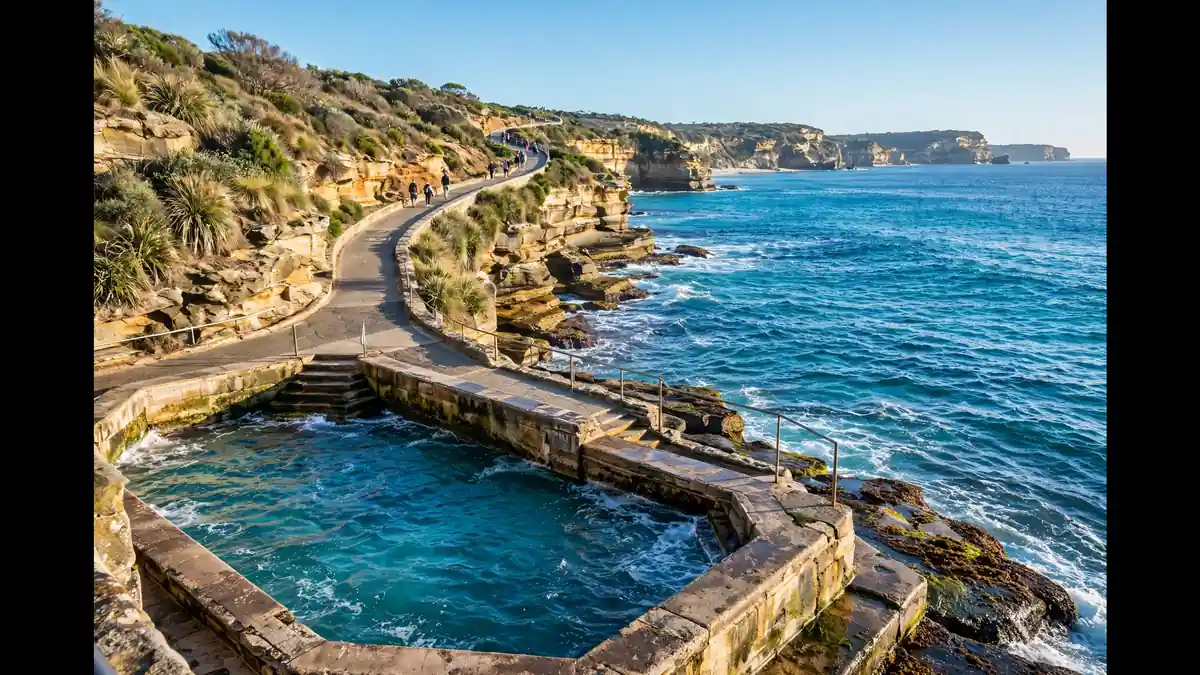
The Bondi to Coogee Coastal Walk is Sydney’s most famous walk — and one of the great urban coastal walks in the world. Six kilometres of clifftop path linking two iconic beaches, past ocean pools, Aboriginal rock carvings, surf breaks and some of the best swimming spots in New South Wales. It’s free, it’s spectacular, and you can do it in a morning.
This guide covers the full route section by section, the best swimming stops, where to eat, practical tips on timing and transport, and the mistakes to avoid. Whether you’re a first-time Sydney visitor or a local who’s somehow never done it properly, here’s everything you need.
The Route at a Glance
The walk runs 6 kilometres from Bondi Beach to Coogee Beach (or vice versa), following the coastline south through Tamarama, Bronte, Clovelly and Gordon’s Bay. The path is mostly paved and well signposted, with some stairs and a few steeper sections around the headlands. Allow 2 to 3 hours at a comfortable pace with photo stops — or a full half-day if you swim along the way, which you should.
You can walk it in either direction. Bondi to Coogee (north to south) is the classic, ending with a swim and lunch at Coogee. Coogee to Bondi works just as well and means the sun is behind you for morning photos. There’s no wrong choice.
Section 1: Bondi Beach to Tamarama (1 km)
Start at the southern end of Bondi Beach, by the Bondi Icebergs pool — the famous ocean pool that’s been photographed a million times. The path climbs immediately onto the headland, and within ten minutes you’re looking back at the full sweep of Bondi with the city skyline behind it. This is the busiest section of the walk, especially on weekend mornings.
The headland between Bondi and Tamarama has some of the walk’s best whale-watching vantage points in season (May to November) — bring binoculars if you’re walking in winter. Tamarama itself is a small, deep, beautiful beach with a surf break that’s best left to experienced surfers. The park above it is a great picnic spot with arguably the best beachfront BBQ facilities in Sydney.
Section 2: Tamarama to Bronte (1 km)
From Tamarama the path dips and climbs around the next headland to Bronte Beach. This section passes Mackenzies Point, a popular whale-watching and sunset spot. Bronte is the walk’s best all-rounder beach: a large ocean pool (free, and less crowded than Icebergs), a patrolled surf beach, a great park with BBQs, and the famous Bronte-to-Tamarama ocean swim route that local swimmers do daily.
Bronte is also where you’ll find the first serious food options on the walk — the cafés along Bronte Road do excellent coffee and brunch. If you’re walking on a Sunday, the Bronte farmers’ market vibe extends informally to the park, with families everywhere.
Section 3: Bronte to Clovelly (1.5 km)
The longest and wildest-feeling section. The path leaves the suburbs behind and follows dramatic sandstone cliffs past the historic Waverley Cemetery — one of the most beautiful cemeteries in the world, with Victorian monuments overlooking the Pacific. It’s worth slowing down here; the ocean views from the cemetery’s clifftop edge are extraordinary.
Continuing south, the path passes through native coastal vegetation with occasional glimpses of secluded coves below. This is the section where the walk feels most like a proper coastal hike rather than an urban promenade. Watch for the Aboriginal rock engravings near the path in places — these are culturally significant sites, so look respectfully and don’t touch.
Section 4: Clovelly to Gordon’s Bay (1 km)
Clovelly Beach is a narrow, calm bay — essentially a long ocean pool — that’s perfect for a sheltered swim. The concrete platforms on either side are packed with locals on summer weekends. Just south is Gordon’s Bay, a tiny, gorgeous cove that’s one of Sydney’s best snorkelling spots, with an underwater nature trail marked by plaques on the seafloor.
The walk between Clovelly and Coogee passes the Dunningham Reserve and more clifftop lookouts. This stretch is quieter than the northern sections and has a lovely neighbourhood feel.
Section 5: Gordon’s Bay to Coogee (1.5 km)
The final stretch rounds the headland into Coogee Beach — a wide, family-friendly curve of sand with a patrolled beach, ocean pools at both ends, and a buzzing café strip. You’ve earned the swim. The Coogee Pavilion and the cafés along Arden Street are the traditional end-of-walk reward: fish and chips, a cold drink, and a table with an ocean view.
Best Swimming Spots on the Walk
Bondi Icebergs Pool
The iconic 50-metre ocean pool at Bondi’s southern end. Entry costs a few dollars for visitors (locals swim on membership), and swimming laps with waves crashing over the edge is a genuine bucket-list experience. Go early to avoid crowds.
Bronte Ocean Pool
Free, large, and right on the walk. The Bogey Hole (a natural rock pool at the southern end of Bronte) is the locals’ secret — ask someone to point you to it.
Clovelly Bay
Calm, sheltered, and perfect for a relaxed float. The concrete sunbaking platforms are a Sydney institution.
Gordon’s Bay
The snorkelling pick. Bring goggles — the underwater trail and the marine life (including the resident blue groper) are excellent on a calm day.
Wylie’s Baths and McIvers Baths, Coogee
Two historic ocean pools at Coogee’s southern end. McIvers is one of Australia’s last women-only ocean pools (with specific mixed sessions), and Wylie’s has stunning Art Deco architecture. Both are worth the small entry fee.
Where to Eat and Drink
You won’t go hungry. Bondi’s Campbell Parade and Hall Street have endless options for pre-walk fuel — the brunch scene here is world-class. At Tamarama, the kiosk does good coffee. Bronte’s cafés are excellent for a mid-walk stop. Clovelly has the beloved Clovelly Hotel for a schooner with ocean views. And Coogee at the finish has everything from fish and chips to the Coogee Pavilion’s sprawling dining. Our advice: eat light at the start, save the real meal for Coogee.
When to Do the Walk
Best time of day
Early morning is unbeatable — sunrise over the Pacific, fewer crowds, and the light on the cliffs is gorgeous. By 10 am on weekends, the Bondi–Bronte sections get genuinely busy. Late afternoon is lovely too, though you’ll be walking into the sun heading south.
Best time of year
The walk is great year-round, but autumn (March–May) and spring (September–November) offer the best combination of mild weather and smaller crowds. Summer is perfect for swimming but hot and busy. Winter brings whale watching (May–November) and dramatic seas — just bring a jacket. For more on whale season, see our whale watching in Australia guide.
Sculpture by the Sea
Each spring (usually October–November), the Bondi to Tamarama section hosts Sculpture by the Sea, the world’s largest free outdoor sculpture exhibition, with 100+ artworks along the cliffs. It’s spectacular — and extremely crowded. Go on a weekday morning if you can.
Practical Tips
Getting there and back
Bondi is reachable by bus from Bondi Junction station (trains from the city). Coogee has buses to the city and Bondi Junction. The classic logistics: bus/train to Bondi, walk to Coogee, bus back. There’s no need for a car — parking at Bondi on weekends is famously miserable.
What to bring
Sunscreen (non-negotiable — reapply), a hat, water (there are refill stations and bubblers along the route, but carry a bottle), swimmers and a towel, and decent walking shoes — the path is paved but there are stairs and uneven sections. Thongs are doable but not ideal.
Fitness and accessibility
The walk is moderate — anyone with reasonable fitness can do it. There are stairs at several headlands, and the Bronte–Clovelly section has the most ups and downs. Parts are wheelchair accessible (Bondi to Tamarama has accessible sections), but the full route isn’t. Take your time; there are benches and lookouts everywhere.
Safety
Stay on the marked path — the cliff edges are unfenced in places and people have died falling. Don’t swim at unpatrolled beaches in big surf. And in summer, the UV is extreme even on cloudy days: the beach safety advice in our best beaches guide applies here too.
Extending Your Eastern Suburbs Day
Done the walk and want more? The coastal path continues south from Coogee to Maroubra (about 4 km further) through Lurline Bay and the Malabar headland — quieter and wilder. Or head north from Bondi to Watsons Bay via the South Head Heritage Trail for harbour views and the Gap’s dramatic cliffs. And if the walk has given you the hiking bug, our 20 best hikes in Australia has bigger challenges waiting.
The Walk’s History
The Bondi to Coogee walk follows one of the oldest songlines in the Sydney region — the coastal path used by the Bidjigal and Gadigal peoples for thousands of years. The rock engravings visible near the path (whales, fish, ancestral figures) are part of a rich cultural landscape; the walk’s interpretive signage shares some of this history, and it’s worth reading rather than rushing past.
European history is layered on top: Waverley Cemetery (1877) with its Victorian monuments, the Inter-Denominational War Memorial, the historic ocean pools (Wylie’s Baths dates to 1907, McIvers to the 1880s), and the Clovelly and Bronte surf lifesaving clubs — among the oldest in the world. The walk you do today was formalised in stages through the 20th century, but people have been walking this coastline for millennia.
Doing the Walk with Kids
The Bondi to Coogee walk is very doable with kids — with caveats. The full 6 km is a lot for under-8s; consider walking Bondi to Bronte (2 km) with its playgrounds, pool and park, then catching the bus. The stairs at several headlands need care with prams — a carrier is easier than a stroller for the full walk. Plan swim stops as bribes (Bronte Pool and Clovelly are kid-magnets), pack snacks, and start early before the heat. The rockpools at the beaches (especially Bronte’s Bogey Hole at low tide) will entertain kids for an hour.
Photography: Best Spots on the Walk
The classic shots: Bondi Icebergs with the beach behind (best in morning light), the Tamarama headland looking back at Bondi, Mackenzies Point at sunset, the Waverley Cemetery’s monuments against the ocean, and the Coogee headland looking north. For whale season (May–November), the headlands between Bondi and Bronte are the prime vantage points — a telephoto lens helps, but breaching whales are visible to the naked eye. Sunrise from the Bondi end is the single best photo opportunity on the walk.
Frequently Asked Questions
How long is the Bondi to Coogee walk?
The Bondi to Coogee Coastal Walk is 6 kilometres one way. Most people take 2–3 hours at a comfortable pace with photo stops, or allow a half-day if you plan to swim and eat along the way.
Is the Bondi to Coogee walk difficult?
No — it’s a moderate, mostly paved walk suitable for anyone with reasonable fitness. There are some stairs and hills around the headlands, particularly between Bronte and Clovelly, but there are plenty of benches and the pace is entirely up to you.
Can you swim on the Bondi to Coogee walk?
Absolutely — swimming is half the point. Bondi Icebergs, Bronte Pool, Clovelly Bay, Gordon’s Bay and the Coogee ocean pools are all on the route. Bring swimmers, a towel and sunscreen, and swim at patrolled beaches or ocean pools.
What is the best time to do the Bondi to Coogee walk?
Early morning is best — sunrise over the ocean, fewer crowds, beautiful light. Autumn and spring offer the most comfortable weather. Whale watching season (May–November) adds a bonus, and Sculpture by the Sea (Oct–Nov) turns the northern section into an open-air gallery.
For official track information, closures and safety alerts, visit the Waverley Council website, which maintains the Bondi to Coogee walk.