
Whale Watching in Australia: Best Spots & Seasons
Every year, tens of thousands of whales migrate along Australia’s coasts — humpbacks travelling 10,000 kilometres from Antarctica to the tropics and back, southern right whales calving in sheltered bays, and orcas hunting off the south coast. Whale watching in Australia best spots are world-class, and with the right timing you can see them from a headland, a boat, or even the beach.
This guide covers the best whale watching spots on each coast, the seasons for each species, land-based vs boat viewing, and how to choose a responsible tour.
The Whales You’ll See
Humpback whales
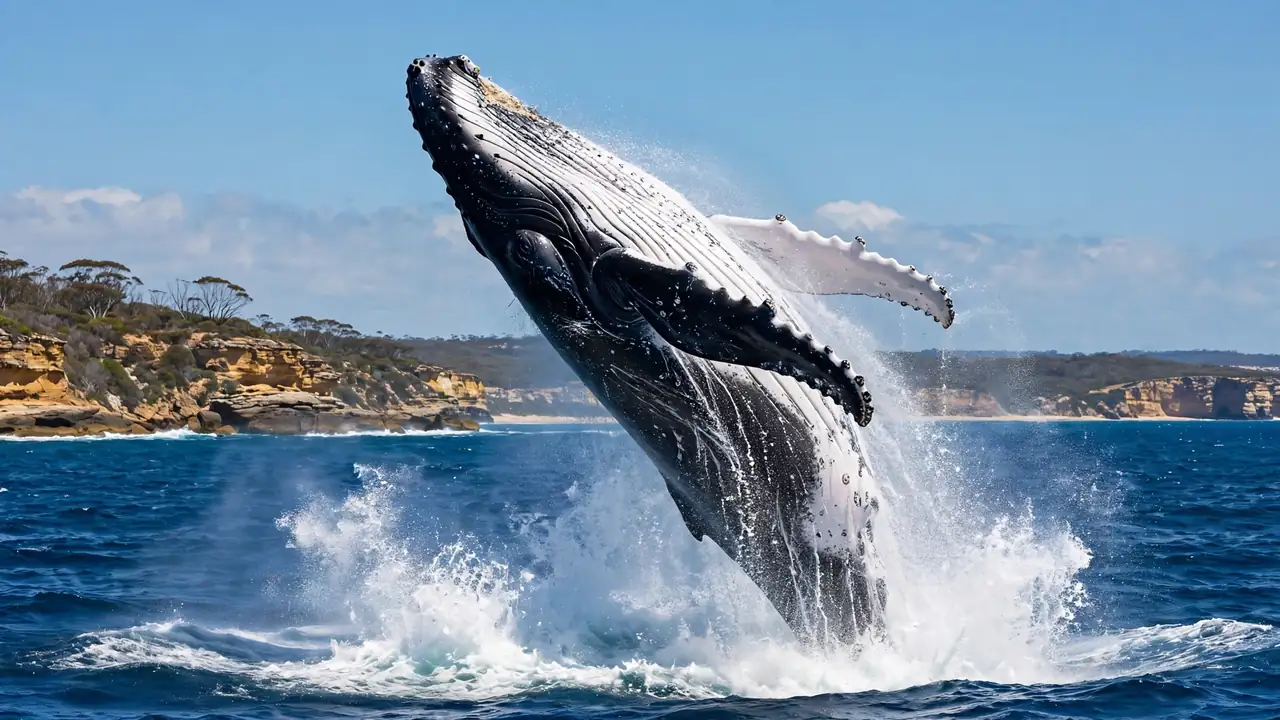
The stars of Australian whale watching. Around 40,000+ humpbacks migrate along the east coast each year (one of the world’s great wildlife migrations), and a separate population travels the west coast. They’re acrobatic — breaching, tail-slapping, pectoral waving — and curious, often approaching boats. Best months: June–November (peak July–September).
Southern right whales
Stockier and slower than humpbacks, southern rights come close to shore to calve — making them the best land-based viewing species. Best spots: Head of the Bight (SA), Warrnambool/Logan’s Beach (Victoria), and the NSW south coast. Season: roughly June–October.
Orcas (killer whales)
Australia’s only reliable orca aggregation hunts in the Bremer Canyon off Bremer Bay, WA, from January to April — one of the few places in the world to see orcas predictably. This is expedition whale watching: full-day boat trips 50 km offshore.
Others
Dwarf minke whales (liveaboard trips from Port Douglas, June–July), blue whales (occasional, off Portland Victoria and Perth Canyon), and pilot whales and dolphins as bonuses on most tours.
East Coast: Best Whale Watching Spots
Hervey Bay, Queensland
The whale watching capital of Australia’s east coast. Humpbacks stop in the calm, sheltered waters between the mainland and K’gari (Fraser Island) to rest and play with their calves on the southern migration (roughly July–November). The whales here are famously interactive — mugging boats, spy-hopping alongside. Full-day and half-day tours from Hervey Bay and Urangan.
Sydney headlands, NSW
The humpback highway passes right past Sydney — North Head, South Head, Cape Solander (in Kamay Botany Bay National Park, one of the best land-based spots in NSW) and the Bondi to Coogee walk all offer superb viewing May–November. The national parks service runs volunteer whale counts at Cape Solander in peak season.
Byron Bay, NSW
The Cape Byron lighthouse is Australia’s easternmost point — and a prime whale-watching platform. Humpbacks pass close to the cape on both migrations; the elevated position means you can spot blows kilometres away. May–November.
Eden and the Sapphire Coast, NSW
Eden was a whaling town; now it’s a whale-watching town. The Killer Whale Museum (named for the famous orca “Old Tom” who cooperated with whalers) tells the extraordinary history, and the headlands offer excellent viewing. Southern rights and humpbacks, September–November peak.
Warrnambool (Logan’s Beach), Victoria
Southern right whales calve right off the beach at Logan’s Beach — sometimes within 100 metres of shore. The viewing platform is free, and the season (June–October) is reliable. One of the best land-based southern right experiences in the country.
West Coast: Best Whale Watching Spots
Augusta and Dunsborough, WA
The south-west corner is where humpbacks and southern rights converge — Augusta (where the Indian and Southern Oceans meet) offers tours from May, and the sheltered Geographe Bay near Dunsborough/Busselton is a resting area for mothers and calves (September–December). The Cape Naturaliste lighthouse is excellent for land-based spotting.
Albany, WA
Another former whaling town turned whale haven — the Historic Whaling Station at Discovery Bay tells the story, and King George Sound hosts humpbacks and southern rights June–October. The Torndirrup National Park lookouts are prime land-based spots.
Head of the Bight, SA
The Nullarbor’s whale capital — up to 100 southern right whales gather in the sheltered bight to calve each winter. The clifftop viewing platform (entry fee) puts you above them. Combine with the Nullarbor crossing for the ultimate road trip detour. Season: June–October, peak July–September.
Bremer Bay, WA (orcas)
January–April, the Bremer Canyon hosts the largest known aggregation of orcas in the Southern Hemisphere. Full-day expeditions from Bremer Bay — expensive, remote, and utterly extraordinary. Book well ahead; the season is short and boats are small.
Land-Based vs Boat Whale Watching
Land-based
Free, flexible, and often excellent — elevated headlands with a wide ocean view are ideal. Bring binoculars, look for the “blow” (the misty spout, visible kilometres away), and be patient: whales surface in patterns, and a pod may be visible for 20 minutes then gone. Best land spots: Cape Solander (Sydney), Cape Byron, Logan’s Beach (Warrnambool), Head of the Bight, Cape Naturaliste (WA).
Boat tours
Boats get you close — Australian regulations require vessels to stay 100 m from whales (300 m if calves are present), but curious humpbacks often close the distance themselves. Choose tours with naturalist guides, small passenger numbers, and eco-certification. Morning tours usually have calmer seas. If you’re prone to seasickness, take tablets before boarding — open-ocean swells are no joke.
When to Go: The Whale Calendar
May–June: northern migration begins; first humpbacks pass Sydney, Byron, Perth’s south-west. July–September: peak season on both coasts — humpbacks everywhere, southern rights calving. October–November: southern migration with calves; Hervey Bay’s famous resting whales; Geographe Bay mothers and calves. January–April: orca season at Bremer Bay. There is genuinely no month without some whale action somewhere in Australia.
Tips for the Best Experience
Book morning tours for calmer seas. Bring layers — it’s cold on the water even in warm months. Polarised sunglasses cut glare and make spotting blows easier. A camera with zoom is nice, but don’t watch the whole thing through a lens. And manage expectations: whales are wild animals, not performers — but in peak season at the top spots, sightings are as close to guaranteed as wildlife gets.
Responsible Whale Watching
Choose operators accredited under Australian whale-watching guidelines (approach distances, no chasing, engines in neutral near whales). Never attempt to swim with whales except on licensed tours where it’s specifically permitted (dwarf minke swim programs in Queensland). Support the towns that protect whales — the whaling-to-watching transformation of places like Eden and Albany is one of Australian tourism’s best stories.
Whale Species ID: What Am I Looking At?
Humpback: the acrobat — breaching, tail-slapping, long pectoral fins (up to 5 m). Bushy blow, 3 m high. The one doing the spectacular stuff. Southern right: stocky, no dorsal fin, distinctive white callosities (rough patches) on the head. V-shaped blow. The one very close to shore in bays. Orca: unmistakable — black and white, tall dorsal fin (males up to 1.8 m). The one hunting in a pod. Dwarf minke: smaller (5–7 m), curious, often approaches swimmers on licensed tours. Blue whale: enormous (up to 30 m), mottled blue-grey, tall columnar blow — if you see one, you’ll know. Dolphins are the small ones riding the bow wave; pilot whales are the all-black ones with bulbous heads.
Whale Festivals and Events
Whale season brings festivals: the Eden Whale Festival (NSW, usually October–November) celebrates the town’s whaling-to-watching story with parades, markets and the famous whale history. Hervey Bay’s whale season (July–November) includes the Paddle Out for Whales and season-opening celebrations. Albany’s whale season events mark the southern rights’ return. These community celebrations are worth timing a trip around — the towns go all in, and the whale talk (from researchers and former whalers) is fascinating.
Photographing Whales
Whale photography rewards patience and preparation. From land: a telephoto lens (200mm+) and a tripod; watch for the blow, then track the area — whales surface in patterns. From boats: a fast shutter speed (1/1000+), continuous shooting mode, and polarising filter to cut glare. The classic breach shot is luck as much as skill — keep shooting. But the deeper advice: put the camera down for at least part of the encounter. Watching a 40-tonne humpback breach 50 metres away is one of the great experiences of a lifetime — don’t experience all of it through a viewfinder.
Swimming with Whales: The Minke Exception
Australia generally prohibits swimming with whales — with one remarkable exception. From June to July, dwarf minke whales aggregate in the Ribbon Reefs off Port Douglas, and a handful of licensed liveaboard operators run swim-with-minke-whales expeditions under strict permits. The minkes are famously curious, often approaching swimmers and maintaining eye contact. It’s one of the world’s great wildlife encounters — expensive, limited to a short season, and worth every cent. Book a year ahead; there are only a few licensed operators and they sell out.
Dolphin Encounters Around Australia
Not whales, but worth including: Monkey Mia, WA — the famous wild dolphin feeding (carefully managed by rangers, one of the world’s longest-running wildlife interactions). Jervis Bay, NSW — dolphin-watching cruises in the bay’s clear water, with pods resident year-round. Port Stephens, NSW — the “dolphin capital”, with bottlenose dolphins on virtually every cruise. Glenelg, SA — swim-with-dolphin tours in Adelaide’s backyard. Wild dolphins are protected; choose operators that follow the approach regulations and never feed them yourself.
The Great Australian Bight: Whales from the Cliffs
The Head of the Bight deserves a deeper look — it’s one of the world’s great land-based whale experiences. Each winter, 60–100 southern right whales gather in the sheltered waters below the 60-metre Bunda Cliffs to mate and calve. The viewing platform (accessed via the Nullarbor Roadhouse area, entry fee applies) puts you directly above them — mothers and calves so close you can hear them breathe. The platform’s telescopes, the interpretive centre, and the sheer drama of the cliffs make it a half-day stop minimum. Combine it with the Nullarbor crossing — it’s the single best detour on the Eyre Highway, and the whales are there June to October, peaking July–September.
Whale Watching from the Air
A few operators offer whale-watching scenic flights — and the aerial perspective is extraordinary. From above, you see what boats can’t: the full body of the whale, the calf tucked alongside, the white water of a breach, and pods spread across kilometres of ocean. Flights operate from Sydney, Byron Bay and Hervey Bay in season (and year-round for the coastal scenery). It’s pricier than a boat trip, but for photographers and anyone who’s done the boat version, the aerial view is a revelation. Combine it with a reef scenic flight in Queensland for the ultimate marine aerial double.
Winter Whale Watching: The Southern Rights
While humpbacks get the fame, winter (June–August) belongs to the southern rights — and they’re the better land-based experience. Unlike the migratory humpbacks, southern rights come in close to calve and stay for weeks, giving you repeat viewing from the same headland. Logan’s Beach (Warrnambool), the Head of the Bight, and Fowlers Bay (SA) are the strongholds; the whales are often within 100 metres of shore. Winter seas can be rough for boats, which is another reason the cliff-top viewing platforms shine — rug up, bring a thermos, and watch the giants nurse their calves in the bay below.
Frequently Asked Questions
What is the best place for whale watching in Australia?
Hervey Bay in Queensland is Australia’s whale watching capital — humpbacks rest and play in the sheltered bay (Jul–Nov) with famously close encounters. For land-based viewing, the Head of the Bight (SA) and Logan’s Beach, Warrnambool (VIC) are outstanding for southern right whales.
When is whale season in Australia?
Peak whale watching season is June to November on both coasts, when humpbacks migrate north to breed and south with calves. Southern right whales calve June–October. Orcas aggregate off Bremer Bay, WA, from January to April.
Can you see whales from land in Australia?
Yes — Australia has superb land-based whale watching. Cape Solander (Sydney), Cape Byron, Logan’s Beach (Warrnambool), Head of the Bight (SA) and Cape Naturaliste (WA) all offer excellent elevated viewing. Bring binoculars and look for blows.
How close do whale watching boats get to whales?
Australian regulations require boats to stay at least 100 metres from whales (300 m when calves are present). In practice, curious humpbacks — especially at Hervey Bay — often approach boats themselves, creating unforgettable close encounters.
Learn about whale conservation and responsible viewing at the Australian Government’s whale conservation pages.