
Wildlife Spotting in Australia: Where to See Kangaroos, Koalas & More
Australia’s wildlife is like nothing else on Earth — 80% of its mammals are found nowhere else. But the animals don’t pose for tourists on cue; seeing them in the wild takes knowing where, when and how to look. This guide to wildlife spotting in Australia covers the best places to see kangaroos, koalas, wombats, platypus, quokkas, echidnas and more — in the wild, not in a zoo.
The golden rules of Australian wildlife watching: dawn and dusk are prime time (most mammals are crepuscular or nocturnal), be quiet and patient, never feed wild animals, and keep a respectful distance — these are wild animals, not attractions. And manage your expectations with the shy ones: the platypus, the quoll, the numbat — the animals that make you work for the sighting are the ones you’ll remember forever. The easy sightings (kangaroos at dusk, lorikeets at breakfast) are the warm-up; the hard ones are the story.
Kangaroos: Where to See Them in the Wild
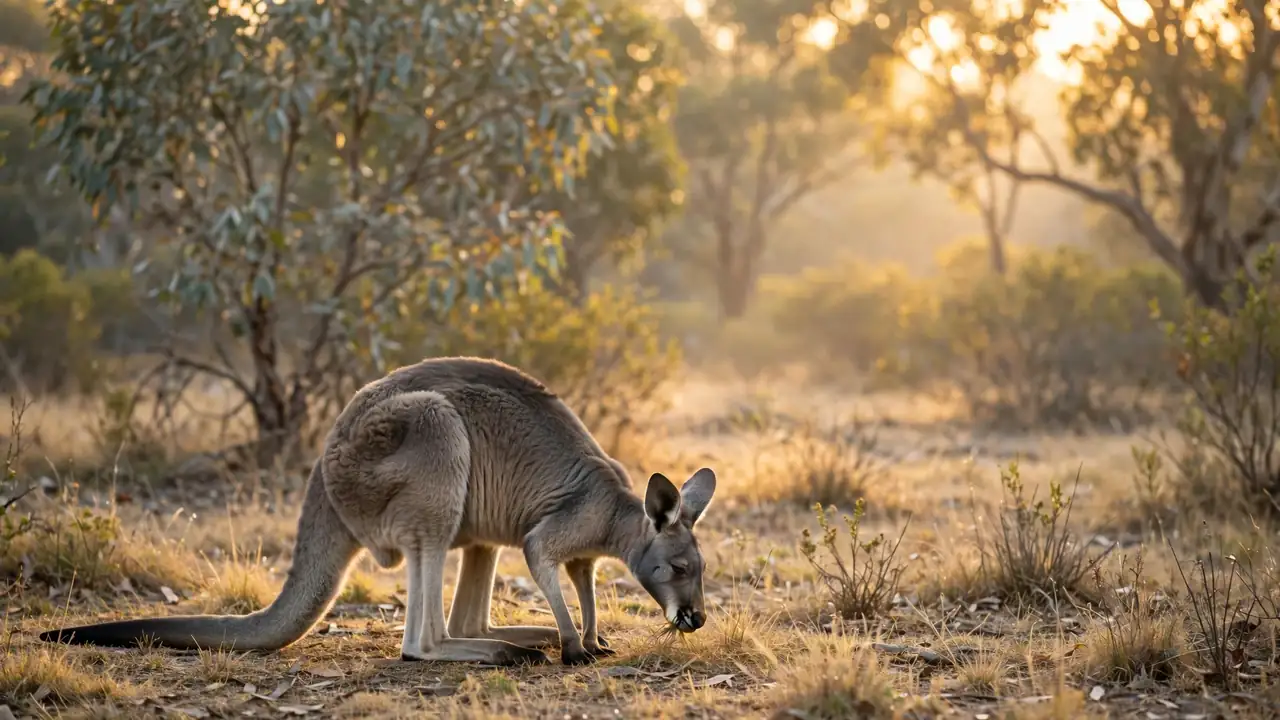
Kangaroos are widespread, but the best viewing is almost guaranteed at these spots. Lucky Bay, Cape Le Grand National Park (WA) — kangaroos on a white-sand beach; the photos don’t do it justice. The Grampians, Victoria — mobs graze around Halls Gap at dawn and dusk. Wilsons Promontory, Victoria — Tidal River campground at dusk is kangaroo central. Cape Hillsborough, Queensland — wallabies and kangaroos on the beach at sunrise. Murramarang National Park, NSW — kangaroos wander through the beach campgrounds (see our Sydney camping guide). And in the Red Centre, euros and red kangaroos are common around Alice Springs and the West MacDonnells — drive carefully at dawn and dusk.
Best time: the hour after dawn and the hour before dusk, when ‘roos graze in the open. Midday, they’re sheltering from the heat.
Koalas: Where to See Them in the Wild
Wild koalas are harder than kangaroos — they’re cryptic, high in trees, and asleep most of the day. Your best bets: Kennett River, Great Ocean Road (Victoria) — the eucalypts along Grey River Road hold one of the most reliable wild koala populations in Australia; look for the dark shapes in the forks of trees. Raymond Island, Victoria — a short ferry from Paynesville, with a signed koala trail. Noosa National Park, Queensland — koalas in the coastal forest along the headland track. Brisbane Ranges, Victoria and the Otways also hold good populations. Magnetic Island in Queensland has a high density too.
How to spot them: look for the shape (a dark blob in a tree fork), listen for the surprisingly loud bellows (especially in breeding season), and check the ground for distinctive pellet droppings. Binoculars help enormously. Early morning is best.
Wombats: Where to See Them
Wombats are nocturnal and shy, but a few places offer reliable dusk viewing. Wilsons Promontory, Victoria — wombats graze around Tidal River at dusk; the Loo-Errn track is named for them. Maria Island, Tasmania — wombats everywhere, gloriously unbothered by people. The Overland Track huts, Tasmania — wombats are regular dusk visitors (see our Overland Track guide). Cradle Mountain, Tasmania — common around the lodges at dusk. Sit quietly near a burrow area at dusk and wait; wombats follow routines.
Platypus: Where to See Them
The platypus is Australia’s most extraordinary animal — and one of the hardest to see. Your best chance: Broken River, Eungella National Park (Queensland) — dawn and dusk viewings are so reliable it’s almost guaranteed; arrive 30 minutes before sunrise and sit quietly on the viewing platforms. Latrobe, Tasmania — the platypus ponds at Warrawee Reserve. Bombala, NSW — the platypus reserve on the Delegate River. Healesville area, Victoria — creeks in the Yarra Ranges at dawn.
Platypus technique: be there before dawn, sit still and silent, and watch for the distinctive ripples and bow-waves. They surface for only seconds. Patience is everything — but when that bill breaks the surface, it’s pure magic.
Quokkas: Rottnest Island
The quokka — “the world’s happiest animal” — lives mainly on Rottnest Island (Wadjemup) off Perth, with a smaller population on Bald Island. Rottnest is a day trip from Perth (ferry from Fremantle or the city), and quokkas are everywhere — around the settlement, on the beaches, in the scrub. They’re famously photogenic and will approach you, but the rules are strict: never touch or feed them (fines apply), and use no flash. Go early morning or late afternoon for the most active quokkas.
Echidnas, Tasmanian Devils and More
Echidnas
Short-beaked echidnas are widespread but well-camouflaged. Look for them waddling across walking tracks in Tasmania (Maria Island, the Overland Track), the Grampians and Kangaroo Island — usually mid-morning. If you spot one, watch quietly; they’ll uncurl and continue foraging if you keep your distance.
Tasmanian devils
Wild devils are nocturnal and increasingly rare due to facial tumour disease. Your realistic options: guided nocturnal tours in Tasmania (several operators run devil-spotting night walks), or the excellent devil enclosures at wildlife parks. Maria Island has a healthy wild population — listen for their screeches at night.
Dingoes
K’gari (Fraser Island) has Australia’s purest dingo population — you’ll likely see them on the beach. The rules are serious: never feed dingoes (huge fines), keep children within arm’s reach, secure all food, and walk in groups. Dingoes are wild predators, not dogs.
Cassowaries
The Daintree and Mission Beach (Queensland) are cassowary country. These endangered, 60 kg birds are genuinely dangerous — never approach or feed them. Sightings are a privilege; drive slowly in signed cassowary areas.
Marine Wildlife
Australia’s marine megafauna deserves its own trip planning. Whale sharks at Ningaloo (March–July) — snorkel with the world’s largest fish. Humpback whales migrate along both coasts (May–November) — see our whale watching guide for the best spots and seasons. Little penguins at Phillip Island (Victoria) — the nightly Penguin Parade. Sea lions at Seal Bay, Kangaroo Island (SA) — guided walks among a wild colony. Dugongs at Shark Bay (WA) — one of the world’s largest populations. Manta rays at Lady Elliot Island and Ningaloo, year-round.
Ethical Wildlife Watching
The rules that matter: never feed wild animals — it changes behaviour, spreads disease and can kill. Keep your distance (use zoom, not feet). Don’t use flash on nocturnal animals. Stay on tracks — off-track trampling destroys habitat. Keep noise down. And choose wildlife tours with eco-certification and small groups. The best wildlife encounter is one where the animal doesn’t know you were there.
When to Go: A Seasonal Guide
Most Australian mammals are active year-round, but seasons matter. Spring (Sep–Nov): joeys emerging, wildflowers, active birds — arguably the best all-round wildlife season. Summer (Dec–Feb): reptiles active, marine life peak (whale sharks, turtles nesting), but heat suppresses daytime mammal activity. Autumn (Mar–May): mild weather, good for most species. Winter (Jun–Aug): whales migrate, wombats and devils active, but cold nights. Tasmania’s wildlife is best in the warmer months; the Top End’s in the dry season.
Nocturnal Wildlife Tours
Most of Australia’s mammals are nocturnal — which means the best wildlife watching happens after dark. Guided nocturnal tours run in many parks: Tasmania’s devil-and-quoll night walks, the Daintree’s nocturnal walks (striped possums, tree frogs, Boyd’s forest dragons), Kangaroo Island’s nocturnal tours (echidnas, possums, owls), and the Atherton Tablelands’ platypus-and-tree-kangaroo night tours. What to expect: red-light torches (white light blinds nocturnal animals), quiet walking, and sightings you’d never get by day. Book ahead — group sizes are small and tours sell out.
Birdwatching in Australia
Australia is a world-class birding destination with 800+ species, many found nowhere else. The Wet Tropics (cassowaries, riflebirds, kingfishers), Kakadu (magpie geese, jabirus, rainbow bee-eaters), the Atherton Tablelands (golden bowerbirds, Victoria’s riflebird), and Broome’s Roebuck Bay (migratory shorebirds — one of the world’s great shorebird sites) are the headline destinations. Even casual travellers will see sulphur-crested cockatoos, rainbow lorikeets, kookaburras and emus without trying. A basic pair of binoculars transforms every walk — and the free bird ID apps make identification easy.
Ethical Wildlife Photography
The zoom is your friend: a 200mm+ lens (or a phone’s telephoto) lets you photograph without approaching. Never bait wildlife for photos — the “quokka selfie” is fine (they approach you), but luring animals with food changes behaviour and is illegal in many parks. Don’t use flash on nocturnal animals. Stay on tracks — that perfect shot isn’t worth trampling habitat. And share location data responsibly: geotagging sensitive species (platypus pools, cassowary crossings, nesting sites) can bring crowds that harm them. The best wildlife photo is one where the animal is behaving naturally because it doesn’t know you’re there.
Emus, Goannas and Reptiles
Emus: Australia’s giant flightless birds are common in the outback and surprisingly approachable. Try the Flinders Ranges, the Nullarbor (they stroll past roadhouses), and Cape Range National Park. They’re curious but keep your distance — they can be aggressive if cornered. Goannas: lace monitors and sand goannas are widespread — look for them around campgrounds in the Top End, Kakadu and the Kimberley (they’re after your food scraps; secure everything). Snakes: Australia has the world’s most venomous snakes, but bites are rare — watch where you put hands and feet, wear boots in the bush, and never try to catch one. If bitten: immobilise, apply a pressure bandage, and call 000. Thorny devils (the spiky little dragons of the western deserts) and frill-neck lizards (Top End) are harmless highlights if you’re lucky.
Where to See Bilbies, Numbats and Quolls
Some of Australia’s most endangered mammals survive only in sanctuaries and remote pockets. Numbats (WA’s faunal emblem): Dryandra Woodland near Narrogin is the best wild bet — go with a guide at dawn. Bilbies: functionally extinct in the wild across most of their range; the Charleville Bilby Experience (Queensland) and sanctuary populations are the realistic options. Quolls: eastern quolls on Tasmania’s east coast (nocturnal tours), northern quolls in the Kimberley and Kakadu. Supporting the sanctuaries and Indigenous ranger programs that protect these species — through visits and donations — directly funds their survival.
Sanctuaries and Wildlife Parks: When Captivity Helps
Seeing animals in the wild is the goal — but sanctuaries play a vital role, and some offer experiences the wild can’t. Healesville Sanctuary (Victoria) — the platypus and lyrebird exhibits are world-class, and the “tales from platypus creek” shows are genuinely educational. Taronga Western Plains Zoo (Dubbo, NSW) — open-range African and Australian animals. Caversham Wildlife Park (WA) — the kangaroo walk-through and wombat encounters. Bonorong Wildlife Sanctuary (Tasmania) — devil feeding tours that fund conservation. Choose sanctuaries with genuine conservation programs (breeding, rehabilitation, research) over roadside menageries. The best ones are conservation organisations that happen to have visitors — and your ticket funds the work.
Frequently Asked Questions
Where is the best place to see kangaroos in the wild in Australia?
Lucky Bay in Cape Le Grand National Park (WA) for kangaroos on the beach; the Grampians and Wilsons Promontory in Victoria for reliable dawn/dusk viewing; and Cape Hillsborough in Queensland for wallabies on the beach at sunrise.
Where can you see koalas in the wild?
Kennett River on Victoria’s Great Ocean Road is the most reliable spot. Raymond Island (Victoria), Noosa National Park (Queensland) and Magnetic Island (Queensland) are also excellent. Look early morning, scan tree forks for dark shapes, and bring binoculars.
Where can you see platypus in the wild?
Broken River in Eungella National Park, Queensland, offers the most reliable wild platypus viewing in Australia — go 30 minutes before sunrise and sit quietly. Latrobe in Tasmania and Bombala in NSW are other good options.
Is it safe to approach kangaroos and other wildlife?
No — keep a respectful distance from all wild animals. Kangaroos can be dangerous when cornered (especially large males), dingoes and cassowaries are genuinely hazardous, and even quokkas must not be touched (fines apply on Rottnest Island). Use a zoom lens, not your feet.
Learn about Australia’s threatened species and how tourism supports conservation at the Australian Government Department of Climate Change, Energy, the Environment and Water.