
Great Barrier Reef: Best Ways to Visit in 2026
The Great Barrier Reef is the world’s largest living structure — 2,300 kilometres of coral reef, 900 islands, 1,500 species of fish. Visiting it properly takes planning: where to base yourself, which part of the reef to see, and how to see it. This guide breaks down the Great Barrier Reef best ways to visit in 2026, whatever your budget and travel style.
An honest note first: the reef has suffered significant coral bleaching events in recent years, driven by marine heatwaves. It is not dead — far from it — but its condition varies enormously by location. The northern and outer reefs are generally healthier than inshore southern sections. Choosing the right trip matters more than ever, and this guide will help you do that.
Where to Base Yourself
Cairns
The main gateway — big city, most tour operators, most competition (which means better prices). Cairns suits travellers who want choice and nightlife. The reef is about 1.5–2 hours by boat from here, so day trips mean early starts and longer rides.
Port Douglas
An hour north of Cairns, Port Douglas is closer to the outer reef (shorter boat rides) and to the best dive sites (the Agincourt ribbon reefs). It’s prettier and more relaxed than Cairns, but pricier and with fewer budget options. For reef-focused trips, it’s the better base.
Airlie Beach and the Whitsundays
The southern gateway, best for combining reef trips with sailing the Whitsunday islands and Whitehaven Beach. The reef trips here go to the outer reef and Hardy Reef’s famous Heart Reef pontoon.
Townsville and Mission Beach
Quieter gateways with access to the central reef and, from Townsville, the Yongala wreck — one of the world’s great wreck dives.
Option 1: Outer Reef Day Trip (Best for Most People)
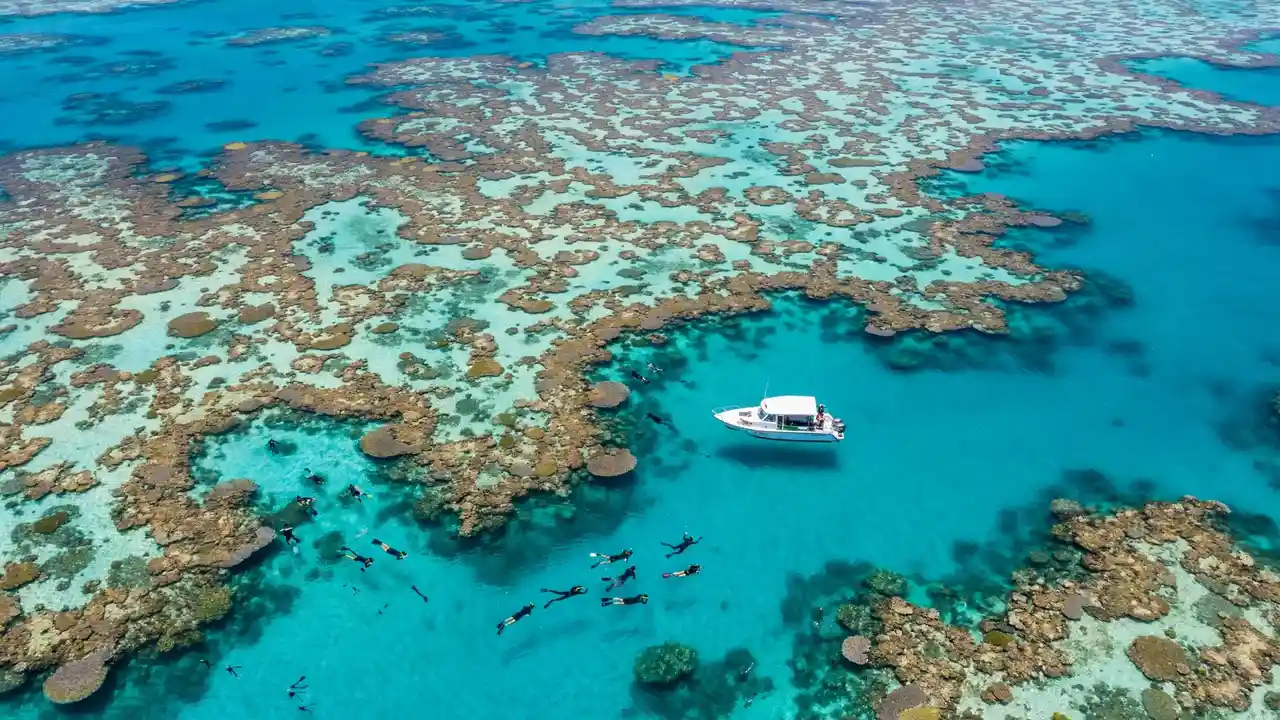
The standard and most popular way to see the reef: a full-day boat trip to an outer reef pontoon or mooring, with snorkelling gear, lunch and often a marine biologist talk included. From Cairns or Port Douglas, expect a 1.5–2.5 hour ride each way.
What you get: several hours of snorkelling or introductory diving on healthy outer coral, all gear provided, lunch on board, and the security of a big stable vessel. What to look for when booking: smaller passenger numbers (under 50 is far better than 200), outer-reef destinations rather than inner fringing reefs, and operators with eco-certification. Book the earliest departure you can — calmer seas, better light, fewer crowds.
Option 2: Liveaboard Trip (Best for Divers and Snorkellers)
Multi-day liveaboard boats (2–7 nights) reach the remote northern ribbon reefs and Coral Sea sites that day boats can’t — the healthiest, most spectacular coral on the GBR, plus encounters with larger marine life. For certified divers, this is unquestionably the best way to see the reef. Snorkellers are welcome on most liveaboards too, and get far more reef time than any day trip offers.
Liveaboards depart mainly from Cairns and Port Douglas. They’re not cheap, but per hour of reef time they’re good value — and the remote sites are transformative.
Option 3: Island Stay (Best for Relaxation)
Staying on a reef island gives you dawn and dusk on the reef — the magical hours day-trippers miss. Options range across budgets and styles:
Heron Island and Lady Elliot Island (southern reef): the snorkelling stars — walk off the beach straight onto coral, with turtles, mantas and reef sharks. Research-station vibes, naturalist focus.
Green Island and Fitzroy Island (near Cairns): easy day-trip or overnight options with fringing reef off the beach. Green is more developed; Fitzroy is more natural.
Hamilton Island and Hayman Island (Whitsundays): resort islands with reef trips, sailing and Whitehaven Beach access. Hamilton is the most developed; Hayman is ultra-luxury.
Lizard Island (far north): the bucket-list luxury option — a remote island resort on the northern reef with world-class diving and a famous research station.
Option 4: Scenic Flight + Reef Combination
Helicopter and seaplane flights over the reef — often combined with a pontoon snorkel stop — give you the perspective you can’t get from the water: the vast scale, the coral patterns, Heart Reef from the air. From the Whitsundays and Port Douglas, reef scenic flights are a genuine highlight, and for non-swimmers they’re the best way to experience the reef at all. Our snorkelling guide covers the in-water side; the aerial side is equally worth doing.
Option 5: Sailing the Whitsundays (Best Overall Holiday)
A 2–3 night sailing trip through the Whitsunday Islands — 74 islands, fringing reefs, Whitehaven Beach, and nights at anchor under the stars — might be the best overall Great Barrier Reef holiday. You get reef snorkelling, island beaches, sailing, and sunsets, all in one trip. Bareboat (self-skippered, no experience needed after a briefing) or crewed charters depart from Airlie Beach and Hamilton Island.
What Will You Actually See?
On a good outer-reef trip: hard and soft corals in wild colours, giant clams, anemones with clownfish, parrotfish, trevally, reef sharks (harmless whitetips and blacktips), turtles, and rays. Whales pass through in winter (June–September) — humpbacks and dwarf minkes. What you won’t reliably see: dugongs (shy, seagrass areas), and the biggest pelagics (that’s more a Coral Sea liveaboard thing).
Seasonal highlights: coral spawning (a few nights after the November full moon — some operators run special night trips), whale season (June–September), and manta ray aggregations at Lady Elliot (winter).
When to Visit the Great Barrier Reef
The dry season (May–October) is the sweet spot: calmer seas, better visibility, less rain, no stingers offshore (though operators provide stinger suits year-round). The wet season (November–April) brings hotter weather, potential cyclones, reduced visibility after rain, and box jellyfish/Irukandji risk at mainland beaches — but also coral spawning, fewer tourists and lower prices. For the full seasonal breakdown across the country, see our best beaches guide.
Costs: What to Budget
Outer reef day trips from Cairns/Port Douglas typically run from around AUD $200–$300 per person including gear and lunch; premium small-group trips cost more. Introductory dives add to the base price. Liveaboards start around AUD $600+ for 2 nights and climb steeply for longer remote trips. Island stays vary enormously — from affordable eco-lodges to five-figure luxury. Scenic flights start around AUD $200 for short hops. Book reef trips early in peak season (June–August); operators do sell out.
Choosing a Responsible Operator
With the reef under pressure, how you visit matters. Look for operators with Ecotourism Australia certification or equivalent, small group sizes, marine biologists on staff, and active participation in reef monitoring programs (like the Eye on the Reef program). Avoid touching coral, use reef-safe sunscreen, and take the environmental briefing seriously. The Great Barrier Reef Marine Park Authority publishes guidance on responsible reef visitation.
Common Mistakes
Booking the cheapest Cairns day trip without checking the destination (inner fringing reefs are a shadow of the outer reef). Visiting in stinger season and being surprised. Trying to “do the reef” in half a day. Skipping the reef entirely because of bleaching headlines — large areas remain spectacular, and your visit (done responsibly) supports the tourism economy that funds protection. And forgetting seasickness tablets if you’re prone — the ride out can be lumpy.
Sample 5-Day Reef Itinerary (Port Douglas Base)
Day 1: Arrive Port Douglas, settle in, sunset at Four Mile Beach. Day 2: Outer reef day trip — full day snorkelling/diving the Agincourt ribbon reefs. Day 3: Slow day — Mossman Gorge in the Daintree (the rainforest side of the region), afternoon at the beach. Day 4: Second reef day, different operator or a low-level scenic flight + reef pontoon combo. Day 5: Kuranda (railway up, Skyrail down) or a Daintree river cruise for crocodiles, then depart. Two reef days is the sweet spot — weather insurance and different sites.
Visiting the Reef with Kids
The reef is fantastic with kids — with the right trip. Choose operators with shaded areas, freshwater showers, and glass-bottom boat or semi-submersible options for non-swimmers and small children. Stinger suits double as sun protection. The reef pontoon trips (with underwater observatories) are ideal for mixed-age groups: grandparents and toddlers can experience the reef without getting wet. Kids under 12 generally can’t do introductory dives, but supervised snorkelling with flotation is fine for confident young swimmers.
What to Pack for Reef Trips
Reef-safe sunscreen (or a long-sleeve rashie — better), a hat and polarised sunglasses for the boat ride, a dry bag for phone/camera, seasickness tablets (take before boarding if you’re prone), a reusable water bottle, and an underwater camera if you have one. Operators provide all snorkel gear, wetsuits/stinger suits and towels — but bring your own mask if you’re fussy about fit. Cash for the onboard photo packages and the bar.
The Rainforest + Reef Combo
The Cairns/Port Douglas region offers the only place in the world where two World Heritage areas sit side by side — and combining them is the region’s signature experience. The classic combo: reef by day (outer reef trip from Port Douglas), rainforest the next (Mossman Gorge’s Dreamtime walks with Kuku Yalanji guides, the Daintree’s boardwalks, Cape Tribulation’s beach where the rainforest meets the reef). Operators sell dedicated reef-and-rainforest packages, but it’s easy to DIY: one reef day, one Daintree day, with a hire car. Allow at least four days in the region to do both properly — they’re each full-day experiences, and rushing either shortchanges it.
Reef After Dark: Night Diving and Coral Spawning
The reef transforms after dark — and a few operators offer night snorkel and dive experiences from pontoons and liveaboards. Coral polyps extend to feed, parrotfish sleep in mucus cocoons, hunting trevally patrol the reef edge, and the bioluminescence on a dark night is otherworldly. The ultimate after-dark event is coral spawning — a few nights after the November full moon, when corals release eggs and sperm in synchronised underwater snowstorms. Some Port Douglas and Cairns operators run special spawning trips; they sell out fast and depend on the moon, but witnesses call it the single most extraordinary thing on the reef.
The Yongala: Australia’s Best Wreck Dive
From Townsville or Ayr, the SS Yongala wreck is consistently rated one of the world’s top wreck dives — a 1911 shipwreck in 30 metres of water, now an artificial reef smothered in coral and swarming with giant trevally, sea snakes, turtles and bull sharks. It’s advanced diving (depth, currents), but for certified divers it’s the best single dive in Queensland — and a reason to base a reef trip in Townsville rather than Cairns. Combine it with Magnetic Island (see our Queensland parks guide) for a superb week.
Frequently Asked Questions
What is the best way to see the Great Barrier Reef?
For most visitors, an outer-reef day trip from Port Douglas or Cairns with a small-group eco-certified operator is the best way to see the Great Barrier Reef. Divers should consider a multi-day liveaboard to the remote northern ribbon reefs, and those wanting relaxation should stay on a coral cay like Heron or Lady Elliot Island.
Is the Great Barrier Reef still worth visiting in 2026?
Yes. While parts of the reef have suffered bleaching, large areas — particularly the outer and northern reefs — remain spectacular, with vibrant coral and abundant marine life. Choosing outer-reef sites and responsible operators matters more than ever.
How many days do you need for the Great Barrier Reef?
Allow at least two to three days in your gateway town: one full day for an outer-reef trip, plus buffer for weather and optional extras like a scenic flight or island visit. A week allows a liveaboard or Whitsundays sailing trip.
Can non-swimmers visit the Great Barrier Reef?
Yes. Scenic helicopter and seaplane flights, glass-bottom boat tours, semi-submersible submarines and reef pontoons with underwater observatories all let non-swimmers experience the reef. Many snorkel tours also cater to nervous swimmers with flotation aids and guided assistance.
Plan your visit with official information from Tourism and Events Queensland, including operator listings and seasonal guides.