
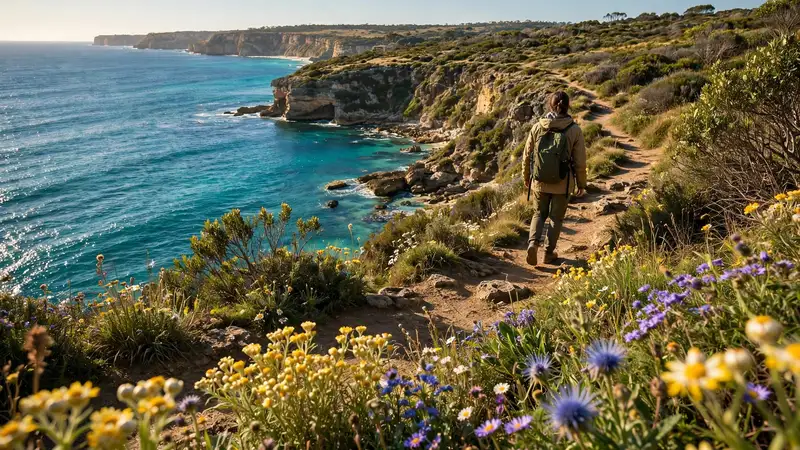
Ask ten Australians when to visit and you will get ten different answers — and most of them will be right for their own corner of the country. The best time to visit Australia is not a single month, because Australia is not a single climate. The tropical north runs on a wet season and a dry season, the temperate south runs on four seasons much like Europe, and the Red Centre runs on a simple rule: visit when it is not scorching. Get the zone right first, and the rest of the planning falls into place.
The short version: for the south — Sydney, Melbourne, Adelaide, Perth and Tasmania — the sweet spot is the shoulder seasons, March to May and September to November, when the weather is mild, the crowds are thinner and prices soften. For the tropical north — Cairns, Port Douglas, Darwin and Broome — the sweet spot is the dry season, May to October, when the rain stops, the humidity drops and the reef is at its clearest. If your trip crosses both zones, and most first trips do, aim for April to May or September to October, when neither zone is at its worst. The month-by-month matrix below turns that rule of thumb into a plan you can actually book around, and our trip budget calculator will show you what each season does to your daily costs.
The one rule that explains everything: the north–south inversion
Australia’s seasons are the reverse of the northern hemisphere’s: December to February is summer, June to August is winter. That much every visitor knows. What surprises people is that the country’s two halves then move in opposite directions. When Sydney and Melbourne are enjoying long summer beach days, Cairns and Darwin are in the middle of the wet season — daily downpours, oppressive humidity and, in the far north, marine stingers in the water from roughly October to May. When Sydney and Melbourne are rug-up cold in July, Cairns and Darwin are enjoying their finest weather: blue skies, low humidity and daytime temperatures in the high twenties.
The Bureau of Meteorology’s capital-city averages make the contrast concrete. Cairns averages 448 millimetres of rain in February and just 31 millimetres in July; Darwin averages 466 millimetres in January and a single millimetre in July. Sydney, by comparison, spreads its rain across the year — between 62 and 119 millimetres in every month — so there is no true dry month in the south-east, only warmer and cooler ones. Perth inverts again: it is a Mediterranean climate, wet in winter (148 millimetres in July) and almost dry in summer (18 millimetres in January). Once you see those three patterns — tropical wet/dry, temperate four-season, Mediterranean winter-rain — you can read any Australian forecast with confidence. The Bureau’s capital-city climate averages are the authoritative place to check the numbers for your exact destinations before you book.
Month by month: south temperate (Sydney, Melbourne, Adelaide)
January–February (summer): peak beach season and peak prices. Sydney days sit in the high twenties, Melbourne can spike into the forties during heatwaves, and both cities are crowded with school holidays running through most of January. The Australian Open fills Melbourne in late January. Book accommodation early, expect the highest rates of the year, and plan outdoor days around the heat — mornings and late afternoons, not midday.
March–May (autumn): the best all-round months for the south. Temperatures ease into the low to mid twenties, the summer crowds thin out after Easter, and the light turns golden — this is the season photographers love in Sydney and the Barossa. Autumn colours peak in the Adelaide Hills, the Blue Mountains and Victoria’s high country in April and May. Rain is possible but rarely trip-ruining, and hotel rates drop noticeably from April.
June–August (winter): cool, not cold, by northern standards — Sydney days around 17–19 degrees, Melbourne around 14–15 — but the wind off the water bites, and Melbourne in particular can string together grey weeks. The upside is real: Vivid Sydney lights up late May into June, whale watching runs along the east coast, and the snowfields of New South Wales and Victoria are in season for skiers. This is also the cheapest time for southern city stays outside school holidays.
September–November (spring): the other shoulder season and, for many travellers, the single best window. Gardens bloom, days warm back into the twenties, the Melbourne Cup carnival fills early November, and the beaches are pleasant without the summer crush. Spring is the best time for coastal walks — Sydney’s Bondi to Coogee, the Great Ocean Road, the Mornington Peninsula — because the sun is warm but the summer glare has not arrived.
Month by month: tropical north (Cairns, Port Douglas, Darwin, Broome)
May–October (dry season): this is the north’s high season for good reason. Days are sunny and in the high twenties, humidity is low, roads into national parks are open, and the reef offers its clearest water. It is also the busiest and priciest window for Port Douglas and Cairns — book reef tours and Daintree stays ahead, especially in July and August. Darwin’s Mindil Beach markets run through the dry season, and Broome’s dry months bring perfect beach weather and the famous stairway to the moon over Roebuck Bay.
November–April (wet season): the north transforms. Afternoon storms roll in, waterfalls thunder in the Daintree and Kakadu, and the landscape turns vivid green — but humidity is relentless, some outback roads close, and swimming in the far north carries a stinger risk from roughly October to May, when stinger suits or netted enclosures are the safe way to swim. The wet is also the cheapest time to visit the north, and if you can handle the heat and plan around the rain, the waterfalls alone can justify it. Just check road conditions daily in Kakadu and the Daintree, and never assume a remote road that was open yesterday is open today.
Month by month: the Red Centre and Tasmania
Uluru and the Red Centre: April to September is the comfortable window, with cool nights and daytime temperatures in the twenties. Summer days in the Centre regularly exceed 40 degrees, which makes the base walk around Uluru and the Kings Canyon rim walk genuinely dangerous in the middle of the day — rangers and guides will tell you to walk at dawn and rest by noon. Winter nights can drop near freezing, so pack a warm layer even for a desert trip. The Centre pairs naturally with a southern city in the same trip, because its best months overlap the south’s shoulder seasons.
Tasmania: December to February is warmest and best for hiking, with long daylight hours — but it is also the busiest window for Cradle Mountain and Freycinet. March to May brings crisp air, autumn colour in the Central Highlands and far fewer walkers on the Overland Track. Winter (June to August) is cold and quiet, with snow on the high peaks, while spring (September to November) is wildflower season and a fine time for the east coast. Tasmania’s weather changes fast in every season, so a waterproof layer belongs in your bag whenever you go.
Best time to visit Australia by trip type
Beaches: for the classic southern beach holiday — Bondi, Byron Bay, the Gold Coast — December to March gives the warmest water and the longest days, with February calmer than the January crush. For the north’s beaches, May to October is the safe swimming window outside stinger season.
Great Barrier Reef: June to October for the clearest water and calmest seas, with whale season running May to November along the Queensland coast. Coral spawning, a spectacular natural event, happens for a few nights after the full moon in November or December — worth timing a dive trip around if you can, though it falls at the start of the wet season.
Road trips: the Great Ocean Road is best in autumn or spring, when the light is soft and the lookouts are quiet. The Savannah Way and the Gibb River Road are dry-season-only — May to October — because wet-season closures are a real possibility. Sydney to Brisbane coastal driving works year-round, with autumn the pick for lighter traffic.
Wildlife: whale watching runs May to November up the east coast, with Hervey Bay peaking in August and September. Kangaroo Island’s wildlife is visible year-round, but joeys and seal pups are most active in spring. For the Daintree’s cassowaries and the Kimberley’s waterfalls, the late dry season (August to October) gives the best access as waterholes shrink.
Festivals and events: Vivid Sydney (late May to June), the Melbourne Cup carnival (early November) and the Australian Open (January) all reward planning a trip around them — but they also push prices up, so book early or stay just outside the event window.
School holidays, crowds and prices
Australia’s four school terms create four predictable crowd peaks: the long summer break from mid-December to late January, a two-week break around Easter, two weeks in July, and two weeks in late September to early October. Travelling just outside those windows — the first two weeks of February, late April after Easter, August, or mid-October — is the simplest way to cut both crowds and costs without sacrificing weather, and it is often the difference between a good best time to visit Australia and a great one. The shoulder seasons win on all three measures at once: decent weather, thinner crowds and softer prices, which is why this guide keeps returning to them. Use our trip budget calculator to see the difference in dollars: the same seven-day Sydney stay priced in January versus May tells you more than any general advice can.
One more practical note: public holidays — Australia Day (26 January), Anzac Day (25 April) and the Melbourne Cup public holiday in Victoria — create long weekends that fill regional towns, so shifting a trip by a week either side can halve the accommodation bill in a popular spot.
So, when is the best time to visit Australia?
If you are visiting one region, follow that region’s best window: the south in autumn or spring, the north in the dry season, the Centre from April to September, Tasmania from December to February. If you are crossing zones on a classic first trip — Sydney, Cairns and Melbourne, or Sydney, the Great Ocean Road and the reef — then April to May or September to October is the honest answer, because those are the months when no zone is at its worst. Deciding the best time to visit Australia comes down to that single trade: match your months to your zones, and the rest takes care of itself. Pick your dates from the matrix above, check the Bureau’s averages for your exact towns, and then build your route: our New South Wales travel guide, Queensland travel guide and Sydney travel guide will take you from the season decision to the day-by-day plan.
Frequently asked questions
What is the cheapest time to visit Australia?
Winter (June to August) is cheapest for the southern cities outside school holidays, and the wet season (November to April) is cheapest for the tropical north. The trade-off is weather: cold and grey in the south, hot and rainy in the north. Shoulder-season travel in April to May or September to October is usually the better bargain, because you get good weather and lower prices together.
When is the best time to visit the Great Barrier Reef?
June to October, during the dry season, when the water is clearest and the seas are calmest. Stinger season in the far north runs roughly October to May, so dry-season swimming needs no stinger suit. Whale season along the Queensland coast runs May to November, overlapping the reef’s best months.
Is it safe to swim in northern Australia in summer?
Only in netted enclosures or with a stinger suit during stinger season, roughly October to May in tropical north Queensland and the Northern Territory. Marine stingers, including box jellyfish, are a genuine risk in that window. Outside stinger season and in the southern states, ocean swimming is a normal part of beach life — always swim between the flags at patrolled beaches.
What is the best month for a first trip to Australia?
For a multi-zone first trip, October is the strongest single month: the north is still dry, the south is warming into spring, and the Centre is comfortable. April is the runner-up, with autumn colour in the south and the north’s wet season ending. Either month avoids the worst of both halves of the country, which is why both top every serious ranking of the best time to visit Australia for a first trip.
Do I need to worry about bushfires when planning?
Bushfire season in the south runs roughly from late spring through summer, and conditions vary enormously by year and region. Check your state fire authority’s advice close to departure, avoid travelling into fire-affected areas on high-risk days, and have a backup plan for any national-park day. The risk should inform your timing and your daily decisions, not stop you travelling.