
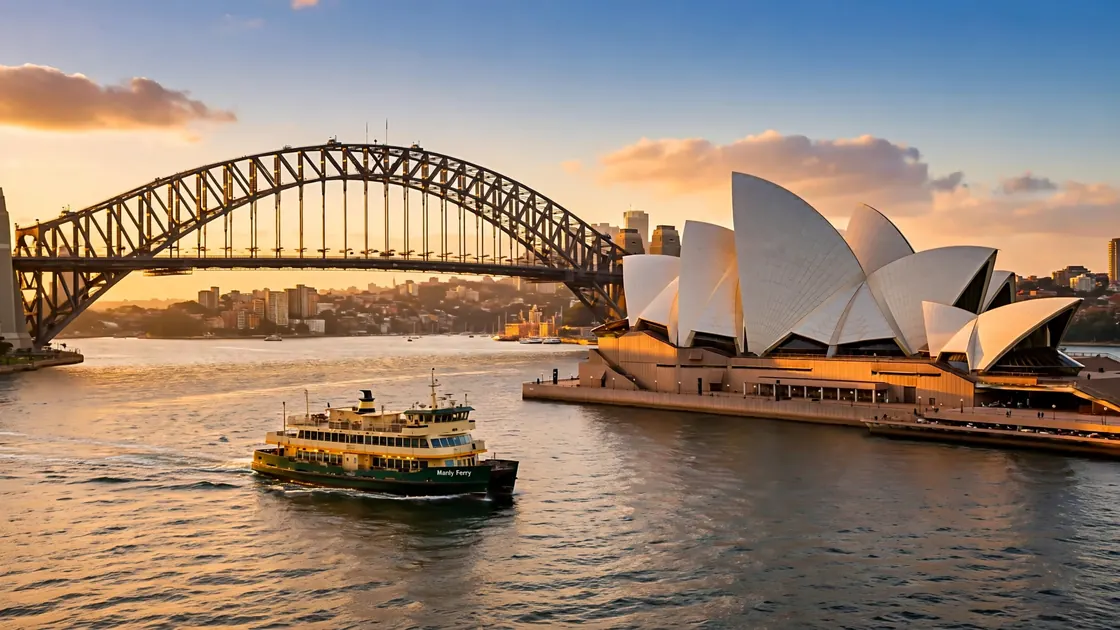
This Sydney travel guide is built for first-time visitors who want to see the best of the Harbour City without wasting a minute. Three days is tight, but Sydney packs its icons close together: the Opera House, Harbour Bridge, Bondi, the Rocks and Manly all sit within a short ferry or train ride of the CBD. Follow this 2026 itinerary and you will cover the classics, eat very well, and still have time for one proper beach day.
Sydney is Australia’s largest city and its most visited, and it earns the attention. The harbour is genuinely spectacular in person — no photograph of the Opera House sails at sunset quite prepares you for the real thing. What surprises most visitors is how easy the city is to navigate: the ferry network doubles as sightseeing, the light rail and metro are clean and simple, and an Opal card with a daily fare cap keeps transport costs predictable.
Why Visit Sydney in 2026
Sydney in 2026 is in fine form. Vivid Sydney (22 May – 13 June 2026) turns the harbour into a light festival each winter, the new Sydney Metro lines have made getting around noticeably faster, and the city’s food scene keeps getting better — from harbourside fine dining to the dumpling houses of Haymarket. It is also the natural starting point for most Australian trips, with direct flights from Asia, the US, the Middle East and Europe.
The city suits almost every travel style. Families get Taronga Zoo, the Australian Museum and calm harbour beaches. Couples get coastal walks, sunset sails and rooftop bars. Budget travellers get free attractions in surprising numbers — the Art Gallery of NSW’s Naala Badu building, the Royal Botanic Garden, the Bondi to Coogee walk and every harbour ferry view cost nothing or close to it.
Best Time to Visit Sydney
Sydney is a year-round destination, but the sweet spots are March to May and September to November: warm days, cool evenings, thinner crowds and lower accommodation prices than the summer peak. Summer (December to February) brings the best beach weather and big events like New Year’s Eve fireworks, but also the highest prices and the busiest attractions.
Winter (June to August) is mild by global standards — daytime temperatures usually sit between 16°C and 19°C — and it is the cheapest time to visit. This is also when Vivid Sydney lights up the city and when whale watching season runs along the coast (May to November, peaking June to August). If your dates are flexible, aim for the shoulder seasons.
Where to Stay in Sydney
Pick your base by travel style:
- The Rocks / Circular Quay: the most central and scenic base, steps from the Opera House and ferries. Accommodation is pricey, but you will save on transport.
- Surry Hills / Darlinghurst: the food-and-bar heart of the city, with great-value boutique hotels and Airbnbs. Excellent for evening dining.
- Bondi: stay here if the beach is the point of your trip. The trade-off is a longer commute into the city (about 30–40 minutes).
- Manly: a beach-town feel with a spectacular 20-minute ferry commute to Circular Quay — many visitors call it the best of both worlds.
- Parramatta: the budget play. Sydney’s second CBD has solid mid-range hotels and the metro reaches the city in about 25 minutes.
Book accommodation early for December–January and for the Vivid Sydney period, when central hotels fill up and rates climb. Expect roughly A$180–280 per night for a decent mid-range hotel in the CBD in shoulder season, and A$120–180 for a well-reviewed hostel dorm or budget private room.
Day 1: The Harbour Icons
Start where Sydney starts: the water. Begin the morning at Circular Quay, walking the promenade from the Overseas Passenger Terminal to the Sydney Opera House. You can admire the sails for free from the quay, but the guided tour (around A$43 per adult, approximately) that goes inside the Concert Hall and theatres is worth it — the building’s engineering story is fascinating.
From the Opera House, walk through the Royal Botanic Garden to Mrs Macquarie’s Chair for the classic postcard view of the harbour with both the Opera House and Bridge in frame. This is one of the best free viewpoints in the city; go in the morning for the softest light.
Cross the harbour on a ferry to Manly in the afternoon — the 20-minute ride past the Heads is one of the world’s great cheap harbour cruises (covered by your Opal fare). Walk the Manly to Shelly Beach trail, swim if the weather allows, and have dinner on the Corso. Return on the ferry at sunset for the skyline lit up behind you.
If you want the big splurge, book the BridgeClimb: the Summit day climb starts from around A$268 per adult in 2026 (dynamic pricing — twilight and dawn cost more). The cheaper alternative with a still-excellent view is the Pylon Lookout. End day one in the Rocks, Sydney’s oldest neighbourhood, for dinner in a historic pub.
Day 2: Bondi and the Eastern Beaches
Day two belongs to the coast. Start at Bondi Beach — arrive before 9 am to beat the crowds and grab a flat-white from one of the cafés on Campbell Parade. Walk the Bondi to Coogee coastal walk (6 km, about 2 hours at a strolling pace): it passes Tamarama, Bronte and Clovelly, with rock pools, ocean baths and cliff lookouts the whole way. The Bronte Baths and the Wylie’s Baths at Coogee are saltwater ocean pools you can swim in for a few dollars.
Have lunch in Coogee or Bronte, then head back toward the city for the afternoon at the Art Gallery of NSW. The original building and the newer Naala Badu building are both free to enter (special exhibitions are ticketed), and the collection of Australian and Aboriginal art is outstanding. The gallery sits on the edge of the Domain, an easy walk from the city.
In the evening, eat in Surry Hills or Haymarket. Sydney’s dining is one of its strongest cards: Thai in Haymarket, modern Australian in Surry Hills, waterfront seafood at the Fish Market or Barangaroo. Budget roughly A$25–40 for a good casual dinner and A$80+ per person for a proper restaurant meal.
Day 3: History, Wildlife and Sunset Sails
Take the ferry to Taronga Zoo first thing — the zoo opens early, the animals are most active in the morning, and the view back across the harbour to the skyline is half the reason to go. Entry is around A$50 per adult (approximately; book online for the best price), and the ferry from Circular Quay is included in the zoo’s combined tickets.
Back in the city, spend the afternoon exploring the Rocks properly: the weekend markets (Saturday and Sunday), the Susannah Place Museum terrace houses, and the convict-carved laneways. Then walk across the Harbour Bridge itself — the pedestrian walkway is free and the views from the middle of the span are superb. It takes about 30 minutes each way.
Finish with a sunset harbour cruise. Plenty of operators run 1–2 hour sunset sails from Circular Quay and Darling Harbour from around A$50–90 per person. Alternatively, do what locals do: buy fish and chips and eat them on the grass at Barangaroo Reserve or Mrs Macquarie’s Point as the sun goes down.
Where to Eat in Sydney
Sydney’s food scene rewards curiosity. Beyond the famous names, try these:
- Quay or Bennelong: the special-occasion harbourside restaurants — book well ahead.
- Ester (Chippendale): wood-fired modern Australian, consistently rated among the city’s best.
- Haymarket/Chinatown: the city’s best-value eating — dumplings, noodles and yum cha at local prices.
- Sydney Fish Market (Blackwattle Bay): Australia’s largest seafood market; grab cooked prawns or a lobster roll and eat by the water.
- Bondi cafés: the brunch culture is real — expect excellent coffee and long weekend queues.
Getting Around Sydney
Public transport in Sydney runs on the Opal card (or contactless bank card). Ferries, trains, light rail, metro and buses are all integrated, and daily and weekly fare caps keep costs predictable — an adult daily cap sits under A$20 (approximately). The ferry network is the star: routes to Manly, Taronga Zoo, Watsons Bay and Parramatta are sightseeing in themselves.
Walking is practical in the CBD, the Rocks, Darling Harbour and around the harbour foreshore. For day trips, trains run to the Blue Mountains (Katoomba, about 2 hours) and to the Royal National Park. Taxis and rideshares are plentiful but expensive in peak hour — the trains usually win.
Sydney on a Budget: What It Costs
Sydney is not a cheap city, but it is very manageable with planning. A realistic mid-range budget is A$250–350 per day for two people sharing accommodation, including a paid attraction or two, casual meals and public transport. Budget travellers can get by on A$120–160 per day using hostels, free attractions, supermarket breakfasts and the Opal cap.
Money-saving tips that actually work: many of the best things (harbour walks, beaches, the Botanic Garden, the Art Gallery, the Bridge walkway) are free; book paid attractions online in advance for discounts; eat your big meal at lunch when set menus are cheaper; and consider the Blue Mountains as your day trip — the train fare is Opal-capped and the scenery rivals anything in the city. Read our Blue Mountains day trip guide for the full plan.
Practical Tips for Sydney
- Sun protection: the UV is brutal even on overcast days. Hat, sunscreen and sunglasses are non-negotiable, especially October to March.
- Tipping: not obligatory in Australia. Ten percent for great restaurant service is appreciated but never expected.
- Swimming safety: swim between the red and yellow flags on patrolled beaches, and never swim alone at unpatrolled spots.
- Power: Australia uses Type I plugs (230V). Bring an adapter.
- Water: Sydney tap water is excellent — bring a reusable bottle.
Extending Your Trip
With more than three days, Sydney makes a superb base for exploring New South Wales. The Blue Mountains are the classic day trip (see our Blue Mountains day trip from Sydney guide), and the Hunter Valley wine region is an easy weekend away. Heading north, the road to Byron Bay passes through some of the prettiest coastal towns in the country. If you are weighing Sydney against its southern rival, our Melbourne neighbourhoods guide breaks down where to stay there. Paired with this Sydney travel guide, those side trips turn a long weekend into a proper New South Wales holiday.
For official event listings, transport updates and trip ideas, check sydney.com, the official visitor site for Destination NSW.
If You Have a Fourth Day
A fourth day in Sydney opens up the city’s best side trips. The Royal National Park — the world’s second-oldest national park — sits 1 hour south by train: the Figure Eight Pools (check tides and swell; people have died here), the Coast Track from Otford to Bundeena, and the Wedding Cake Rock lookout. Alternatively, take the ferry to Watsons Bay for the South Head walk and lunch at Doyle’s, or explore the Inner West — Newtown’s King Street for vintage shops and live music, Balmain’s pubs, and the White Bay brewery precinct. With five days, add the Hunter Valley wine region (see our Hunter Valley weekend guide) or an overnight in the Blue Mountains beyond the day-trip highlights.
Sydney Travel Guide FAQs
How many days do you need in Sydney?
Three full days covers Sydney’s highlights: the harbour icons, Bondi and the coastal walk, Taronga Zoo and a harbour cruise. Add a fourth day for the Blue Mountains day trip and a fifth if you want a slower pace with a second beach day.
What is the best month to visit Sydney?
March to May and September to November offer the best balance of pleasant weather, smaller crowds and lower prices. December to February is peak beach season but also the most expensive and busiest time.
Is Sydney expensive for tourists?
Sydney is one of Australia’s priciest cities, but a mid-range trip costs roughly A$250–350 per day for two people sharing. Many top attractions — beaches, harbour walks, the Botanic Garden and the Art Gallery of NSW — are free.
Do I need a car in Sydney?
No. Sydney’s trains, ferries, light rail and metro cover all major sights, and the Opal daily fare cap keeps public transport affordable. You only need a car for self-driven day trips outside the train network.
Is the BridgeClimb worth it?
The BridgeClimb is a bucket-list experience with unmatched 360-degree harbour views, starting from around A$268 per adult for a day climb in 2026. If the price is too steep, the free pedestrian walkway across the bridge still delivers superb views.
Final Thoughts
Sydney rewards travellers who plan the big sights and then leave room to wander. Use this Sydney travel guide as your base map, then follow the ferries, the coastal walks and your appetite. We will keep this Sydney travel guide updated as prices, events and transport change, so your 2026 trip runs exactly as planned.