
Blue Mountains Day Trip from Sydney
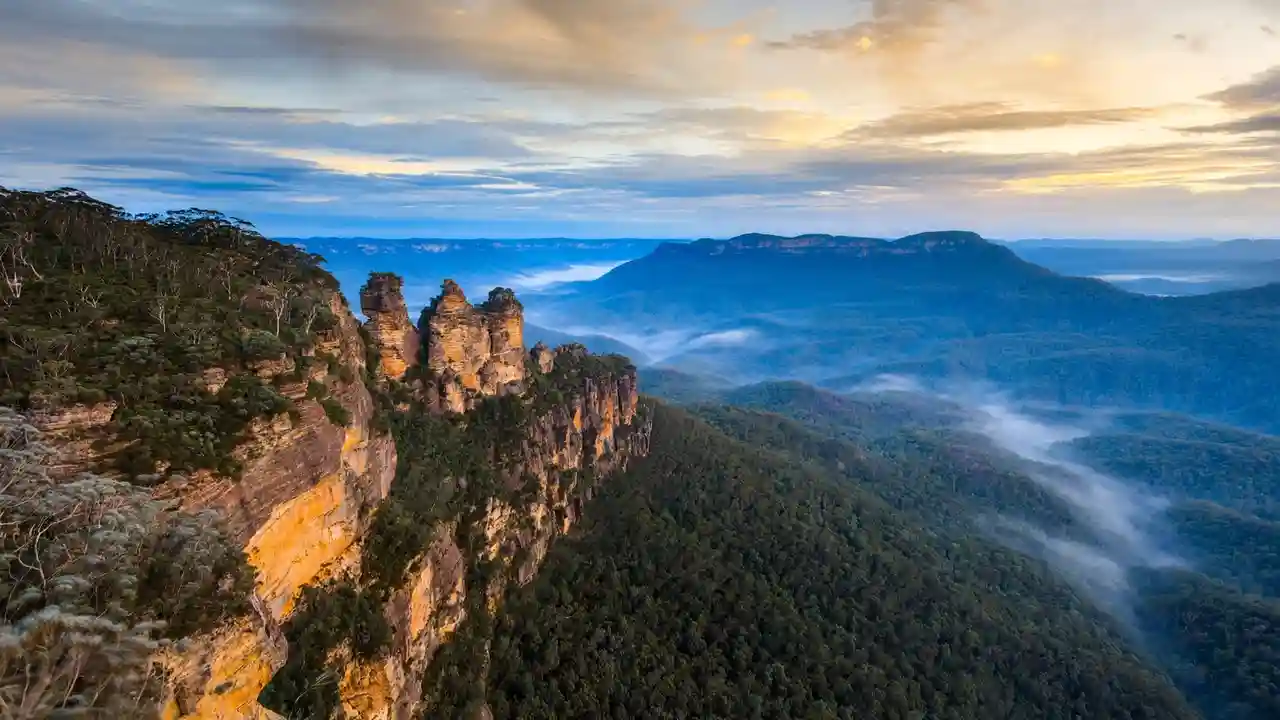
This Blue Mountains day trip guide covers Sydney’s greatest escape — a World Heritage wilderness of eucalyptus-blue valleys, sandstone escarpments and waterfalls, just 2 hours by train from Central Station. The Blue Mountains are the classic Sydney day trip for good reason: the Three Sisters at Echo Point, the valley walks, the mountain villages of Katoomba and Leura, and scenery that genuinely rivals the harbour. This guide covers train vs tour, the best walks, Scenic World, costs, and a perfect one-day itinerary for 2026.
The mountains’ blue haze — eucalyptus oil droplets scattering light — is real and visible on every clear day. The region is Greater Blue Mountains World Heritage Area: 10,000 km² of protected bushland, home to ancient Wollemi pines, lyrebirds, and 400+ animal species. You can do it independently by train (cheap, easy) or on a guided tour (efficient, informative). Either way, start early.
Train vs Tour: How to Get There
By Train (Independent)
Sydney trains run from Central Station to Katoomba in about 2 hours (Blue Mountains Line, direct). An Opal card covers the fare — and the Opal daily cap (under A$20 for adults, approximately) means the return trip costs no more than a day of city travel. Trains run roughly hourly. From Katoomba station, the Explorer Bus (hop-on hop-off, around A$55 per adult for the day, approximately) loops the main lookouts — or walk (the town to Echo Point is 2.5 km).
Pros: cheapest option, total flexibility, no timetable pressure. Cons: you plan everything yourself; the Explorer Bus adds cost.
By Guided Tour
Day tours from Sydney (around A$150–250 per person, approximately) typically include hotel pickup, the Three Sisters, Scenic World rides, a bushwalk, and often a Featherdale Wildlife Park or river cruise add-on. Small-group tours (max 20) are far better than the 50-seat coaches — more time at lookouts, less time herding.
Pros: zero planning, efficient routing, guide commentary. Cons: pricier, fixed schedule, less time for long walks.
By Car
Driving takes 1.5–2 hours via the M4/Great Western Highway. A car gives you the western villages (Blackheath, Mt Victoria) and sunset flexibility — but parking at Echo Point fills by mid-morning on weekends.
The Perfect One-Day Itinerary (Independent)
7:30 am — Train to Katoomba
Catch an early train from Central (around 7:30 am) to arrive Katoomba by 9:30 am. Grab a coffee on Katoomba Street — the town’s art-deco main street is worth 20 minutes itself.
9:30 am — Echo Point and the Three Sisters
Head straight to Echo Point Lookout — the Three Sisters (Meehni, Wimlah, Gunnedoo) with the Jamison Valley behind them. Morning light is best for photography, and you’ll beat the tour-bus crowds. Read the Aboriginal legend of the Sisters on the interpretive signs.
10:30 am — The Prince Henry Cliff Walk
Walk the Prince Henry Cliff Walk from Echo Point toward Scenic World (about 1 hour, easy, spectacular the whole way) — or descend the Giant Stairway (900+ steps down beside the Sisters) into the valley for the adventurous. The stairway is steep; knees beware.
12:30 pm — Scenic World
Scenic World at Katoomba: the Scenic Skyway (glass-floor cable car across the valley), Scenic Cableway (descending into the rainforest), Scenic Railway (the world’s steepest passenger railway, 52° incline), and the Scenic Walkway through ancient rainforest. The unlimited-ride pass is around A$55 per adult (approximately). Allow 2–3 hours.
3:00 pm — Leura
Bus or train to Leura — the mountains’ prettiest village: Leura Mall‘s boutiques and cafés, the Leura Cascades walk, and Gordon Falls lookout. Afternoon tea in Leura is a Blue Mountains tradition.
4:30 pm — Train Home
Train from Leura or Katoomba back to Central by 6:30–7 pm. If you have a car and energy, stay for sunset at Govetts Leap (Blackheath) or Cahill’s Lookout — the valley glows gold.
The Best Walks (If You Have More Time)
- National Pass (Valley of the Waters): the mountains’ greatest day walk — 5 km, waterfalls (Empress, Sylvia, Lodore Falls), cliff-edge track. Allow 3–4 hours. Start at Conservation Hut, Wentworth Falls.
- Wentworth Falls Track: from the village to the 187-m falls — the upper lookouts are easy; the descent to the base is steep.
- Grand Canyon Walk (Blackheath): a 6-km loop through rainforest canyon — lush, shaded, spectacular. Allow 3 hours.
- Six Foot Track (Katoomba to Jenolan): the multi-day classic — 44 km to the Jenolan Caves. Day-walk the first section from the Explorers Tree.
- Ruined Castle: from Scenic World — a half-day walk to a dramatic rock formation with valley views.
Jenolan Caves
If you have a car and a full day, the Jenolan Caves (1 hour west of Katoomba) are among the world’s oldest and most beautiful limestone cave systems — 11 show caves, underground rivers, the Grand Arch. Guided tours from around A$55 per adult (approximately). The drive through the mountains is spectacular; the caves need 3–4 hours.
Where to Eat
- Katoomba: The Carrington Hotel (grand old dame — high tea, pub meals), Yellow Deli, the Blue Mountains Chocolate Company.
- Leura: Leura Garage (the famous café in a converted garage), Silk’s Brasserie, the Candy Store.
- Blackheath: Victoriana (pies), the Blackheath General Store.
- Wentworth Falls: the Conservation Hut café — the view from the deck is the meal.
Budget A$20–30 for lunch; the villages’ cafés are excellent and the pie shops are institutions.
What It Costs (Independent Day Trip)
Train return (Opal-capped): under A$20. Explorer Bus: ~A$55. Scenic World unlimited pass: ~A$55. Lunch: ~A$25. Total: around A$130–155 per person for the full independent day — versus A$150–250+ for a guided tour. The train option is genuinely one of Australia’s best-value day trips.
Practical Tips
- Start early: the 7:30 am train beats the crowds at every lookout.
- Weather: the mountains are 5–10°C cooler than Sydney and often misty — bring a jacket and check the forecast. The valley views disappear in thick fog (but the misty forest walks are magical).
- Safety: stay behind barriers at lookouts; the cliffs are unforgiving. Carry water — there are few refills on tracks.
- Lyrebirds: listen for them on the valley tracks — the superb lyrebird’s mimicry is extraordinary.
- Weekends: Echo Point and Scenic World are packed 11 am–3 pm on weekends — do lookouts early, villages midday.
- Mobile coverage: patchy in the valleys — download the area offline.
The Blue Mountains are Sydney’s essential day trip — see our Sydney travel guide for the city itself. For a wine-region weekend instead, our Hunter Valley guide covers the alternative, and Canberra is 3 hours south-west. For official trip ideas, see visitnsw.com.
Wentworth Falls: The Village and the Falls
Wentworth Falls — 10 minutes east of Katoomba — is the walkers’ village: quieter than Katoomba, closer to the best tracks. The Wentworth Falls themselves (187 m, three tiers) are reached by the National Pass or the shorter Overcliff-Undercliff Track (the upper lookouts are a 20-minute walk from the Conservation Hut). The Conservation Hut café — the deck overlooking the Valley of the Waters — is the walkers’ lunch spot (the scones are famous).
The Valley of the Waters track (the National Pass’s eastern end) passes Empress Falls, Sylvia Falls, Lodore Falls, and the Vera Falls turnoff — a waterfall symphony in a rainforest gorge. The full National Pass (Wentworth Falls to Slacks Stairs) is 5 km, 3–4 hours, moderate-hard — the cliff-edge section (the Grand Stairway) is the highlight. Start early, carry 2L of water, and check track closures (the Pass closes after heavy rain).
Blue Mountains with Kids
- Scenic World: the Skyway (glass floor!), the Railway (the steepest!), and the Walkway (the dinosaur sculptures) — kids’ heaven. The family pass offers good value.
- Echo Point: the Three Sisters — the Aboriginal legend (the three sisters turned to stone) captivates kids. The lookout is pram-friendly.
- Leura Cascades: the easy walk (1 km return) to the waterfalls — picnic areas, lyrebirds, kid-friendly.
- Jenolan Caves: the Lucas Cave (the “cathedral” chamber) — kids love the underground river. The self-guided Nettle Cave is free.
- Waradah Aboriginal Centre: the Katoomba cultural centre — didgeridoo performances, art, storytelling.
- Blue Mountains Chocolate Company: the Leura institution — chocolate rewards for walked-out kids.
Blackheath and Mount Victoria: The Upper Mountains
Beyond Katoomba, the upper mountains offer quieter villages and wilder walks:
- Blackheath: the Govetts Leap lookout (the Grose Valley panorama — sunset is spectacular), the Grand Canyon Walk (6 km, rainforest), the Victoriana pie shop, and the Blackheath General Store (the local institution).
- Mount Victoria: the highest village (1,052 m) — the Mount York lookouts (the explorers’ viewpoint — Blaxland, Lawson and Wentworth crossed here in 1813), the Berghofer’s Pass walk, and the Imperial Hotel (the 1878 pub).
- Hartley Vale: the historic village — the Hartley Historic Site (the 1830s courthouse, church, inn), the Glow Worm Tunnel (the old railway tunnel — glow worms after dark, 4WD or long walk in).
Blue Mountains in Winter vs Summer: The Seasonal Guide
- Summer (December–February): the warm days (25–30°C in the valleys), the swimming holes (the Jellybean Pool at Glenbrook, the Minnehaha Falls at Katoomba), the long days. The downsides: heatwaves (40°C+ — the tracks close), bushfire risk (check the RFS website), crowds (the holidays).
- Autumn (March–May): the golden season — mild days, autumn colour (the Leura gardens, Mount Wilson — the heritage gardens are spectacular), fewer crowds. The Leura Gardens Festival (October — spring, actually) and the autumn leaves (April–May).
- Winter (June–August): the crisp days (10–15°C), the mist (the valleys filled with fog — magical), the open fires (the pubs, the cafés), the Yulefest (the Blue Mountains‘ Christmas in July — the restaurants do Christmas dinners). Snow is rare but possible (the upper mountains).
- Spring (September–November): the wildflowers (the heath blooms), the waterfalls (the winter rains), the lyrebirds (the breeding season — the males display), mild weather. The best all-round season.
Blue Mountains’ Best Picnic Spots
- Wentworth Falls Lake: the lakeside park — BBQs, playground, calm water.
- Leura Cascades: the picnic area — waterfalls, lyrebirds, shade.
- Govetts Leap (Blackheath): the lookout reserve — Grose Valley views, BBQs.
- Evans Lookout (Blackheath): the clifftop — valley panorama, quiet.
- Blaxland’s Glenbrook: the Jellybean Pool — swimming, picnics, family-friendly.
- Mount Wilson: the heritage village — Cathedral Reserve (the rainforest), autumn colour (April–May).
Bring supplies from Katoomba or Leura — the villages’ bakeries do excellent picnic fare.
Blue Mountains Day Trip FAQs
How do I get to the Blue Mountains from Sydney?
Take the train from Central Station to Katoomba (about 2 hours, direct, Opal-capped under A$20 return). Guided day tours (A$150–250) include hotel pickup and Scenic World. Driving takes 1.5–2 hours via the M4.
Is a Blue Mountains day trip worth it?
Absolutely — the Three Sisters, Jamison Valley views, Scenic World rides and mountain villages make it Sydney’s best day trip. The independent train option costs around A$130–155 per person for the full day.
How much time do you need in the Blue Mountains?
One full day covers the highlights (Three Sisters, Scenic World, Leura). Two days allows the great walks (National Pass, Grand Canyon) and Jenolan Caves. Start early to beat the crowds.
What is the best walk in the Blue Mountains?
The National Pass at Wentworth Falls is the classic full-day walk (waterfalls, cliff-edge track). For shorter options: the Prince Henry Cliff Walk (Echo Point to Scenic World) and the Grand Canyon Walk at Blackheath are superb.
Should I take a tour or go independently to the Blue Mountains?
Independent by train is cheaper (around A$130-155 all-in) and flexible — ideal for confident travellers. Guided tours (A$150-250) suit those wanting zero planning, hotel pickup and commentary. Both visit the same highlights.