
Noosa Travel Guide: Beaches & National Park
This Noosa travel guide covers the Sunshine Coast’s polished jewel — a headland of national park wrapped around some of Queensland’s best beaches, with a dining strip (Hastings Street) that rivals city restaurants. Noosa is where Brisbane goes to holiday: north-facing Noosa Main Beach (calm, patrolled, swimmable year-round), the Noosa National Park coastal walk (one of Australia’s great short walks), and the Noosa Everglades — one of only two everglades systems in the world. It is upmarket, beautiful, and worth every dollar.
Noosa’s trick is balance: the national park keeps development in check, the beaches face north (sheltered from the southerly swell), and the food scene is genuinely excellent rather than merely expensive. Two to three days is the sweet spot — one for the national park walk, one for the beaches and Hastings Street, one for the Everglades or a hinterland day. This guide covers all of it.
Best Time to Visit Noosa
March to May and September to November are ideal: warm days (24–28°C), warm water, thinner crowds. Summer (December–February) is hot, humid and busy — school holidays push prices to their peak. Winter (June–August) is the locals’ secret: sunny 22°C days, empty beaches, whale watching from the headland (June–November), and the cheapest rates. The water stays swimmable year-round, rarely below 21°C.
Noosa National Park: The Coastal Walk
The Noosa National Park coastal track is the essential Noosa experience — 10.8 km one-way from Noosa Heads to Sunshine Beach, though most walkers do the 5.4-km section to Hell’s Gates and return (2–3 hours). The track threads through coastal rainforest and pandanus groves with lookouts at every turn:
- Tea Tree Bay: the first cove — a beautiful swimming beach 20 minutes in.
- Granite Bay: the local secret — rock pools and a quieter beach.
- Dolphin Point: the headland lookout — dolphins surf the waves below most mornings; whales pass June–November.
- Hell’s Gates: the dramatic headland at the track’s midpoint — waves exploding through the rock channel.
- Alexandria Bay: beyond Hell’s Gates — a stunning (clothing-optional) beach.
Start early (by 8 am) to beat the heat and crowds. Bring water — there are no refills on the track. Koalas live in the park (look up in the eucalyptus near the track start at dawn), and black cockatoos are common. The track is free and open 24 hours.
The Beaches
Noosa Main Beach
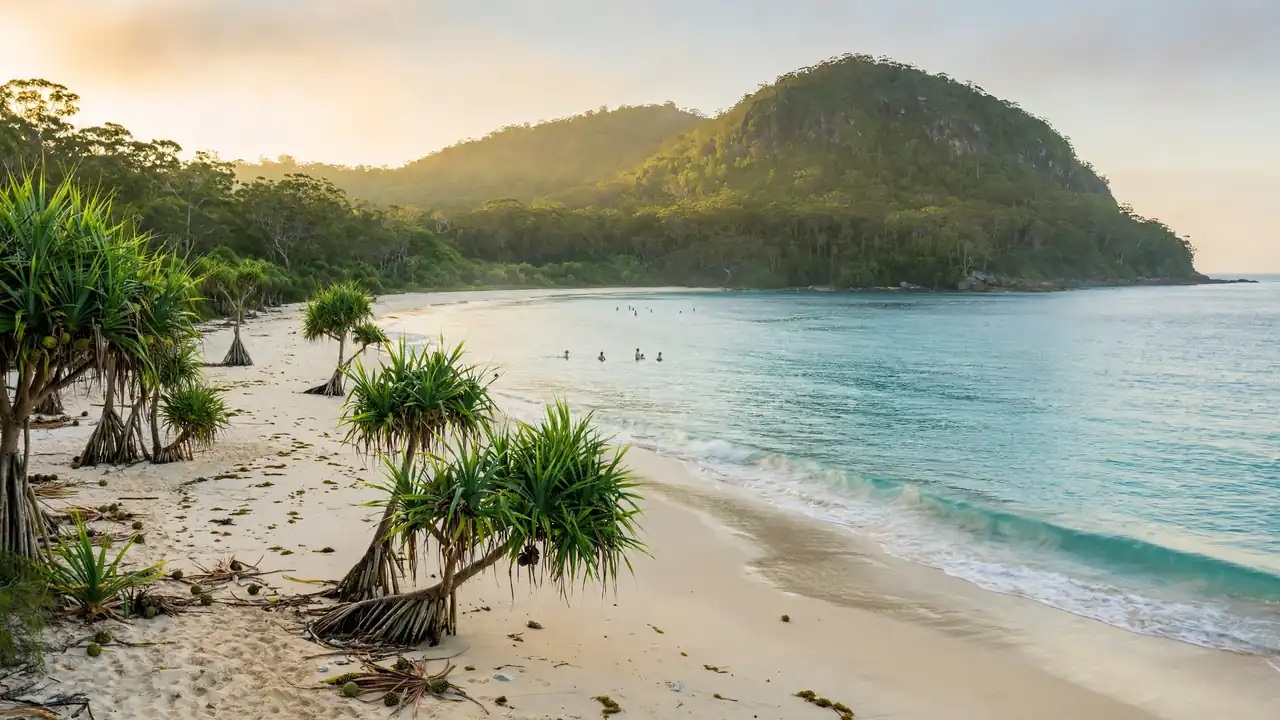
The famous one: north-facing, calm, patrolled, fringed with pandanus — one of the only north-facing beaches on Australia’s east coast, which means sheltered swimming even when the southerly blows. The boardwalk behind the beach links to Hastings Street. It gets busy — walk east toward the national park for space.
Sunshine Beach
South of the headland: 15 km of open surf beach, patrolled at the surf club end, with a village of cafés. The Sunshine Beach Surf Club does an excellent breakfast with ocean views. Wilder and quieter than Main Beach.
Tea Tree Bay and Granite Bay
The national park coves — reached only on foot. Tea Tree Bay is the swimmable one; Granite Bay is the explorer’s one. Both are magical on a weekday morning.
Noosa Spit and the River
West of Main Beach: the Noosa Spit Recreation Area — calm river beaches, BBQs, and the dog beach. The Noosa River is ideal for stand-up paddleboarding, kayaking and the river ferry to Noosaville and Tewantin.
Hastings Street: Eating and Shopping
Hastings Street is Noosa’s famous strip — beachfront restaurants, boutiques, galleries and bars. It is expensive and touristy, but the quality is high:
- Breakfast: the Hastings Street cafés are institutions — expect A$24–30 for the full breakfast.
- Fine dining: Season, Ricky’s River Bar (on the river at Noosaville — the sunset spot), Bistro C (beachfront).
- Casual: the Noosa Surf Club (the best-value ocean-view meal in town), Miss Moneypenny’s, the Noosaville riverfront restaurants.
- Markets: the Noosa Farmers’ Market (Sunday mornings, Noosaville) — superb local produce.
Budget A$25–35 for lunch, A$50–85 per person for dinner. Noosa is premium-priced — the Noosaville and Tewantin river precincts offer better value than Hastings Street.
The Noosa Everglades
The Noosa Everglades — one of only two everglades systems in the world (the other is Florida) — is Noosa’s hidden wonder: 60 km of pristine waterways through Cooloola National Park. Kayak and cruise tours from HABITAT Noosa (Lake Cootharaba) explore the Narrabeen and upper Noosa River — mirror-still black water, ancient paperbarks, abundant birdlife. Full-day kayak tours run around A$150–180 per person (approximately); the self-guided canoe trails (with camping platforms) are the adventurer’s option. Allow a full day.
The Hinterland
- Eumundi: 20 minutes inland — the famous Eumundi Markets (Wednesday and Saturday, Australia’s largest artisan markets), the Imperial Hotel brewery, and a gorgeous heritage main street.
- Montville and Maleny: 40 minutes into the Blackall Range — mountain villages with galleries, cheese factories (Maleny Cheese), the Maleny Botanic Gardens, and Gardners Falls swimming hole.
- Mount Coolum: the 208-m volcanic dome between Noosa and Coolum — a steep 1.6-km return climb with 360° coastal views. Go at sunrise.
- Cooloola: north of the river — the Teewah Beach coloured sands, Double Island Point (dolphins, turtles, the lighthouse walk), accessible by 4WD or tour.
Where to Stay
Hastings Street/Noosa Heads: the prime location — walk to Main Beach and the national park. A$300–600+/night. Noosaville: the river side — apartments, better value, family-friendly. A$200–350/night. Sunshine Beach: quieter, village feel. Tewantin: the local town — cheapest beds. Noosa is one of Australia’s priciest regional destinations — book 3–6 months ahead for summer and Easter.
Getting Around
Central Noosa (Hastings Street, Main Beach, national park entrance) is walkable. The river ferry links Noosa Heads, Noosaville and Tewantin. Buses cover the coast. For the Everglades, Eumundi, Montville/Maleny and Cooloola you need a car. Noosa is 2 hours north of Brisbane (Bruce Highway) — the Brisbane Airport shuttle buses run regularly.
Practical Tips
- Book restaurants ahead — the good ones fill days out, especially weekends.
- National park track: start by 8 am; carry 2L of water; no bins — take rubbish out.
- Stingers: rare at Noosa’s ocean beaches but possible November–May — swim at patrolled beaches.
- Eumundi Markets: Wednesday is quieter than Saturday; arrive before 10 am.
- Sun: the north-facing beach means all-day sun — the pandanus shade is precious.
Noosa is the Sunshine Coast’s crown — pair it with our Brisbane guide (2 hours south) or contrast it with Byron Bay (the NSW counterpart). For reef-and-islands further north, see our Whitsundays guide. For official trip ideas, see visitnoosa.com.au.
The Noosa River: Paddle, Cruise and Fish
The Noosa River — the calm water behind the beaches — is Noosa’s other playground:
- Stand-up paddleboarding: hire from Noosaville (around A$30–40/hour, approximately) — paddle the calm reaches past waterfront homes, pelicans, and black swans. Sunrise is magical (the glass-off conditions).
- Kayaking: the Noosa River kayak trails — paddle to Harry’s Hut (the historic hut in the national park, 8 km upstream) or the Kinaba information centre.
- River cruises: the Noosa Ferry (the hop-on hop-off service — Noosa Heads to Tewantin), sunset cruises (the river at golden hour), and eco-cruises (the birdwatching tours).
- Fishing: the Noosa River is a renowned fishery — flathead, whiting, trevally, mangrove jack. Charter from Noosaville or fish from the Noosa Spit (no licence needed for recreational fishing in Queensland, but size/bag limits apply).
- Noosa Spit Recreation Area: the dog beach, the BBQs, the calm swimming — the local family’s weekend spot.
Day Trip: Rainbow Beach and K’gari (Fraser Island)
Rainbow Beach (1 hour north) is the gateway to K’gari (Fraser Island) — the world’s largest sand island (World Heritage). The day trip (around A$250–300 per person, approximately, 4WD tour) visits Lake McKenzie (the perched lake — white silica sand, crystal water), 75 Mile Beach (the beach highway), the Maheno shipwreck, Eli Creek (the float down the creek), and the Pinnacles (the coloured sands). Rainbow Beach itself offers the Carlo Sandblow (the massive sand dune — sunset is spectacular), Double Island Point (the lighthouse walk, dolphins, turtles), and paragliding off the sandblow. K’gari needs a high-clearance 4WD (hire in Rainbow Beach or take a tour) — dingoes are wild (never feed, fines apply).
Noosa’s Best Kept Secrets
- Tea Tree Bay at dawn: the national park cove — empty, glass-off, dolphins. The 20-minute walk is worth the early alarm.
- Laguna Lookout: the Noosa Heads viewpoint — the panorama from Noosa to Coolum. Sunset spot.
- Noosa Farmers’ Market (Sunday): the Noosaville market — local produce, breakfast, live music. Arrive hungry.
- Tewantin: the old town — the Noosa Marina (the riverfront restaurants), Ric’s (the historic pub), better value than Hastings Street.
- Mount Tinbeerwah: 20 minutes inland — the 360° lookout (the coast to the hinterland), the 1-km return walk. Sunset spot.
Noosa’s Dining Guide: Hastings Street to Tewantin
Hastings Street is the famous strip — but the best eating spreads wider:
- Hastings Street: Bistro C (the beachfront — the breakfast institution), Season (the fine dining — hatted), Aromas (the café — the people-watching), Miss Moneypenny’s (the scene — cocktails, share plates).
- Noosaville: Ricky’s River Bar (the riverfront — the sunset spot, book the deck), Thomas Corner Eatery (the local favourite — modern Australian), Locale (the Italian — the river views).
- Tewantin: Ric’s (the historic pub — the beer garden), Noosa Marina restaurants (the waterfront — better value than Hastings Street), Belgian chocolate cafés.
- Sunshine Beach: the Surf Club (the best-value ocean-view meal — breakfast with waves), Ducati cafés (the village strip).
- Markets: the Noosa Farmers’ Market (Sunday, Noosaville — the produce), the Eumundi Markets (Wednesday/Saturday — the street food).
Budget: A$25–35 (lunch), A$50–85 (dinner). Book the top restaurants days ahead — Noosa books out.
Noosa’s Best Swimming Spots Ranked
- 1. Noosa Main Beach: the patrolled, north-facing, calm beach — the safest ocean swim. Swim between the flags.
- 2. Tea Tree Bay: the national park cove — the 20-minute walk, the clear water, the granite headland.
- 3. Noosa River (Noosaville): the calm river — the warm water, no surf, family-friendly.
- 4. Laguna Bay (Noosa Spit): the sheltered bay — the dog beach end, the calm swimming.
- 5. Sunshine Beach (patrolled section): the surf beach — the waves, the surf club patrol (summer).
- 6. Granite Bay: the rock pools — the explorer’s swim (the national park track).
- 7. Lake Weyba: the lake — the warm, shallow water (the locals’ secret).
Noosa Packing Checklist
Pack for Noosa: swimmers (the water is swimmable year-round), reef-safe sunscreen, hat, walking shoes (the national park track is uneven), water bottle (no refills on the coastal track), light rain jacket (the afternoon showers, November–March), and binoculars (the dolphins at Dolphin Point, the whales June–November).
Noosa Travel FAQs
How many days do you need in Noosa?
Two to three days is ideal: one for the Noosa National Park coastal walk, one for Main Beach and Hastings Street, and one for the Everglades or the hinterland (Eumundi, Montville/Maleny). Add days for Cooloola and Double Island Point.
What is the best walk in Noosa?
The Noosa National Park coastal track — walk the 5.4-km section from Noosa Heads to Hell’s Gates and back (2–3 hours), passing Tea Tree Bay, Granite Bay and Dolphin Point. Start by 8 am and bring water.
Is Noosa expensive?
Yes — Noosa is one of Australia’s priciest regional destinations. Expect A$300–600+/night near Hastings Street, A$50–85 per person for dinner. Noosaville and Tewantin offer better value; book 3–6 months ahead for summer.
What is the best month to visit Noosa?
March to May and September to November offer warm weather, warm water and fewer crowds. Winter (June–August) is sunny, mild and cheapest with whale watching. Summer is hot, humid and busiest.
Can you swim at Noosa beaches year-round?
Yes — the water rarely drops below 21°C. Noosa Main Beach is patrolled, calm and north-facing, making it swimmable in all seasons. Swim between the flags; stingers are rare but possible November–May.