
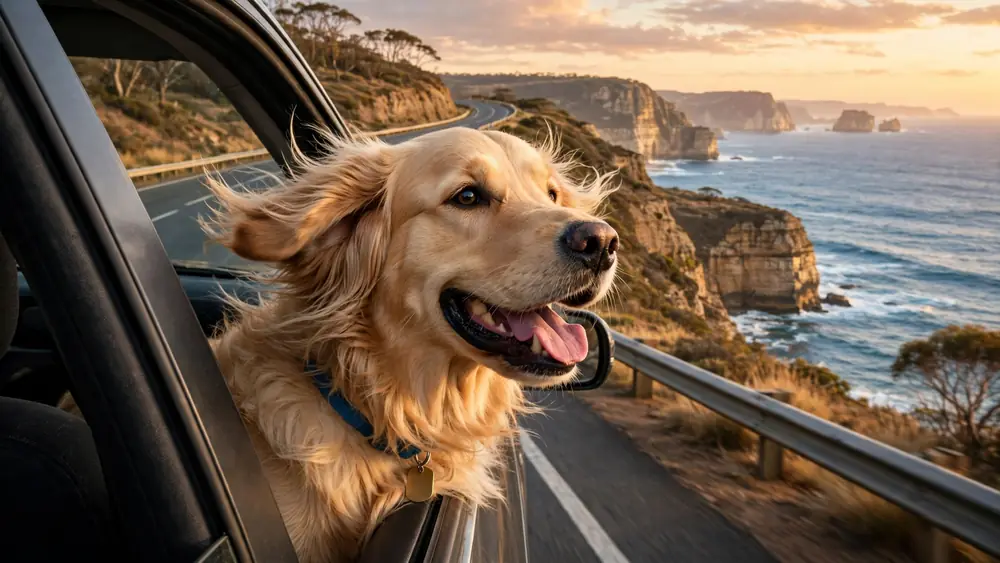
Australia is a wonderful place for doing road trips, and there’s no better joy than bringing your beloved dog with you. Australia has long coastlines, endless beaches, and tons of nature parks. And dogs will love every bit of adventuring around this beautiful country.
But of course, having a dog along for the ride isn’t the same as having friends with you. They have specific needs and may not be as easy to bring everywhere. The good news is that with the right planning, bringing your dog along for a road trip can be very doable.
Start with the vet, not the map
Schedule a check up with your vet before you start any road trip planning. You’ll need to make sure they’re vaccinated, have flea and tick prevention, and are wormed. There are areas along the east coast that have life threatening ticks, so make sure you give them the right preventative measures.
While you’re at it:
- Check the microchip details. This can protect your dog if they ever get lost.
- Put your mobile number on the tag.
- Ask about travel sickness. Some dogs can handle being in the car well while others get sick right away. Take your dog for a few test drives and see if your vet has suggested medications to help with travel sickness.
- Take a copy of vaccination records and any medication.
The rules that actually matter
Different states, councils, and parks have different rules, so make sure you find out beforehand so you don’t encounter any surprises later on. Check each local authority’s website before you go.
In the car. In most of Australia, dogs are not allowed if not properly restrained. Even in places where this is not a rule, an unrestrained dog can get you in trouble because it can jump onto you in a fit of excitement and potentially cause an accident. They can also accidentally projectile if you stop too suddenly.
National parks. Most national parks don’t allow dogs at all, some won’t even let you leave dogs in the car. Look for pet friendly forests, beaches, and campgrounds, and find out whether you need a lead or muzzle for your dog.
Beaches. This is highly dependent on the area but many councils have off leash areas or off leash hours. Some have strict bans during summer or have areas where dogs are allowed. Be sure to do your research and look out for signs.
State borders and ferries. Some states and territories have their own entry conditions for dogs, and travelling to Tasmania by ferry has a separate booking process for pets. Look this up well before you travel, not at the terminal.
Leads and poo bags. Even in off-leash areas, have a lead with you and pick up after your dog.
The gear worth packing
Here are a list of things you should bring with you on your road trip with your dog:
- A secure harness or crate.
- A seat cover or boot liner. To protect your upholstery.
- A collapsible bowl and more water than you think you need.
- A cooling mat or wet towel.
- Pre-portioned meals, plus a spare day.
- A basic dog first-aid kit.
- Paw protection.
- Towels, wipes and a spare lead.
If you’re planning a longer trip, our travel gear page is a good place to start thinking about what else belongs in the boot.
How far, how often
A good rule of thumb is to have regular stops every 2 or 3 hours for at least 15 to 20 minutes. Allow them to have a proper walk, a drink, and a sniff, so they have time to potty.
How much exercise your dog needs during these stops depends on the breed. A high-energy dog like a Labrador typically needs a couple of 30-minute walks each day at home, and a day of sitting in the back seat doesn’t change that.
A few things that make the days easier:
- Drive in the cooler parts of the day especially during summer.
- Don’t try to do eight-hour hauls back to back. Both of you will be wrecked. Shorter driving days leave more time for swims and exploration.
- Never leave your dog in a parked car. A car interior can reach dangerous temperatures very quickly, even on a mild day.
- Do the hand test. If you can’t hold the back of your hand on the pavement or sand for about five seconds, it’s too hot for your dog’s paws.
Timing matters too. If you’re still deciding when to go, our guide to the best time to visit Australia will help you avoid the hottest stretches in each region. Spring and autumn are usually kinder on dogs than peak summer.
Rest stops and places to stay
Highway rest areas are fine for a toilet break, and a lot of cafes and pubs have dog-friendly outdoor seating. It’s worth doing a quick search before you set off so you know where your next good stop is rather than hoping one shows up.
For accommodation, “pet-friendly” can mean very different things:
- Holiday and caravan parks. Many allow dogs, but often only in certain sites or cabins, and sometimes not over school holidays. Ring and confirm.
- Motels and rentals. Use the pet filter on booking sites, then check the fine print. Size limits and cleaning fees are common.
- Free and low-cost camps. Camping apps list whether pets are allowed. Remember that national park campgrounds typically aren’t.
Never leave a dog alone in a new room or cabin unless you know they’re comfortable with it. Barking dogs are the quickest way to get a place to stop accepting pets.
Hazards that are very Australian
This isn’t to scare you off, just to make sure you’re not caught out.
- Ticks. Check your dog carefully in tick country. Prevention products help but they are not completely fool proof.
- Snakes. Keep your dog on a lead in long grass and bushland, especially in warmer months.
- Cane toads. Their toxins can be dangerous to dogs so don’t let your dog lick them.
- Poison baits. In some regional areas, baiting for foxes and wild dogs is commonly used. Look out for signs and keep your dog close in such areas.
- Blue-green algae. If in doubt, don’t let them swim or drink murky water.
- Grass seeds. These can lodge in ears, paws and eyes. Check after every bushwalk.
- Surf, rips and jellyfish. A dog that loves water can easily get into trouble so keep an eye on them.
- Heatstroke. Take note if there is heavy panting, drooling, dizziness and vomiting. Keep them hydrated to prevent this.
Go slower than you planned
The best road trips with a dog are the ones where you accept that you’ll cover less ground. You’ll stop more, you’ll detour for a beach, and you’ll spend longer at the places that actually welcome dogs. That’s not a downside. It’s usually the best part of the trip.
Sort the vet visit, check the rules for each stop, pack the gear that matters, and keep the days short enough that both of you enjoy them. Do that and you’ll have a travel buddy who’s thrilled about every single kilometre.