
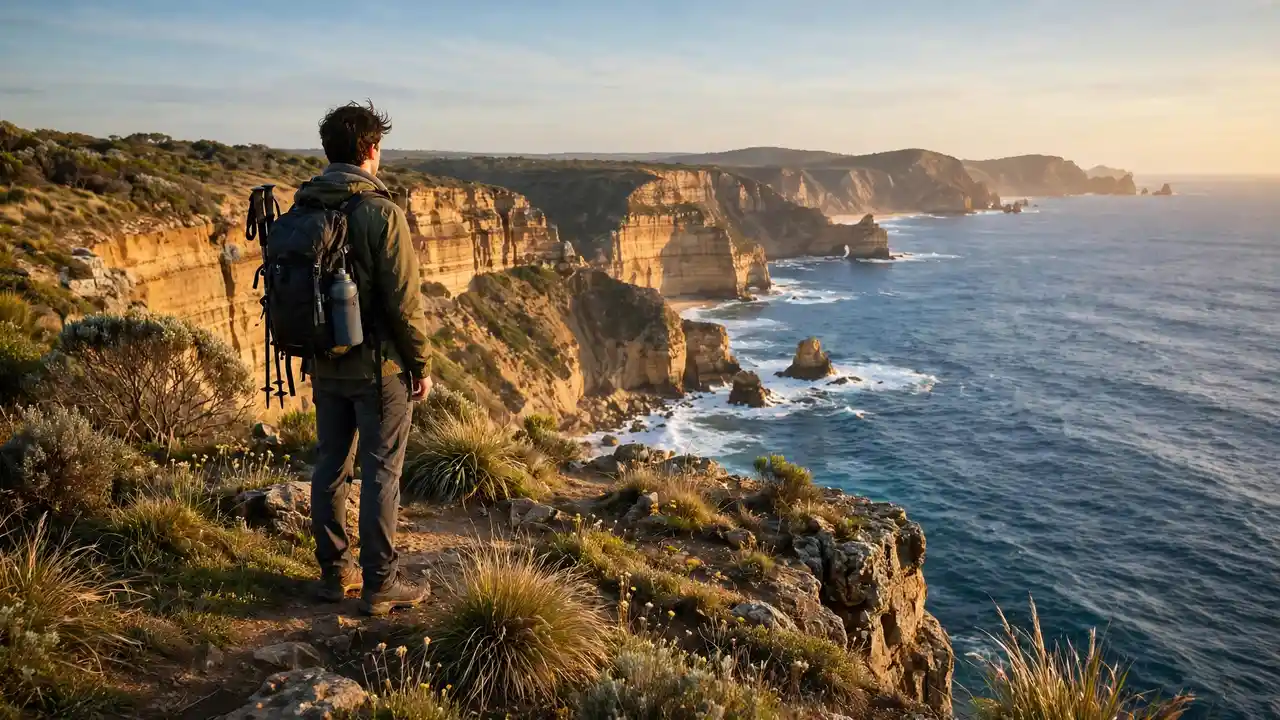
Solo Travel in Australia: Safety Guide & Best Spots
Australia is one of the best countries in the world to travel alone — English-speaking, well-connected, with a deep backpacker culture that means you are never the only solo traveller in the room. But “safe” does not mean “risk-free”: the distances are vast, the environment can be unforgiving, and the usual city precautions still apply. This solo travel Australia safety guide covers the essentials, the best destinations for lone travellers, how to meet people, and the mistakes to avoid.
Is Australia Safe for Solo Travellers?
By global standards, yes — Australia consistently ranks among the safer destinations for independent travel. Violent crime against tourists is rare, the political environment is stable, and emergency services are reliable (triple zero — 000 — works everywhere, and 112 works from mobiles even without reception on your network).
The real risks for solo travellers are different from the ones people worry about: distance, heat, water and wildlife. More tourists get into trouble underestimating a hike, swimming at an unpatrolled beach or driving tired on remote roads than from any human threat. Respect the environment and you have handled the biggest dangers.
Safety Essentials for Solo Travellers
Share your plans
Tell someone — a hostel receptionist, a friend back home, family — where you are going and when you expect to be back, especially for hikes, road trips and remote travel. Australia’s search-and-rescue system works, but only if someone knows you are missing.
Stay connected
Telstra has the widest regional coverage in Australia — if you are going beyond the cities, it is worth the switch. Download offline maps before leaving coverage areas, and consider a personal locator beacon (PLB) for remote hiking. Our essential travel apps list covers connectivity tools.
Trust your instincts with people
The backpacker trail is overwhelmingly friendly, but stay alert in the usual ways: watch your drink, do not leave valuables visible, be cautious about lifts from strangers in remote areas, and have an exit plan from any situation that feels wrong. Hostels with good reviews and female-only dorms (where offered) add a layer of comfort.
Water safety
Swim at patrolled beaches between the red and yellow flags. Rip currents kill more tourists than sharks — if caught in one, float and signal rather than fighting it. In the tropical north, observe stinger season precautions (November-May) and never swim in estuaries or waterways where crocodiles may be present. The signs are not decorative.
Road safety
Do not drive tired — fatigue kills on long Outback roads. Plan fuel stops (distances between servos can exceed 200km), carry water, and avoid driving at dawn and dusk in rural areas when kangaroos are most active. If your car breaks down remotely, stay with the vehicle.
Best Destinations for Solo Travellers
Melbourne — easiest city to be alone in
Laneway bars, live music, great hostels and a culture that treats dining alone as normal. The hostel scene in Fitzroy and St Kilda makes meeting people effortless.
Sydney — iconic and social
Coastal walks, harbour beaches and a huge backpacker infrastructure. Bondi and Coogee hostels are social hubs; the free coastal walks are perfect solo activities.
Cairns and the Great Barrier Reef — the backpacker capital
Cairns exists for travellers. Reef trips, rainforest tours and hostel bars mean you will meet dozens of fellow solo travellers within days. Group tours solve the “who do I do this with” problem.
Byron Bay — wellness and surf
Yoga, surf lessons and a laid-back crowd. Ideal for solo travellers who want a slower pace and easy socialising.
Tasmania — for independent explorers
Wilderness, food trails and small towns. Better suited to confident solo travellers with a car — the rewards (empty beaches, mountain huts, world-class produce) are worth the effort.
The Red Centre — do it on a tour
Uluru and Kings Canyon are bucket-list, but the distances and heat make solo self-driving risky for the inexperienced. Multi-day group tours from Alice Springs are the smart solo option — transport, guiding and company in one.
How to Meet People (Without Forcing It)
- Stay in social hostels: read reviews for “social atmosphere” — the best hostels run barbecues, trivia and group outings.
- Join day tours: reef cruises, surf lessons, wine tours and city walking tours are full of solo travellers. Book the group option, not the private one.
- Take a class: surf lessons, cooking classes and dive courses create instant shared experience.
- Work or volunteer: hostel work-for-accommodation, harvest work or conservation volunteering builds real connections fast.
- Use common spaces: eat in the hostel kitchen, not your room. Most travel friendships start over someone else’s cooking.
Solo Travel Scams and Annoyances
Solo travellers are marginally more targeted by touts and scammers — not because Australia is dangerous, but because a lone traveller looks more approachable. The common ones: overcharging by unlicensed “taxis” at airports, timeshare-style pitches at tourist strips, and rental scams on accommodation sites. Our guide to travel scams targeting Australians covers the full list and how to shut each one down.
Solo Travel on a Budget
Solo travel costs more per person — no one to split the room, the taxi or the hire car. The fixes: hostel dorms (the solo traveller’s best friend), cooking in hostel kitchens, free activities (coastal walks, beaches, markets, galleries), and ride-share boards for splitting long drives. Our 30 budget travel tips for Australia has the full playbook — most of the savings apply double when you are solo.
When to Splurge as a Solo Traveller
Spend on: a private room occasionally (sleep quality matters), group tours for remote destinations (safety + company), and travel insurance (no companion means no backup plan — medical evacuation cover is non-negotiable). Save on: accommodation most nights (dorms), food (cook), and transport (buses over flights where time allows).
Solo Female Travellers: Specific Notes
Australia is widely considered safe for solo female travellers, and thousands do it every year. The same general advice applies, plus: choose well-reviewed hostels (many offer female-only dorms), be cautious with late-night transport in unfamiliar cities (use booked rideshares, not hailed cars), and trust the “this feels off” instinct without apology. The backpacker trail from Sydney to Cairns is one of the most travelled solo-female routes in the world — you will be in good company.
For official safety information, check destination advice at smartraveller.gov.au before and during your trip.
Two-Week Solo Itinerary: The East Coast Classic
The definitive first solo trip in Australia: Days 1-3 Sydney (Bondi-Coogee walk, harbour ferry to Manly, hostel in Bondi), Days 4-5 Byron Bay (surf lesson, lighthouse walk), Days 6-8 Brisbane + Noosa (day trip north, national park walks), Days 9-11 Airlie Beach/Whitsundays (2-day sailing trip — the ultimate solo social experience), Days 12-14 Cairns (Great Barrier Reef day trip, Daintree tour). Book the sailing trip and reef tour in advance; leave the rest flexible. You will meet your travel family in the first hostel — the itinerary after that tends to write itself.
Hostel Safety: Choosing and Staying
- Read recent reviews filtering for “solo” and “safe” — patterns matter more than one bad review.
- Lockers: bring your own padlock; use the locker for passport, cards and electronics every time you leave.
- Female-only dorms: available at most large hostels — book them if you prefer.
- Arrive in daylight: plan arrivals before dark in unfamiliar cities; hostels in nightlife districts are noisier.
- Trust the vibe: a hostel with no common area, no staff presence and bad reviews is not worth the $10 saving.
Solo Travel Insurance: Non-Negotiable Extras
Solo travellers need everything in a standard policy plus attention to two things: medical evacuation cover (no companion to advocate for you — the insurer’s emergency line becomes your advocate, so choose an insurer with direct hospital payment), and activity cover matching what you will actually do (surfing, diving, hiking — declare them). Keep the emergency number and policy number in your phone and on paper, and tell someone at home which insurer you are with.
Working While Travelling Solo
The digital nomad life and solo travel overlap heavily in Australia — good wifi, English-speaking, and coworking spaces in every major city. The practicalities: hostels with dedicated work areas (check reviews — “good wifi” in a listing means nothing), coworking day passes ($30-$50 in Sydney/Melbourne), and timezone maths for overseas clients (Australia is brutally offset from Europe and the US). Tax-wise, working remotely for a foreign employer while travelling is a grey area — get advice if it is more than a few weeks. The lifestyle works best in slow-travel mode: a month in Melbourne with a coworking membership beats a week of frantic sightseeing with a laptop.
Night Safety in Australian Cities
Australian cities are relatively safe at night, but solo travellers should know the patterns. Kings Cross (Sydney) and parts of St Kilda (Melbourne) have nightlife edges — fine with awareness, less fine very late and very drunk. Use booked rideshares rather than walking alone through unfamiliar areas after midnight. Keep your phone charged and share your live location with someone when heading out. And the standard rule that bears repeating: watch your drink being poured, and never leave it unattended. Most “bad nights” in Australian cities involve alcohol, not crime.
Beating the Post-Trip Blues
Solo trips end, and the return can hit hard — especially after months of constant novelty and company. The re-entry plan: schedule something social for your first week back, start planning the next trip (even vaguely), and channel the energy — many solo travellers return with new directions (career changes, moves, relationships). The blues are real but temporary; they are also proof the trip mattered. Keep the friendships: the hostel friends scattered across continents are the real souvenir.
Packing for Solo Travel: The Differences
Solo packing differs from couple/family packing in three ways. Security: a portable door lock or doorstop alarm ($15, weighs nothing) for hostel privates and budget hotels; a slash-proof bag or money belt for high-risk areas. Self-sufficiency: no one to watch your bag while you find the platform — pack so you can carry everything at once, always. A 40L backpack you can sprint with beats a 70L you cannot. Social gear: a pack of cards, a small Bluetooth speaker, snacks to share — the fastest friendship accelerators in hostel common rooms. And the solo traveller’s luxury: packing cubes in bright colours, because when your entire life is in one bag, finding things fast matters.
One last thing: buy your travel insurance the day you book, not the week you fly. Cancellation cover runs from purchase, and travelling solo means there is no one to split the cost if plans change. The right policy, bought early, is the cheapest peace of mind in solo travel.
Frequently Asked Questions
Is Australia safe for solo travellers?
Yes, by global standards Australia is one of the safest countries for solo travel. The main risks are environmental — heat, water, wildlife and remote distances — rather than crime. Standard city precautions, shared itineraries and respect for the environment cover the vast majority of risks.
What is the best place to travel solo in Australia?
Cairns is the backpacker capital and easiest for meeting people. Melbourne and Sydney have the best hostel scenes and solo-friendly city culture. Byron Bay suits a slower pace. Tasmania rewards independent explorers, and the Red Centre is best done on a group tour.
Is it expensive to travel solo in Australia?
Solo travel costs more per person since there’s no one to split rooms, taxis or hire cars. Hostel dorms, hostel kitchens, free activities and ride-share boards for long drives are the main ways solo travellers keep costs down.
Is Australia safe for solo female travellers?
Yes — Australia is widely considered safe for solo female travellers. Choose well-reviewed hostels (many offer female-only dorms), use booked transport at night, and trust your instincts. The east coast backpacker trail is one of the world’s most travelled solo-female routes.
What is the emergency number in Australia?
Triple zero (000) for police, fire and ambulance. From a mobile, 112 also works and will connect even without reception on your own network, using any available carrier.