
Travelling Australia with a Disability: Access Guide
Australia is one of the more accessible countries to travel in — the Disability Discrimination Act has driven decades of improvements to transport, buildings and services — but accessible travel still takes more planning than most guides admit. This travelling Australia with disability access guide covers your rights, flights, accommodation, transport, attractions and the practical details that make the difference between a good trip and a frustrating one.
Your Rights: The Basics
Under the Disability Discrimination Act 1992, it is unlawful for transport operators, accommodation providers and service providers to discriminate against people with disability — including refusing service or charging extra because of disability-related needs (with limited exceptions around safety). Airlines cannot refuse to carry you because of disability, and must provide assistance with boarding, seating and disembarking.
Knowing this matters because problems still happen: being told a wheelchair cannot be accommodated, being charged for an assistance animal, being denied a booking. When it does, you can complain to the operator, escalate to the Airline Customer Advocate for flight issues, or contact the Australian Human Rights Commission. Our flight rights guide covers the complaints process for airline problems.
Flying with a Disability
Book assistance in advance
All Australian airlines offer assistance services — wheelchair support through the airport, help with boarding, seating near toilets, and assistance for vision or hearing impairment. Request it when booking (not at the airport): at least 48-72 hours ahead for standard assistance, longer for complex needs like onboard oxygen or stretcher arrangements.
Wheelchairs and mobility aids
Manual and powered wheelchairs travel as checked baggage free of charge on Australian airlines — they do not count against your baggage allowance. Powered chairs need battery details in advance (spillable batteries have restrictions). Photograph your chair from all angles before handing it over; damage claims need evidence. Consider a lightweight travel chair if your primary chair is expensive or custom-fitted.
Seating
Request aisle seats near the front for easier boarding, or bulkhead rows for legroom and transfer space. Airlines allocate accessible seating on request — ask explicitly rather than hoping the algorithm helps.
Assistance animals
Recognised assistance animals travel free in the cabin on Australian airlines, but you must book ahead and provide accreditation documentation. Rules differ for international flights — check with the airline and the destination country’s quarantine requirements well in advance.
Accessible Accommodation
What “accessible” actually means
“Accessible room” is not a standard — it ranges from a genuinely well-designed space to a standard room with a grab rail screwed to the wall. Always call or email ahead and ask specific questions: door widths, roll-in shower vs shower-over-bath, bed height, hoist availability, step-free access from the car park. Photos help more than descriptions.
Where to search
Mainstream booking sites have accessibility filters, but they are unreliable — treat them as a starting shortlist, then verify directly with the property. Specialist accessible-accommodation directories and disability travel forums have user reviews that flag the reality behind the listing.
Holiday parks and apartments
Caravan parks increasingly offer accessible cabins with proper bathrooms and ramps — often at lower prices than hotels. Serviced apartments give you kitchen, laundry and space, which matters on longer trips. Book the accessible room category explicitly; “we’ll sort it on arrival” is a gamble.
Getting Around
City public transport
All Australian capital cities have accessible public transport, but coverage varies. Sydney trains and ferries are largely accessible; Melbourne’s tram network is mixed — low-floor trams on some routes, older high-floor trams on others (check the PTV app for accessible services). Buses with kneeling ramps are standard in most cities. Plan routes with the transport apps, which show accessible options.
Taxis and rideshares
Wheelchair-accessible taxis operate in all major cities — book ahead rather than hailing, especially at peak times or in regional areas. Some states subsidise accessible taxi fares for eligible passengers. Rideshare wheelchair options exist in major cities but availability is patchy — have a backup plan.
Hire cars
Hand controls and other adaptations can be fitted to hire cars, but you must arrange this well in advance — the vehicle needs to be prepared before pickup. Major hire companies offer this at capital city locations; regional availability is limited. Book directly with the hire company (not an aggregator) to confirm the adaptation.
Intercity travel
Coaches and trains have wheelchair spaces but they are limited — book early and confirm the specific service is accessible. The long-distance trains (like NSW TrainLink and Queensland’s Tilt Train) have accessible carriages; regional coaches vary.
Attractions and the Outdoors
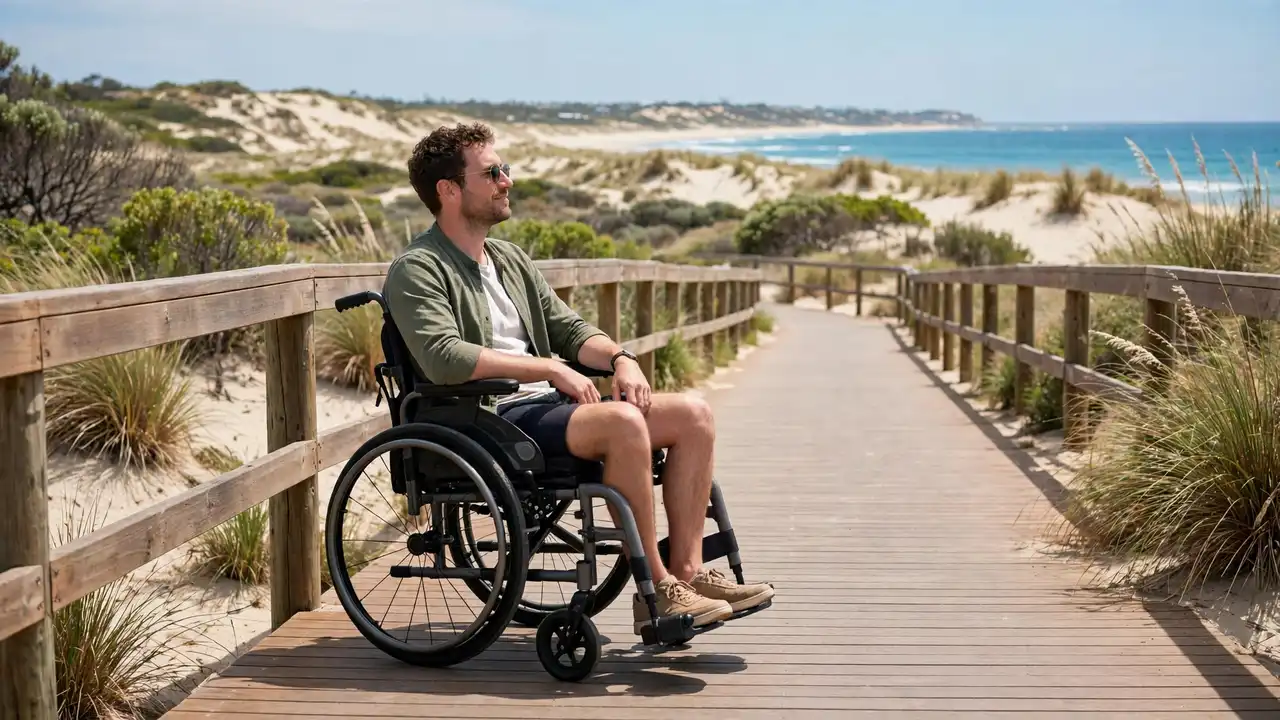
Many major attractions are genuinely accessible: the Sydney Opera House (tours and performances), Melbourne’s major galleries, wildlife parks with sealed paths, and river cruises with ramped boarding. National parks are improving — many now list accessible trails, lookouts and facilities on their websites. Beach access is the standout success story: beach wheelchairs (free to borrow at many patrolled beaches) and accessible beach matting are increasingly common.
The honest caveat: historic sites, wilderness trails and older regional attractions can be genuinely inaccessible. Check before you go, have a plan B, and do not let one inaccessible stop define the trip.
Practical Details
- Companion Card: state-based cards (e.g., NSW Companion Card) let your companion enter venues and events free. If you are visiting from interstate, check reciprocal recognition.
- Changing Places: a network of fully accessible public toilets with hoists and adult change tables — the Changing Places map shows locations.
- Travel insurance: declare disability-related needs and equipment. Wheelchair damage or loss, and the cost of hiring replacements, should be covered — check the PDS. See our travel insurance cover guide.
- Medications and equipment: carry prescriptions, a doctor’s letter for equipment and medications, and spares of critical supplies. Allow extra time at airport security for equipment screening.
- Airports: all major Australian airports have assistance services, accessible toilets and Changing Places facilities — request assistance 48+ hours ahead. Our Sydney Airport guide covers terminal layouts.
For official travel advice including accessible travel resources, see smartraveller.gov.au.
Cruises: Accessibility at Sea
Cruises are among the most accessible holidays available: one unpacking, step-free ships, accessible cabins with roll-in showers, and ports reached without airports. But “accessible ship” varies — older vessels have narrower corridors and fewer accessible cabins, which sell out first. Book accessible cabins 9-12 months ahead for popular itineraries. Check tender ports (where you transfer by small boat — often not wheelchair accessible) versus dock ports on your itinerary. And buy cruise-specific travel insurance: medical care at sea is expensive and standard policies often exclude cruises.
Booking Tours and Attractions Accessibly
When booking tours, call the operator directly and describe your specific needs — “wheelchair accessible” means different things to different operators. Ask: step-free boarding? Accessible toilet on board? How does the wheelchair get secured? What happens if the accessible vehicle breaks down? Good operators answer precisely; vague answers (“she’ll be right”) are a red flag. For major attractions, check their access guides online before visiting — most large Australian attractions now publish detailed accessibility information including maps.
Assistance Dogs: Know the Detail
Recognised assistance dogs have public access rights under federal and state law — they can go where pets cannot, including restaurants, shops and public transport. Carry the dog’s accreditation and know the distinction: an assistance dog (trained for disability-related tasks) has rights a therapy or emotional support animal does not. Interstate travel is straightforward; international travel involves quarantine and import permits that take months — start the process the day you book. Airlines need advance notice and documentation for in-cabin travel.
Emergency Planning: The Access Version
Emergencies are harder with access needs — plan for it. Carry: a written summary of your condition, medications and equipment (paramedics need this fast); spare essential medication in a separate bag; your equipment supplier’s contact details; and a plan for equipment failure (who hires a replacement wheelchair in this town?). The Emergency+ app shows your GPS coordinates to triple-zero operators — install it. If you travel with a support worker or companion, brief them on your emergency preferences. And check your travel insurance covers emergency equipment hire and the cost of a companion’s extended stay if you are hospitalised.
Travel Agents Who Specialise in Access
General travel agents often guess at accessibility; specialist accessible-travel agents know it. They verify room measurements, book confirmed accessible transfers, arrange equipment hire at destinations, and know which tour operators genuinely cater to access needs versus those who just claim to. For complex trips — multi-city itineraries, cruises, or significant access needs — a specialist agent’s fee pays for itself in avoided disasters. Ask for references from travellers with similar needs, and verify their claims about specific properties independently.
The Access Packing Checklist
- All medications plus 3-5 days’ surplus, in original packaging with prescriptions
- Doctor’s letter describing your condition and equipment (for security, airlines and foreign doctors)
- Equipment chargers, spare parts and tools (wheelchair tyre pump, spare fuses, Allen keys)
- Portable ramp or threshold plate if you use one
- Shower chair or bath seat if needed (confirm the accommodation has one first)
- Travel insurance documents with the equipment cover section highlighted
- Companion Card and any access membership cards
Attraction Access: Sydney and Melbourne Highlights
The major attractions in Australia’s two biggest cities are genuinely accessible — with specifics worth knowing. Sydney Opera House: step-free access to the Concert Hall and most venues, accessible tours bookable in advance, hearing loops in major spaces. Taronga Zoo: steep in parts — the Sky Safari cable car is wheelchair accessible and the best way to manage the hill. National Gallery of Victoria (Melbourne): fully step-free, wheelchairs available to borrow, Auslan tours on schedule. Melbourne Zoo: flat, sealed paths throughout, accessible toilets well distributed. Federation Square: step-free with good sightlines for events. The pattern: Australia’s flagship cultural institutions have invested seriously in access — it is the smaller regional attractions where you must check ahead.
The Pre-Booking Access Checklist
Run through this before paying for anything: 1. Called the accommodation and confirmed specific access features (not just “accessible”)? 2. Airline assistance booked 48-72 hours ahead, with equipment details provided? 3. Transfers confirmed as accessible vehicles, not just “we can help”? 4. Travel insurance covers your equipment and its hire/replacement cost? 5. Medications, prescriptions and doctor’s letter packed separately from checked bags? 6. Companion Card packed, interstate recognition checked? 7. Key attraction access pages checked, not assumed? 8. Emergency contacts and the Emergency+ app set up? Eight yeses and the trip is as planned as it can be — the rest is what travel is for.
Accessible travel in Australia takes more planning — but the country is genuinely worth the effort. The infrastructure keeps improving, the legal protections are real, and the experiences on offer are the same ones everyone else gets. Plan thoroughly, verify specifically, and go.
Frequently Asked Questions
Can airlines refuse to fly passengers with disability in Australia?
No. Under the Disability Discrimination Act 1992, airlines cannot refuse service because of disability, and must provide assistance with boarding, seating and disembarking. Request assistance when booking (48-72 hours ahead) rather than at the airport.
Do wheelchairs count as baggage on Australian flights?
No — manual and powered wheelchairs travel as checked baggage free of charge on Australian airlines and don’t count against your baggage allowance. Powered chairs need battery details provided in advance. Photograph your chair before handing it over.
What is the Companion Card in Australia?
State-based Companion Cards (e.g., NSW Companion Card) allow a person’s companion free entry to venues and events. If visiting from interstate, check whether your card is recognised reciprocally in the state you’re visiting.
Are assistance animals allowed on Australian flights?
Recognised assistance animals travel free in the cabin on Australian airlines, but you must book ahead and provide accreditation documentation. International rules differ — check with the airline and the destination’s quarantine requirements well in advance.
Is public transport accessible in Australian cities?
All capital cities have accessible public transport, but coverage varies. Sydney trains and ferries are largely accessible; Melbourne’s tram network is mixed (check the PTV app for low-floor accessible services). Buses with ramps are standard in most cities.