
Best National Parks in Victoria
Victoria might be Australia’s smallest mainland state, but its national parks punch absurdly above their weight. From the sandstone ranges of the Grampians to the southernmost tip of the mainland at Wilsons Promontory, the best national parks in Victoria pack rainforest, alpine high country, wild coastline and desert into day-trip distance of Melbourne.
Here are the 10 essential Victorian parks, with what makes each special, the best walks, and when to go.
1. Grampians National Park (Gariwerd)
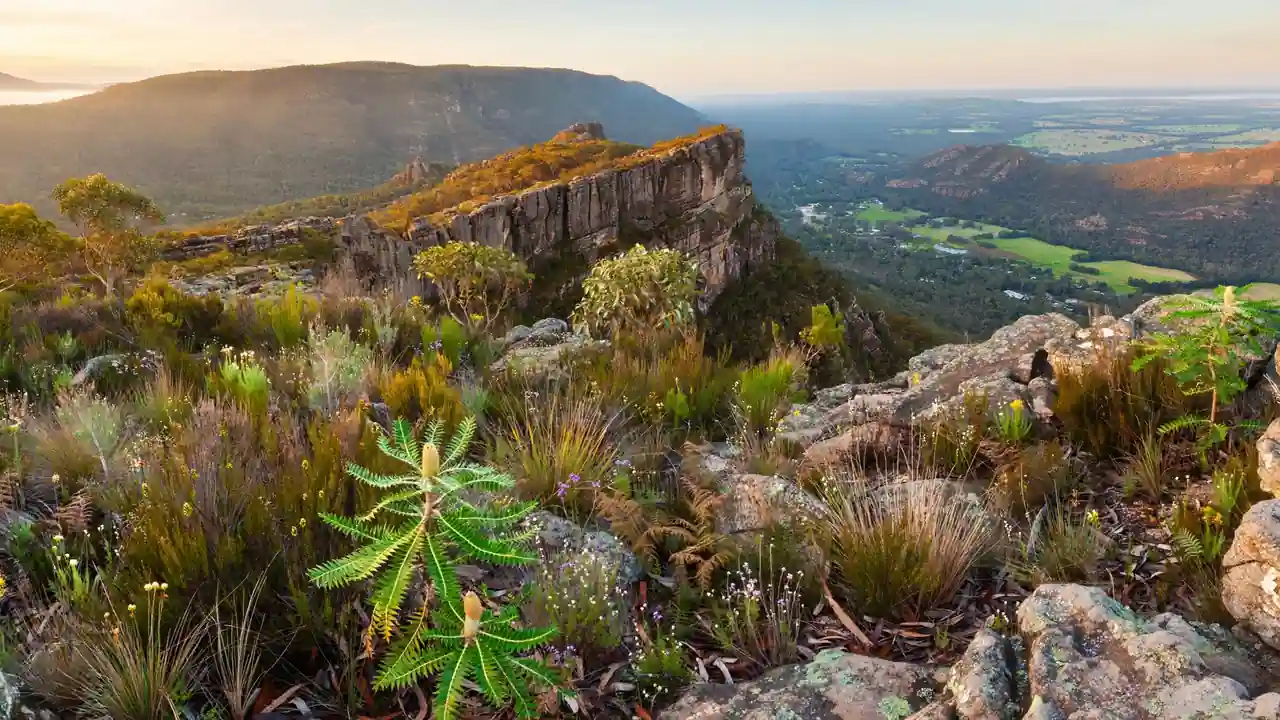
The Grampians — Gariwerd to the Jardwadjali and Djab Wurrung traditional owners — is Victoria’s most dramatic inland park: a series of rugged sandstone ranges rising from the western plains, with the highest point at Mount William (1,167 m). The park is famous for the Pinnacle lookout walk from Halls Gap, Mackenzie Falls (which flows year-round), the Balconies, and one of the richest Aboriginal rock art sites in south-eastern Australia. Spring brings spectacular wildflower displays. Allow two to three days; Halls Gap is the main base with excellent facilities.
2. Wilsons Promontory National Park
“The Prom” is the southernmost point of mainland Australia — 50,000 hectares of granite mountains, rainforest, heathland and some of Victoria’s best beaches. Squeaky Beach (the sand literally squeaks), the hike to the summit of Mount Oberon for the classic view over Tidal River, and the multi-day Southern Prom Circuit for experienced walkers. Wombats graze the Tidal River campground at dusk. Book campsites well ahead — the Prom is Victoria’s most popular park and Tidal River books out in summer.
3. Great Otway National Park
Stretching from Torquay to Princetown along the Great Ocean Road, the Otways combine tall eucalypt forest, ancient cool-temperate rainforest, and waterfalls. Highlights: the rainforest walk at Maits Rest, the Californian redwoods at Aire Valley, Erskine Falls and Hopetoun Falls, and the glow-worms at Melba Gully after dark. The Great Ocean Walk traverses the park’s coastal edge — see our best hikes in Australia for details.
4. Alpine National Park
Victoria’s largest national park protects the state’s high country — the Bogong High Plains, Mount Bogong (1,986 m, Victoria’s highest peak), Mount Feathertop’s razorback ridge, and the historic cattlemen’s huts. Summer brings wildflower meadows and the Great Alpine Road touring route; winter brings snow and backcountry skiing. The Falls to Hotham Alpine Crossing is one of Australia’s great multi-day walks.
5. Mornington Peninsula National Park
An hour from Melbourne, this coastal park protects the wild ocean side of the peninsula: the dramatic cliffs and rock formations of Cape Schanck, the surf beaches of Gunnamatta, and the bay-side calm of Point Nepean (with its quarantine station history and dolphin-spotting lookouts). The Two Bays Walking Track crosses the peninsula. Pair with the peninsula’s hot springs — see our best hot springs in Australia guide.
6. Dandenong Ranges National Park
Melbourne’s mountain backyard: towering mountain ash forest, fern gullies, and the famous 1000 Steps (Kokoda Track Memorial Walk) — the city’s favourite fitness pilgrimage. Sherbrooke Forest’s lyrebirds, the Alfred Nicholas Gardens in autumn, and Puffing Billy’s steam railway nearby. Perfect for a half-day escape from the city.
7. Point Nepean National Park
At the very tip of the Mornington Peninsula, Point Nepean combines military history (forts, gun emplacements, the quarantine station) with stunning coastal scenery where the bay meets the ocean. Dolphins, seals and migrating whales are regularly spotted from the lookouts. The park’s layered history — from Aboriginal heritage to Cold War installations — makes it one of Victoria’s most fascinating.
8. Hattah-Kulkyne National Park
In the Mallee near Mildura, Hattah-Kulkyne is classic outback Victoria: red sand, mallee scrub, and a chain of freshwater lakes that attract extraordinary birdlife. Lake Hattah at sunset, with kangaroos on the shore and pelicans on the water, is magical. Best in the cooler months; summer is brutally hot.
9. Croajingolong National Park
In Victoria’s far east, this UNESCO Biosphere Reserve protects one of the most pristine coastal wilderness areas in the state — from the rainforests of the Howe Range to the wild beaches of Mallacoota Inlet. Remote, rugged and gloriously uncrowded. The Wilderness Coast Walk traverses it for experienced hikers.
10. Brisbane Ranges National Park
An hour west of Melbourne, the Brisbane Ranges are Victoria’s wildflower capital — over 600 native plant species, with spring displays that rival WA’s. Anakie Gorge, the Ted Errey Nature Circuit, and koala spotting in the wild. An underrated gem that locals love.
Planning Your Victorian Parks Trip
Park passes and bookings
Victoria’s national parks don’t charge general entry fees (a rarity in Australia), but camping requires booking and fees through Parks Victoria. Popular campgrounds (Tidal River at the Prom, Halls Gap in the Grampians) book out well ahead in summer and on long weekends.
Best time to visit
Autumn (March–May) and spring (September–November) are ideal for most parks — mild weather, wildflowers in spring, autumn colour in the high country and Dandenongs. Summer is peak beach season at the Prom and Mornington Peninsula but brings heat and crowds inland. Winter suits the Grampians and high country (with snow gear) but many alpine roads close.
Wildlife
Victoria’s parks are superb for wildlife: wombats at the Prom, kangaroos in the Grampians, koalas in the Brisbane Ranges and Otways, lyrebirds in the Dandenongs, and platypus in the Otways’ streams at dawn. Our wildlife spotting guide has the full picture.
3-Day Grampians Itinerary
Day 1: Arrive Halls Gap, afternoon walk to the Pinnacle via Sundial carpark (shorter route) for sunset over the Victoria Valley. Day 2: Mackenzie Falls in the morning (go early), then the Balconies and Reeds Lookout in the afternoon, finishing with kangaroo-spotting around Halls Gap at dusk. Day 3: The Grand Canyon walk at Wonderland, Boroka Lookout, then the drive home via the Silo Art Trail towns. Three days covers the highlights; add a fourth for the Mount William summit or the Aboriginal rock art sites (Billimina, Ngamadjidj) with a cultural tour.
Wilsons Prom Camping Guide
Tidal River is the Prom’s main campground — powered and unpowered sites, hot showers, a general store, and wombats grazing at dusk. It books out for summer and long weekends months ahead; book the moment bookings open. For hikers, the overnight hike-in campgrounds (Sealers Cove, Waterloo Bay, Little Waterloo Bay) on the Southern Prom Circuit offer wilder camping — book these too. Camp rules are strict (wildlife protection): secure all food, use the provided facilities, and never feed the animals. The Prom’s popularity means planning ahead is essential — this is not a spontaneous weekend park in summer.
Hidden Gems: Victoria’s Overlooked Parks
Beyond the big names: Lower Glenelg National Park (far south-west) — the Glenelg River’s limestone gorges, canoeing through the Princess Margaret Rose Cave system. Mitchell River National Park (East Gippsland) — the Den of Nargun and the Mitchell River silt jetties. Churchill National Park (outer Melbourne) — koalas, kangaroos and 173 bird species 30 minutes from the CBD. Yarra Ranges National Park — mountain ash forest, the Black Spur Drive, and lyrebirds. These smaller parks deliver big experiences without the crowds — see our best hikes in Australia for walks that touch several of them.
Alpine National Park: Victoria’s High Country
Victoria’s largest national park deserves more than the paragraph above — it’s a destination in itself. The Bogong High Plains (Falls Creek area) offer summer wildflower meadows and the Wallace Hut heritage walks; Mount Bogong (1,986 m) is the state’s highest peak, a serious day climb via Staircase Spur; Mount Feathertop’s Razorback Ridge is one of Australia’s great alpine traverses. In winter, the park becomes backcountry ski country (with all the avalanche and navigation skills that demands). The Falls to Hotham Alpine Crossing (37 km, 3 days) is the signature multi-day walk, hut to hut through snow gum forest and alpine plains. Summer and autumn are the walking seasons; the high country in March — golden grass, clear skies, fewer people — is sublime.
Mornington Peninsula: The Perfect Day Trip
From Melbourne: morning at the Cape Schanck boardwalk and lighthouse, midday at Gunnamatta surf beach (or the calm bay side at Safety Beach for swimmers), lunch in Flinders or Red Hill, afternoon at Point Nepean (forts, quarantine station, dolphin lookouts), and sunset from the bay side. Add the Peninsula Hot Springs for the evening soak and it’s one of the best day trips in Australia. The Two Bays Walking Track (26 km) crosses the peninsula for walkers wanting more.
Victoria’s Alpine Huts and High Plains
The Alpine National Park’s cattlemen’s huts — Wallace’s Hut (1889, the oldest), Cope Hut, Edmondson Hut — are icons of high-country heritage, built by mountain cattlemen and maintained by volunteers. The Falls to Hotham Alpine Crossing links several huts over 37 km of snow gum plains. In summer, the high plains bloom with wildflowers (alpine daisies, billy buttons, trigger plants); in autumn, the snow gums turn gold — one of Victoria’s great autumn colour experiences. Winter brings backcountry skiing for the experienced. The high country is Victoria’s wildest backyard — treat it with the respect remoteness demands.
East Gippsland: Parks of the Far East
Victoria’s far east is its wild frontier. Croajingolong (above) anchors it, but add Errinundra National Park — ancient cool-temperate rainforest with 300-year-old shining gums, some of the oldest forest in Victoria; Snowy River National Park — the wild Snowy Gorge, Little River Gorge (one of the deepest in Victoria), and the McKillops Bridge crossing; and Alpine’s eastern edge around Omeo and Benambra. This is big, empty, beautiful country — allow days, carry everything, and check road conditions. Few international visitors ever see it; most Victorians haven’t either.
Great Ocean Road Parks: Port Campbell and Beyond
The Great Ocean Road’s parks deserve a combined itinerary. Port Campbell National Park — the Twelve Apostles, Loch Ard Gorge, the Arch, London Bridge: the Shipwreck Coast’s limestone theatre, best at sunrise before the tour buses. Great Otway National Park (above) — rainforest and waterfalls 20 minutes inland. Bay of Islands Coastal Park — the quieter, wilder sibling west of the Apostles. Do it as a 3-day Melbourne return: Day 1 — Torquay to Apollo Bay (surf coast, rainforest detours); Day 2 — Apollo Bay to Port Campbell (Otways, then the Apostles at sunset); Day 3 — the Shipwreck Coast at sunrise, then home via the inland Princes Highway. The Great Ocean Road is Victoria’s signature drive — and its parks are why.
Planning Tip: The Parks Victoria App
Before visiting any Victorian park, download the Parks Victoria app and check the park’s page for alerts — track closures, fire bans, flood warnings and campground availability are updated regularly. Book campgrounds online well ahead for summer and long weekends; Tidal River (Wilsons Prom) and Halls Gap (Grampians) are the two that sell out fastest. And carry a paper map as backup — phone coverage is patchy in the Grampians, the high country and the far east. The best Victorian parks trip is the one where the logistics disappear and the landscape takes over. Start with the icons, then go back for the hidden gems — Victoria’s parks reward repeat visits like few places in Australia.
Frequently Asked Questions
What is the best national park in Victoria?
The Grampians (Gariwerd) and Wilsons Promontory are Victoria’s two standout national parks. The Grampians wins for dramatic mountain scenery, waterfalls and Aboriginal culture; the Prom wins for beaches, coastal wilderness and wildlife. Visit both if you can.
Do you need a pass for Victorian national parks?
No — Victoria doesn’t charge entry fees for its national parks. Camping fees and bookings apply at park campgrounds, booked through Parks Victoria.
What is the best time to visit Wilsons Promontory?
Autumn (March–May) is ideal — warm enough for the beaches, fewer crowds, and stunning light. Summer is peak season (book Tidal River months ahead); winter is quiet and moody but the water is cold.
Can you see kangaroos in Victorian national parks?
Easily. The Grampians (Halls Gap), Wilsons Promontory (Tidal River), Hattah-Kulkyne and the Brisbane Ranges all have abundant kangaroos, most active at dawn and dusk.
Plan visits and book campgrounds at Parks Victoria, the official manager of the state’s parks.