
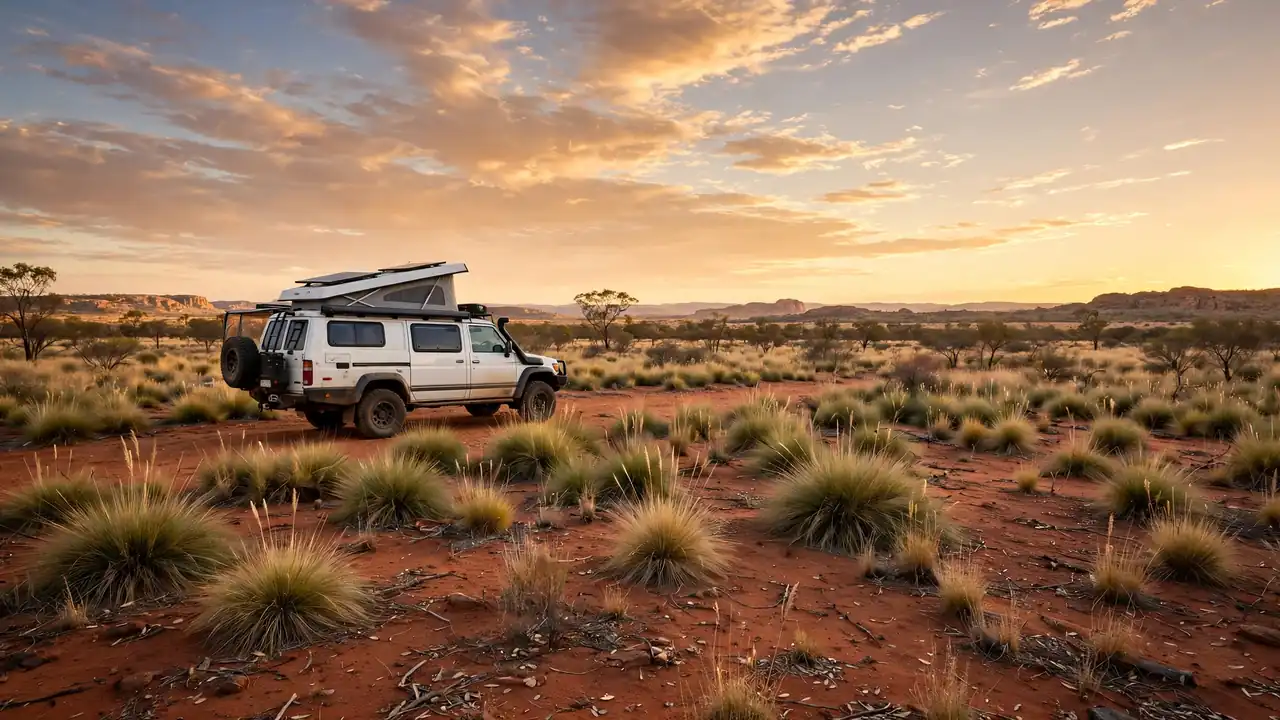
Free Camping in Australia: Rules & Best Spots
Free camping in Australia is one of the great budget travel hacks — thousands of free and low-cost campsites across the country, from outback rest areas to beachside reserves. But the rules are a minefield: they differ by state, by council, and sometimes by individual town. Get it wrong and you’re facing fines; get it right and you’ll camp in spectacular places for nothing.
This guide explains the rules state by state, how to find free camps, the etiquette that keeps them free, and 15 of the best free camping spots in the country.
What Counts as Free Camping?
Free camping means staying overnight in your tent, camper, caravan or motorhome without paying a site fee — typically on public land where it’s permitted. This includes designated free campgrounds (council or community-run), roadside rest areas where overnight stays are allowed, and dispersed bush camping in state forests. It does not include pulling up anywhere you like: camping is prohibited in national parks without a booking (fees apply), on most beaches, in urban areas, and on private land without permission.
The Rules, State by State
New South Wales
NSW is the strictest state for free camping. Camping in national parks requires booking and fees. Free options exist mainly in state forests (Forestry Corporation land), where dispersed camping is generally permitted unless signposted otherwise, and at some council-run rest areas. Many coastal councils ban overnight camping outside designated areas — fines are common and enforced, especially around Byron Bay and the far north coast.
Victoria
Victoria is relatively generous: dispersed camping is allowed in most state forests and many parks under the “bush camping” provisions, and there are numerous free campgrounds. As in NSW, national parks generally charge. Check the specific park’s rules — some high-use areas require bookings even for free sites.
Queensland
Queensland’s national parks require camping permits (booked and paid). Free camping is available at council-run sites, showgrounds (often gold-coin donation) and roadside rest areas on major highways. Some councils actively welcome self-contained travellers with free 24–72 hour sites.
South Australia
SA has excellent free camping, particularly in the outback and on the Eyre and Yorke Peninsulas. Many council and community campgrounds are free or donation-based. National and conservation parks require permits/fees.
Western Australia
WA is a free camper’s paradise in the regions: countless 24-hour rest areas on highways (including the Nullarbor), free council camps, and station stays. National parks charge. Note that many rest areas limit stays to 24 hours and are designed for self-contained vehicles.
Tasmania
Tasmania’s councils vary widely — some welcome free campers, others ban overnight stays outside caravan parks. National parks charge. The east coast and Huon Valley have good free options; always check council signage.
Northern Territory
The NT is relaxed outside of national parks (Kakadu, Litchfield and Nitmiluk require fees/bookings). Roadside rest areas on the Stuart Highway allow overnight stops, and there are free bush camps on the Savannah Way and Plenty Highway routes. Our Savannah Way guide covers the NT’s remote camping reality.
Self-Contained vs Not: Why It Matters
Many free camps — especially council-run sites in towns — are restricted to fully self-contained vehicles (with onboard toilet, water and waste storage). This is the single biggest factor in free camping access: a self-contained campervan or motorhome with certification opens far more doors than a tent or swag. If you’re buying or hiring a camper for a big trip, self-containment certification is worth its weight in gold.
How to Find Free Camps
Apps and websites
WikiCamps Australia is the essential app — crowdsourced listings of free and paid camps with reviews, photos, prices and facilities, working offline. CamperMate and Free Range Camping are solid alternatives. Use them together: listings change, and recent reviews reveal closures or new restrictions.
Visitor information centres
Small-town VICs are goldmines — staff know which free camps are open, which have water, and which have been closed by the council. Stop in; it takes five minutes and saves hours of driving.
Main Roads rest area maps
State road authorities publish rest area maps showing which sites allow overnight stops and what facilities they have. On the Nullarbor and other remote highways, these are your bible — see our Nullarbor guide for how the rest areas work there.
15 Top Free Camping Spots
1. Nullarbor rest areas, WA/SA
The signed rest areas along the Eyre Highway are free, spacious and under enormous skies. Basic (toilets at some, nothing at others), but the stargazing is world-class — see our dark sky guide.
2. Innes National Park surrounds, SA
While the park itself charges, the Yorke Peninsula’s council coastline offers free clifftop camps with Southern Ocean views.
3. State forests of the NSW South Coast hinterland
Dispersed bush camping among spotted gums, free, with towns like Narooma and Bermagui nearby for supplies.
4. Karuah and the Barrington Tops foothills, NSW
State forest camping near the Barrington wilderness — rivers, rainforest edges, and mountain views.
5. The Dig Tree and outback Queensland stations routes
Free bush camps along the adventure ways of western Queensland, where the history is as big as the sky.
6. Mataranka region free camps, NT
Free and low-cost camps around the thermal springs — swim by day, camp free by night.
7. Banka Banka Station, NT
The historic cattle station on the Stuart Highway offers free camping — a genuine outback station experience for nothing.
8. Free camps of the Savannah Way, QLD/NT
Numerous free bush camps along the Gulf route — remote, beautiful, and gloriously empty.
9. Esperance surrounds, WA
Free 24-hour rest areas near some of Australia’s best beaches (though not on the beaches themselves — Cape Le Grand charges).
10. The Nullarbor Links towns, WA/SA
Roadhouses like Border Village and Eucla offer budget camping; nearby rest areas are free.
11. Flinders Ranges station stays, SA
Several stations offer free or donation camping with walkers’ access to the ranges.
12. Victorian High Country state forest camps
Free dispersed camping along the rivers of the high country — stunning in autumn.
13. The Plenty Highway, NT/QLD
Free bush camping the entire remote length — for well-prepared travellers only.
14. Tassie’s east coast council reserves
Free foreshore camping in welcoming municipalities — check current council rules on arrival.
15. Showgrounds across rural Australia
The unsung heroes: hundreds of country showgrounds offer powered or unpowered sites for a gold-coin donation or small fee, with hot showers and town access.
Free Camping Etiquette: Keep It Free
Free camps disappear when campers behave badly — councils close sites after rubbish dumping, noise complaints and overstaying. The code: stay only the posted limit (usually 24–72 hours), take all rubbish with you (including grey water — never dump it), keep noise down after 9 pm, don’t park on vegetation, use toilets or carry a portable one (never go bush near water), and support the town — buy fuel, groceries and a meal locally. Free camping survives on goodwill; be the camper towns want back.
What You Need for Free Camping
Self-sufficiency is the game. Water: carry plenty (20+ litres for remote areas) — many free camps have no water. Power: a dual-battery system or portable power station plus solar keeps fridges and devices running. Toilet: a portable toilet or self-contained setup. Navigation: offline maps and the camping apps downloaded. And always: a first-aid kit, tyre repair gear, and the mindset that you’re on your own — because at a free bush camp, you are.
Free Camping with Kids and Dogs
Free camps are brilliant for families — space to run, no neighbours close by, and campfire evenings. Check dog rules: dogs are prohibited in national parks but often allowed in state forests and council free camps (on leash). Always confirm before arriving — being turned away at dusk with tired kids is nobody’s idea of fun.
Water, Dump Points and Supplies on the Road
Free camping works when you manage three things: water, waste and power. Water: carry more than you think — 20+ litres for remote travel. Potable water is available at visitor centres, many service stations and dedicated water points in outback towns; the WikiCamps app marks them. Dump points: never dump grey or black water on the ground — use the free public dump points found in most country towns (also marked in the apps). Power: a dual-battery system or portable power station with solar panels keeps the fridge cold and devices charged indefinitely. A 120W+ folding solar panel is the sweet spot for most setups.
Budgeting the Big Lap
Free camping is the backbone of affordable long-term travel. A couple doing the “big lap” (12 months around Australia) with a self-sufficient setup, cooking most meals and mixing free camps with occasional caravan parks, spends dramatically less than the same trip in motels. The big costs are fuel (the lap is 30,000+ km), vehicle maintenance (outback roads are hard on vehicles — budget for tyres and servicing), and insurance. The savings from free camping — hundreds of dollars a week vs caravan parks — are what make the lap possible for most people. Track spending with an app; fuel and food are the categories that blow out.
Staying Safe at Remote Free Camps
Remote free camping is safe with common sense. Camp with others when possible (popular free camps naturally cluster travellers). Lock valuables out of sight. Let someone know your location and plans. Carry a satellite communicator where there’s no coverage. Be fire-aware — total fire bans are common and absolute. And trust your instincts: if a spot feels wrong, move on. The overwhelming experience of free campers is friendliness — the community looks out for each other, shares firewood and travel tips, and the campfire conversations are half the reason to do it.
Winter Free Camping: The Secret Season
Winter is the free camper’s secret weapon — especially in the north. While southerners hibernate, the outback, the Top End and tropical Queensland offer perfect winter camping: mild days, cool nights, no crowds, and free camps you’ll have to yourself. The Savannah Way, the Red Centre and the Kimberley fringe are at their best June–August. In the south, winter free camping means cold nights but empty sites and crackling fires (where permitted) — the Victorian High Country and South Australia’s outback are superb. The key: a warm sleeping setup (cold-rated bag, insulated mat) and the flexibility to chase the weather north.
Free Camping and the Grey Nomad Community
Free camping in Australia has a culture — the grey nomads (retired travellers doing the big lap), the backpacker van-lifers, the weekend-warrior families. At popular free camps you’ll find communal campfires, shared travel intelligence (“the road to X is corrugated, go via Y”), and an unspoken code of looking out for each other. Joining this community, even for a week, is one of the great social experiences of Australian travel. The etiquette above isn’t just rules — it’s how you earn your place around the fire.
Frequently Asked Questions
Is free camping legal in Australia?
Yes, where it’s permitted — and that’s the key phrase. Free camping is legal at designated free campgrounds, in state forests (most states), and at signed rest areas allowing overnight stays. It’s illegal in national parks without booking, on most beaches, in urban areas, and on private land without permission. Rules vary by state and council.
What is the best app for finding free camps in Australia?
WikiCamps Australia is the most comprehensive — thousands of crowdsourced free and paid campsite listings with reviews, photos and offline access. CamperMate is a good backup. Always check recent reviews for closures.
Can you sleep in your car in Australia?
It depends where. Sleeping in your car at a designated free camp or rest area allowing overnight stays is fine. Doing it on city streets, beaches or in national parks risks fines — many councils actively patrol and fine illegal campers, with penalties in the hundreds of dollars.
How long can you stay at a free camp in Australia?
Most free camps limit stays to 24–72 hours (signposted on site). Some allow up to a week. Always check the signs — overstaying is the fastest way to get free camps closed down.
For official guidance on camping on public land, check your state parks agency — e.g. NSW National Parks and Wildlife Service — and always confirm local council rules on arrival.