
Best National Parks in New South Wales
New South Wales protects more than 870 national parks and reserves — from the Blue Mountains on Sydney’s doorstep to the alpine heights of Kosciuszko and the Gondwanan rainforests of the north coast. The best national parks in New South Wales offer extraordinary variety within easy reach of the state’s big cities.
Here are the 12 essential NSW parks: what makes each one special, the must-do walks and experiences, and when to visit. Whether you’re after a Sydney day trip or a week in the high country, start here.
1. Blue Mountains National Park
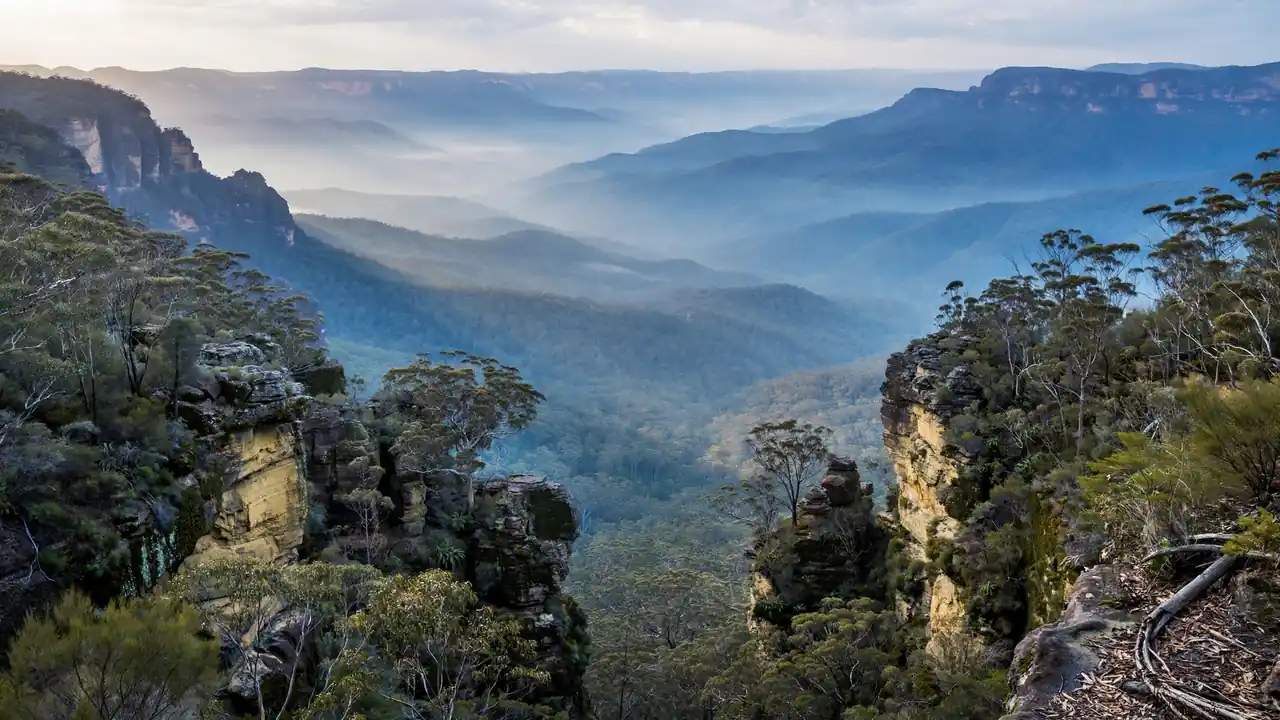
The Blue Mountains are Sydney’s backyard wilderness — a million hectares of eucalypt forest, slot canyons, waterfalls and the famous blue haze (eucalyptus oil in the air). The Three Sisters at Echo Point is the icon, but the real magic is in the walks: the National Pass under Wentworth Falls, the Grand Canyon track at Blackheath, and the wild Grose Valley. Katoomba and Blackheath are the main bases, 90 minutes from Sydney by train. Visit in autumn for crisp air and smaller crowds, or spring for wildflowers. Winter brings frosty mornings and occasional snow; summer brings heat and bushfire risk — always check alerts.
2. Kosciuszko National Park
Kosciuszko is Australia’s alpine heart — home to the country’s highest peak (Mount Kosciuszko, 2,228 m), glacial lakes, snow gums and summer wildflower meadows. In winter it’s the centre of Australian skiing (Thredbo, Perisher); in summer it’s a walker’s paradise, with the summit walk, the Main Range Track and the alpine huts. The Snowy Mountains Highway and Alpine Way make it accessible, though winter requires snow chains and preparation. Jindabyne is the main gateway town. See our best hikes in Australia for the summit walk details.
3. Royal National Park
The world’s second-oldest national park (est. 1879) sits on Sydney’s southern edge — and it’s superb. The Coast Track (26 km, two days) from Bundeena to Otford is one of NSW’s great walks, passing Wedding Cake Rock, Figure Eight Pools (check ocean conditions — people have died here) and secluded beaches. Wattamolla’s lagoon-and-beach combo is perfect for swimming, and the park’s palm forests feel prehistoric. Easily reached by train to Cronulla plus ferry to Bundeena.
4. Dorrigo National Park
Dorrigo protects World Heritage Gondwanan rainforest on the edge of the New England escarpment — ancient Antarctic beech, giant strangler figs, and the Skywalk lookout over the Bellinger Valley. The Wonga Walk loops past waterfalls and the famous 200-metre-long Crystal Shower Falls, which you can walk behind. It’s a highlight of the Pacific Coast Drive hinterland and pairs perfectly with the Waterfall Way’s Dangar and Ebor Falls — see our waterfalls top 20.
5. Jervis Bay: Booderee National Park
Booderee (jointly managed with the Wreck Bay Aboriginal community) protects the southern shores of Jervis Bay — home to some of the whitest sand and clearest water in Australia. Hyams Beach, Green Patch (superb camping — see our Sydney camping guide), dolphin watching, and the Cape St George Lighthouse ruins. The water clarity here is remarkable — on a calm day it’s like swimming in an aquarium.
6. Myall Lakes National Park
Two hours north of Sydney, Myall Lakes is a water-lover’s park — one of NSW’s largest coastal lake systems, fringed by eucalypt forest and empty surf beaches. Canoeing the lakes at dawn, camping at Seal Rocks or Treachery, and the short walk to the Sugarloaf Point Lighthouse. It’s quieter than the parks closer to Sydney, which is exactly the appeal.
7. Warrumbungle National Park
NSW’s only Dark Sky Park — the Warrumbungles’ jagged volcanic spires (the Breadknife, Bluff Mountain, Mount Exmouth) rise from the western plains near Coonabarabran, home to the Siding Spring Observatory. The Breadknife and Grand High Tops walk is the signature hike, with extraordinary views over the volcanic landscape. Come for the hiking, stay for the stars — see our dark sky parks guide.
8. Mount Kaputar National Park
An extinct volcano near Narrabri, Mount Kaputar is famous for two things: the giant pink slugs found nowhere else on Earth, and the extraordinary views from the summit over the western plains. In winter, it occasionally snows — surreal in the outback. The Scuttles Hut and Barraba Track walks showcase the park’s volcanic weirdness.
9. Mutawintji National Park
In the far west near Broken Hill, Mutawintji protects gorges, rock holes and one of Australia’s most significant Aboriginal cultural landscapes — with rock art, engravings and sacred sites. Access to the historic site is by guided tour only, run with traditional owners. It’s a powerful, moving place, and a long way from the coast — plan it as part of an outback trip.
10. Mungo National Park
Mungo’s Walls of China — a 30-kilometre crescent of eroded lunette dunes — are one of Australia’s most otherworldly landscapes, and the site of the 40,000+ year-old Mungo Man and Mungo Lady discoveries that rewrote human history. Sunset and sunrise tours (guided, with traditional owners) are essential — the dunes glow gold and the scale is humbling. Remote (a full day west of Sydney), unsealed access, and utterly worth it.
11. Border Ranges National Park
Part of the Gondwana Rainforests World Heritage Area on the NSW–Queensland border, the Border Ranges offer Antarctic beech forest, the Pinnacle Lookout’s sweeping caldera views, and the Blackbutt Lookout. It’s the quieter sibling of the Queensland-side parks, with excellent short walks and a real sense of ancient wilderness.
12. Ku-ring-gai Chase National Park
Sydney’s northern wilderness — 15,000 hectares of bushland, Aboriginal rock engravings (Red Hands Cave, the Basin Track engravings), and the beautiful waterways of Cowan Creek and Pittwater. The Basin campground (see our Sydney camping picks) is boat-access only and magical. Akuna Bay, West Head’s lookouts, and some of the best mountain biking near Sydney round it out.
Planning Your NSW Parks Trip
Passes and bookings
NSW charges park entry fees at many parks (daily or annual passes available — the annual pass pays for itself quickly if you visit regularly). Camping requires pre-booking online through the NSW National Parks website; popular campgrounds sell out for weekends and holidays. Some remote parks (Mungo, Mutawintji) have limited facilities — carry everything.
Best time to visit
Autumn (March–May) and spring (September–November) suit most parks. The alpine parks are winter (ski) or summer (hiking) destinations. The outback parks (Mungo, Mutawintji) are best in the cooler months — summer temperatures can exceed 45°C. The north coast rainforest parks are year-round, best after rain.
Safety
Check park alerts before every visit — closures for fire danger, flooding and track work are common. Carry water, tell someone your plans, and in the outback parks, carry far more water and fuel than you think you need. Mobile coverage is unreliable in most parks outside the Sydney basin.
3-Day Blue Mountains Itinerary
Day 1: Echo Point and the Three Sisters, then the Prince Henry Cliff Walk to Katoomba Falls. Afternoon: Scenic World (railway, cableway, walkway) for the valley views without the effort. Day 2: The National Pass walk under Wentworth Falls (allow 4–5 hours, pack lunch) — the Blue Mountains’ signature day walk. Afternoon: Blackheath’s Govetts Leap and the Grand Canyon track if legs allow. Day 3: Jenolan Caves (book tours ahead) or the Glow Worm Tunnel at Wollemi, then back to Sydney via the Bells Line of Road with its orchards and lookouts. Three days barely scratches the surface — the Blueys reward repeat visits.
Kosciuszko: Summer vs Winter
Kosciuszko is two completely different parks. Winter (June–October): Australia’s snow country — Thredbo and Perisher ski resorts, snow gum forests under snow, and the Kosciuszko Express chairlift running for sightseers. You’ll need snow chains, winter driving skills, and warm everything. Summer (December–March): wildflower meadows, the summit walks, mountain biking at Thredbo, and trout fishing in the Snowy. The Main Range Track (22 km) is the premier summer walk. Both seasons are superb; they’re just different trips. The shoulder months can bring either — check conditions.
Outback NSW: Driving the West
The western parks (Mungo, Mutawintji) demand outback driving preparation: unsealed roads (Mungo’s access is unsealed but usually 2WD-accessible in dry weather — check conditions), extreme summer heat (avoid November–March), and vast fuel gaps. Broken Hill makes the ideal base — a fascinating mining city with excellent accommodation — with day trips or overnights to Mutawintji (guided tours essential) and Mungo (2+ hours each way, go for sunset). Carry 10L+ water per person, offline maps, and a satellite communicator. The outback parks are the most rewarding in NSW precisely because they’re the hardest to reach.
The Gondwana Rainforests: A World Heritage Story
NSW’s north-east protects the most extensive subtropical rainforest in the world — the Gondwana Rainforests of Australia World Heritage Area, spanning Dorrigo, Border Ranges, New England and Washpool parks. These forests are living fossils: Antarctic beech, hoop pines and tree ferns whose lineages trace to the supercontinent Gondwana, 100+ million years ago. The Washpool and Gibraltar Range parks protect the largest wilderness rainforest in NSW — remote, rugged and barely visited. Walking here is walking through deep time; the interpretive signage at Dorrigo’s Skywalk and the Antarctic beech forests of the Border Ranges tell the story well. For the Queensland side of this story, see our Queensland parks guide.
South Coast Parks: Beyond the Royal
South of the Royal National Park, the NSW coast keeps delivering. Murramarang National Park — spotted gum forest, kangaroos on the beaches at Depot Bay and Pebbly Beach, some of the best beach camping near Sydney. Eurobodalla National Park — headlands, lagoons and the historic Toragy Point. Ben Boyd National Park — the wild cliffs of the far south coast, the Light to Light walk (31 km, one of NSW’s great coastal walks), and the historic Davidson Whaling Station. Beowa National Park (formerly Ben Boyd’s southern section) protects the Green Cape lighthouse and remote beaches. The far south coast is quieter than the north — fewer crowds, wilder scenery, and excellent winter whale watching (see our whale watching guide).
New England and the Northern Tablelands
NSW’s New England region is the state’s high-country surprise. New England National Park — World Heritage rainforest on the escarpment edge, the Point Lookout views, and some of the best autumn colour in NSW. Oxley Wild Rivers National Park — one of the largest wilderness areas in NSW, with the spectacular Apsley Falls and Tia Falls gorges. Mount Hyland and the Cathedral Rock parks — granite tors and high-country walks. Armidale makes the ideal base: heritage architecture, cool-climate gardens, and the Waterfall Way on its doorstep. Autumn (April–May) is the prime season — colour, crisp air, and waterfalls flowing.
NSW’s Wildflower Seasons
Spring (September–November) brings wildflower displays to several NSW parks: the Royal National Park’s coastal heath (waratahs in October — the state’s floral emblem at its finest), the Blue Mountains’ heathlands, and the Warrumbungles’ spring bloom. The waratah season is short and celebrated — the red blooms against the sandstone are iconic. Pair a spring wildflower walk with the autumn colour destinations above for the full NSW seasonal experience.
Frequently Asked Questions
What is the best national park in NSW?
The Blue Mountains is NSW’s most visited and most versatile national park — world-class walks 90 minutes from Sydney. Kosciuszko wins for alpine scenery, Dorrigo for rainforest, and Mungo for sheer otherworldliness.
Do you need a pass for NSW national parks?
Many NSW national parks charge a daily vehicle entry fee; an annual pass is better value for regular visitors. Camping always requires pre-booking and fees. Check the NSW National Parks website for the specific park.
What is the best national park near Sydney?
The Royal National Park (south) and Ku-ring-gai Chase (north) are the two great Sydney-doorstep parks — both reachable by public transport, both with superb coastal walking, swimming and camping.
When is the best time to visit the Blue Mountains?
Autumn (March–May) offers crisp clear days and smaller crowds; spring brings wildflowers. Winter is beautiful but cold (occasional snow); summer can be hot with bushfire risk — always check alerts.
Book campsites and check alerts at the NSW National Parks and Wildlife Service.