
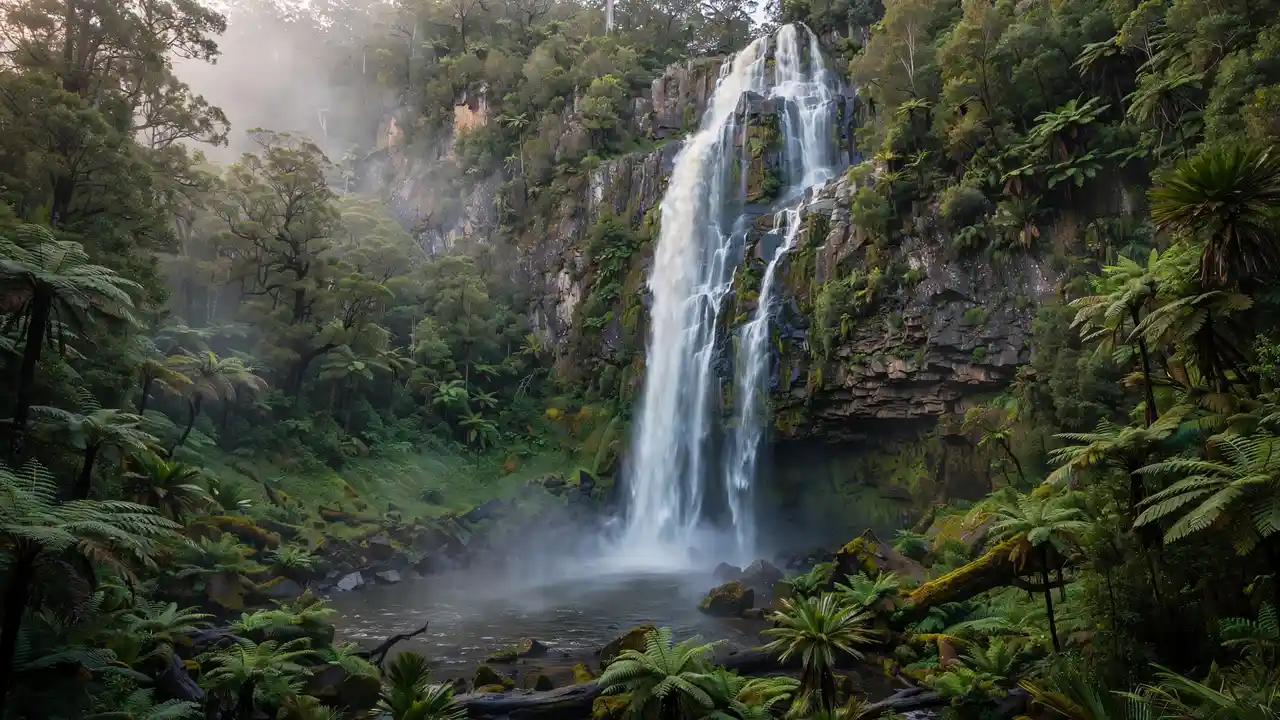
Best Waterfalls in Australia: Top 20
Australia’s waterfalls don’t get the global fame of its beaches — but they should. From the tropical cascades of the Top End to Tasmania’s wild highland falls, the best waterfalls in Australia are scattered across every state, and many are at their most spectacular right now. Here’s the definitive top 20, with when to go and how to reach each one.
One essential truth about Australian waterfalls: they’re seasonal. Most flow hardest in the wet season or after rain, and some Top End giants are inaccessible (or dry) for half the year. Timing is everything — we’ve noted the best months for each fall below. And the golden rule of waterfall chasing: go after rain. A waterfall the week after a big downpour is a different, wilder, more magnificent thing than the same fall in a dry spell — check recent rainfall in the catchment, not just the calendar.
The Top 5
1. Jim Jim Falls, Kakadu National Park, NT
The icon. Jim Jim plunges 200 metres off the Arnhem Land escarpment into a deep plunge pool, surrounded by towering cliffs. It’s a dry-season-only experience (roughly May–October) — the access road is 4WD-only and the falls themselves transform from a raging torrent in the wet to a serene, swimmable cascade in the dry. The walk in through monsoon forest is part of the magic.
2. Wallaman Falls, Queensland
Australia’s highest permanent single-drop waterfall at 268 metres, in Girringun National Park west of Ingham. The lookout gives you the full drop in one view; the steep Djyinda walk descends to the base. It flows year-round but is most powerful in the wet season (December–April).
3. Mackenzie Falls, Grampians, Victoria
The Grampians’ showpiece — a wide, powerful cascade that flows year-round, with lookouts at the top and a steep trail to the base. It’s one of the few major southern waterfalls that never dries up, making it a reliable visit any month. Sunset from the bluff lookout is superb.
4. Horizontal Falls, Kimberley, WA
Not a waterfall in the conventional sense — it’s a tidal phenomenon where massive tides force water horizontally through narrow gorges in the Buccaneer Archipelago. Described by David Attenborough as one of the greatest natural wonders of the world. Visited by seaplane and boat from Broome or Derby. Note: check current access arrangements, as management of the falls has been under review with traditional owners.
5. Russell Falls, Tasmania
The two-tiered cascade in Mount Field National Park is Tasmania’s most photographed waterfall — and the easiest to reach, via a flat, wheelchair-accessible 20-minute walk through towering swamp gums. It flows year-round, framed by ferns and moss. Magical after rain.
6–12: More Australian Waterfall Greats
6. Twin Falls, Kakadu, NT
Jim Jim’s neighbour, reached by boat shuttle up the gorge in the dry season. Two side-by-side cascades dropping into a sandy beach-fringed plunge pool. The boat ride through the gorge is half the experience.
7. Barron Falls, Queensland
Near Kuranda outside Cairns, Barron Falls is a wet-season monster — 260 metres wide when the Barron River is in flood. The Kuranda Scenic Railway and Skyrail both stop at lookouts. In the dry season it can reduce to a trickle, so time your visit for the wet (December–April).
8. Ellenborough Falls, NSW
One of NSW’s tallest single-drop falls (around 200 metres) in the hinterland west of Port Macquarie. The viewing platform at the top and the steep track to the base both deliver. Best after rain; the surrounding Bulga Plateau is lovely country.
9. Dangar Falls, NSW
On the Pacific Coast Drive hinterland near Dorrigo, Dangar Falls drops 30 metres into a gorge you can walk down into. An easy, beautiful stop on the Waterfall Way — pair it with Ebor Falls further west.
10. Wollomombi Falls, NSW
Also on the Waterfall Way, Wollomombi is one of the highest falls in NSW (around 220 metres in tiers) with spectacular gorge lookouts. The Chandlers Peak walk gives the full panorama.
11. Fitzroy Falls, NSW
In Morton National Park in the Southern Highlands, an 81-metre plunge with excellent lookouts and wildflower walks in spring. An easy day trip from Sydney or Canberra.
12. Wentworth Falls, NSW
The Blue Mountains’ signature waterfall — a three-tiered, 187-metre cascade with the famous National Pass walk carved into the cliff face below it. Combine with the valley views for the classic Blue Mountains day.
13–20: Hidden Gems and Regional Stars
13. Mitchell Falls (Punamii-Uunpuu), Kimberley, WA
Four tiers of falls in one of the most remote spots in Australia, reached by 4WD (dry season only), helicopter, or the multi-day trek from the Mitchell Plateau. The flight over the falls is unforgettable. This is expedition waterfalling.
14. King George Falls, Kimberley, WA
Twin 80-metre falls dropping straight off the Kimberley plateau into the ocean — accessible only by boat or helicopter on a Kimberley cruise. The scale is hard to comprehend until you’re there.
15. Emma Gorge, El Questro, WA
A 65-metre cascade at the end of a gorge walk in El Questro Wilderness Park, with a perfect swimming hole at its base. One of the Kimberley’s most rewarding short walks.
16. Montezuma Falls, Tasmania
Tasmania’s highest waterfall (104 metres) on the west coast near Rosebery, reached via a 3-hour return walk along an old tramway through rainforest. Wild, remote, wonderful.
17. Nelson Falls, Tasmania
On the Lyell Highway between Queenstown and Derwent Bridge, Nelson Falls is a short, easy walk to a beautiful multi-tiered cascade. The perfect roadside stop.
18. Erskine Falls, Victoria
In the Otways near Lorne on the Great Ocean Road, Erskine drops 30 metres into a fern-filled amphitheatre. An easy detour from the best road trips in Australia — and it flows well after rain.
19. Trentham Falls, Victoria
Victoria’s longest single-drop waterfall (32 metres) near Daylesford, with a basalt-column backdrop. Best in winter and spring when the Coliban River is running high.
20. Purling Brook Falls, Queensland
In Springbrook National Park in the Gold Coast hinterland, a 100-metre horsetail fall with a walk that goes behind the curtain of water. The full circuit is one of south-east Queensland’s best day walks.
When to See Waterfalls: A Seasonal Guide
Top End (Kakadu, Litchfield, Kimberley)
Dry season only for access (May–October), but the falls are at their most dramatic early in the dry season when wet-season flows are still draining. By September–October, some reduce to a trickle.
Tropical Queensland (Atherton Tablelands, Ingham, Kuranda)
Wet season (December–April) for maximum flow; many flow year-round but are most impressive after rain.
Temperate south (Victoria, Tasmania, NSW)
Winter and spring (June–November) bring the best flows after rain. Many southern falls flow year-round but are thin in late summer and autumn.
Waterfall Safety
Waterfalls kill people every year in Australia. The rules: never climb on wet rocks near the top of a fall — algae makes them lethally slippery, and the drop is unforgiving. Don’t swim above a waterfall’s edge. Check water levels after heavy rain; flash flooding can turn a swimming hole deadly in minutes. In the Top End, assume every waterway has crocodiles unless it’s a signed safe swimming spot — and even then, heed the signs. Stick to marked tracks; cliff edges at waterfall lookouts are often unfenced.
Planning a Waterfall Road Trip
Waterfalls cluster beautifully for road trips. The NSW Waterfall Way (Coffs Harbour to Armidale) strings together Dangar, Ebor and Wollomombi. The Atherton Tablelands waterfall circuit (Millaa Millaa, Zillie, Ellinjaa) is a perfect day from Cairns. The Grampians and Otways pair for a Victorian falls weekend. And the ultimate: a dry-season Top End trip linking Litchfield, Kakadu and Nitmiluk. For more route ideas, see our best national parks in Queensland and NSW national parks guides.
Waterfall Photography Tips
The classic silky-water waterfall shot needs a tripod, a neutral-density filter (or just low light), and a shutter speed of 1–2 seconds. Overcast days are ideal — harsh sun creates blown highlights on white water. For the Top End giants (Jim Jim, Twin Falls), a wide-angle lens captures the scale; for intimate cascades like Russell Falls, a mid-range zoom isolates the tiers. Morning light is usually best (many falls face east), and after rain the flow — and the rainforest — is at its most vibrant. Protect your gear: waterfall spray is relentless, so bring lens cloths and a rain cover.
Waterfall Road Trip Itineraries
NSW Waterfall Way (2–3 days): Coffs Harbour → Dorrigo (Dangar Falls, Crystal Shower Falls) → Ebor Falls → Wollomombi Falls → Armidale. The densest waterfall touring in NSW. Atherton Tablelands circuit (1–2 days): Millaa Millaa, Zillie and Ellinjaa Falls in a single loop from Cairns, plus the Curtain Fig Tree. Kakadu dry-season falls (3–4 days): Jim Jim, Twin Falls, Maguk and Gunlom — the ultimate Top End waterfall expedition, 4WD required. Tasmanian highlands (2–3 days): Russell Falls, Nelson Falls, Montezuma Falls and the west coast cascades. Each of these routes also features in our best road trips in Australia.
Wet Season Spectacles (and Warnings)
The wet season transforms Top End waterfalls into thundering monsters — Barron Falls at full flood, Jim Jim inaccessible but raging, the Kimberley’s King George Falls at peak flow. Seeing them requires scenic flights (roads are closed), and it’s expensive — but witnesses describe it as life-changing. The warnings are serious: never approach flooded waterways, flash flooding kills, and crocodiles move with floodwaters. Admire the wet-season falls from the air or from signed lookouts, never up close.
Tasmania’s Waterfall Country
Tasmania might have the highest waterfall density in Australia — the island’s high rainfall and wild rivers create cascades everywhere. Beyond Russell Falls and Montezuma: Horsetail Falls near Queenstown, St Columba Falls in the north-east (90 metres, one of the state’s highest), Liffey Falls in the central highlands (a series of cascades through myrtle forest), and the falls of the Walls of Jerusalem backcountry. The west coast’s rain — up to 3 metres a year — means Tasmanian falls flow hard and often. Winter and spring are peak; the highland falls are spectacular with snowmelt. Tasmania’s waterfalls pair perfectly with the island’s hiking — many of the best are on walking tracks.
The Science: Why Australian Waterfalls Are Seasonal
Australia is the driest inhabited continent, and its waterfalls reflect that — most are rain-dependent rather than snowmelt-fed. The Top End’s giants (Jim Jim, Twin Falls) are monsoon waterfalls: they rage in the wet season when access is impossible, then dwindle through the dry season when you can visit. The east coast’s falls (Dorrigo, the Waterfall Way) depend on orographic rainfall — moist air forced up the escarpment. The southern falls (Mackenzie, Russell) rely on winter frontal rain. Understanding this is the key to timing: you’re not just visiting a waterfall, you’re visiting a moment in the continent’s water cycle. Check recent rainfall, not just the season — a waterfall a week after heavy rain is a different beast to the same fall in drought.
Frequently Asked Questions
What is the tallest waterfall in Australia?
Wallaman Falls in Queensland, at 268 metres, is Australia’s tallest permanent single-drop waterfall. Wollomombi Falls in NSW (around 220m in tiers) and Jim Jim Falls in Kakadu (200m) are other giants.
What is the best time to visit waterfalls in Australia?
It depends on the region. Top End waterfalls (Kakadu, Kimberley) are accessible in the dry season (May–October) and most spectacular early in the season. Southern waterfalls flow best in winter and spring after rain. Tropical Queensland falls peak in the wet season (December–April).
Can you swim at Australian waterfalls?
Many — but not all. Litchfield’s Florence Falls, Emma Gorge and most southern falls have swimmable pools. In the Top End, only swim where signs explicitly allow it (crocodile risk). Never swim above a waterfall or after heavy rain due to flash flooding.
Which waterfall is closest to Sydney?
Wentworth Falls in the Blue Mountains (about 2 hours from Sydney) is the closest major waterfall. Fitzroy Falls in the Southern Highlands is also around 2 hours. Both are easy day trips.
Check park alerts, track conditions and seasonal closures at Parks Australia, which manages Commonwealth national parks including Kakadu and Uluru-Kata Tjuta.