
Best National Parks in Queensland
Queensland’s national parks span the lot: ancient rainforest older than the Amazon, reef-fringed tropical islands, outback gorges, and volcanic peaks. The best national parks in Queensland could fill a lifetime of trips — here are the 12 you should prioritise, with when to go and what to do in each.
Queensland’s seasons matter more than in the southern states: the tropical north has a distinct wet season (November–April) that closes roads and swells rivers, while the dry season (May–October) is prime time. The south-east is more forgiving year-round. This seasonal rhythm shapes everything — the waterfalls, the wildlife, the road access — so plan your parks trip around it, not against it. Get the timing right and Queensland’s parks are unbeatable; get it wrong and you’ll be watching the rain from the car.
1. Daintree National Park
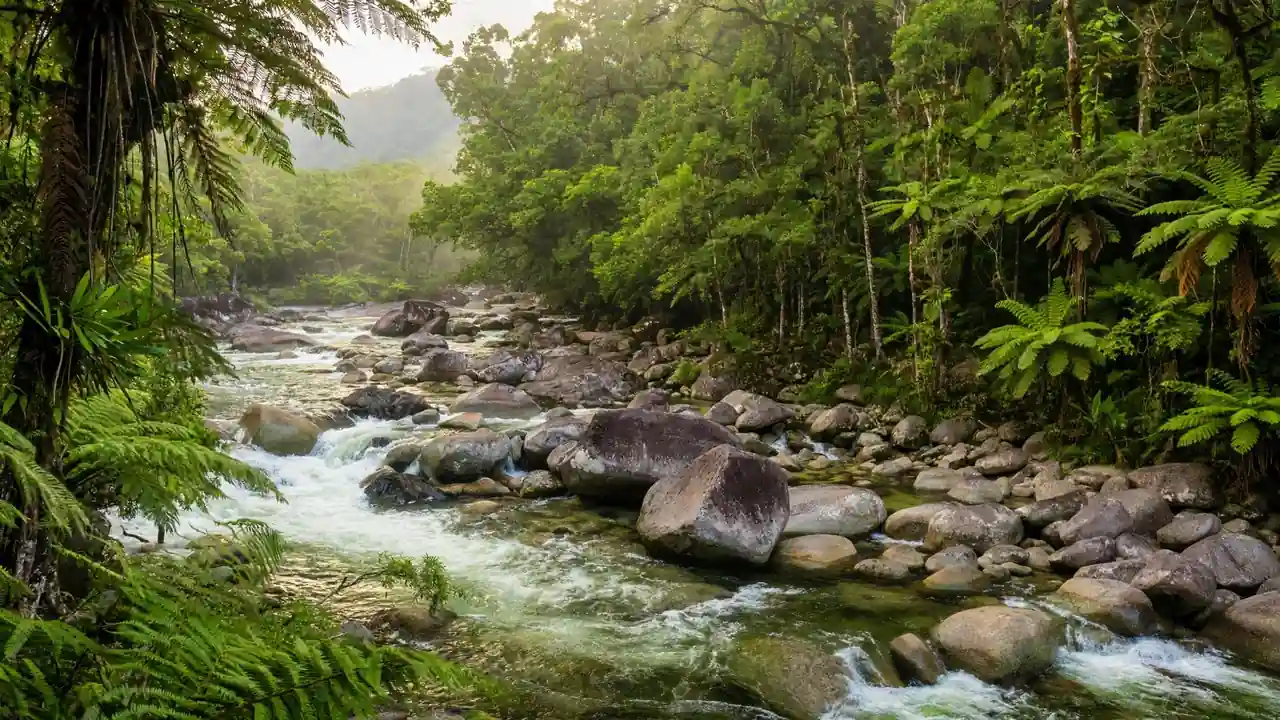
The Daintree is the world’s oldest tropical rainforest — around 180 million years old — and one of only two places on Earth where two World Heritage areas meet (the Wet Tropics rainforest and the Great Barrier Reef). Mossman Gorge’s swimming holes, the boardwalks, Cape Tribulation’s beaches, and the prehistoric fan palms and cassowaries. Stay a few days: day-trippers from Cairns see a fraction. The Savannah Way starts in this region, and our Great Barrier Reef guide covers the reef side of a Daintree trip.
2. Whitsunday Islands National Park
Seventy-four islands of fringing reef, white sand and rainforest — including Whitehaven Beach, regularly ranked among the best beaches in Australia. The park is best experienced by water: sailing trips, sea kayaking, or island-hopping day tours from Airlie Beach. Camping is available on several islands (book ahead). Hill Inlet’s swirling sands at low tide are the money shot.
3. Carnarvon Gorge
Queensland’s premier outback walking destination — a 30-kilometre gorge in the central Queensland sandstone belt, lined with 3,500-year-old Aboriginal stencil art (the Art Gallery and Cathedral Cave are extraordinary), side gorges, and permanent waterholes. The main gorge walk can be done as long day walks from the campground. Best in the cooler months (April–September); summer is hot and the gorge can flood.
4. Lamington National Park
Part of the Gondwana Rainforests World Heritage Area in the Gold Coast hinterland, Lamington is ancient Antarctic beech forest, 500+ waterfalls, and the famous O’Reilly’s and Binna Burra guesthouses. The Box Falls and Morans Falls walks, the Tree Top Walk, and dawn birdwatching (Albert’s lyrebirds, bowerbirds, king parrots) are highlights. An easy escape from Brisbane or the Gold Coast, good year-round.
5. Springbrook National Park
Lamington’s neighbour, also Gondwanan, with the Natural Bridge (a waterfall through a rock arch, with glow-worms after dark), Purling Brook Falls — see our waterfalls top 20 — and the Best of All Lookout’s ancient beech forest. Compact, accessible, and magical after rain.
6. Girringun National Park (Wallaman Falls)
Home to Wallaman Falls — Australia’s highest permanent single-drop waterfall at 268 metres. The Djyinda walk to the base is steep but rewarding, and the lookout alone justifies the drive west of Ingham. Combine with the surrounding Wet Tropics waterfalls (Millaa Millaa, Zillie, Ellinjaa on the Atherton Tablelands) for a waterfall road trip.
7. Eungella National Park
Inland from Mackay, Eungella is one of the most reliable places in the world to see wild platypus — dawn and dusk at Broken River are almost guaranteed sightings. The rainforest walks (Sky Window, the Crediton Creek track) are beautiful, and the views from the range over the Pioneer Valley are superb. Cooler than the coast; bring a jumper even in summer.
8. K’gari (Fraser Island)
The world’s largest sand island — 123 kilometres of rainforest growing on sand, perched dune lakes (Lake McKenzie’s impossibly clear water), the Maheno shipwreck, Eli Creek, and dingoes. 4WD only, and the island demands respect: dingoes are wild animals (never feed them, keep children close), and the eastern beach is a highway with road rules. Two to three days minimum; tag-along 4WD tours are the easy option.
9. Noosa National Park
Small but perfect: the coastal track from Noosa Main Beach past Tea Tree Bay to Hell’s Gates is one of Australia’s great short walks, with koalas in the trees, dolphins offshore, and swimming coves along the way. Combine with Noosa’s beaches and dining for the ideal day. Go early — the car parks fill by mid-morning.
10. Undara Volcanic National Park
Near the start of the Savannah Way, Undara’s lava tubes are among the longest and best-preserved in the world — formed 190,000 years ago. Guided tours only (book ahead), and the sunset wildlife tour (thousands of microbats streaming from the tubes) is unforgettable. The lava tube accommodation (converted railway carriages) is a novelty worth trying.
11. Cape Hillsborough National Park
North of Mackay, Cape Hillsborough is famous for one thing: kangaroos and wallabies on the beach at sunrise, silhouetted against the water. Rangers run a morning experience in peak season. The volcanic headland walks and rainforest are lovely, but it’s the dawn ‘roos that bring people.
12. Boodjamulla (Lawn Hill) National Park
In Queensland’s far north-west, Boodjamulla’s emerald waterholes and 300-metre red sandstone cliffs feel like the Kimberley without the crowds. Canoe the gorge, walk the Island Stack and Wild Dog Dreaming tracks, and see the Rainbow Serpent rock art. Remote — it’s a serious drive from anywhere — but extraordinary. Dry season only.
Planning Your Queensland Parks Trip
Permits and bookings
Queensland national park camping requires pre-booked permits (booked online, per person per night) — and popular campgrounds sell out in the dry season. Park entry itself is generally free. Island camping (Whitsundays, K’gari) books out months ahead for winter.
When to go
Tropical north (Daintree, Undara, Boodjamulla): dry season, May–October. Wet season brings closures, flooding and stingers. Central Queensland (Carnarvon): April–September. South-east (Lamington, Springbrook, Noosa): year-round, best in autumn and spring.
Safety
Crocodile safety in the north is non-negotiable: never swim except where signs explicitly allow it, and stay back from water edges. Stinger season (November–May) affects coastal swimming — wear stinger suits. In the outback parks, carry excess water and fuel, and check road conditions.
3-Day Daintree Itinerary
Day 1: Drive Cairns to the Daintree (via the Captain Cook Highway, one of Australia’s great coastal roads), Mossman Gorge for a swim and the Dreamtime walks with Kuku Yalanji guides. Cross the Daintree River ferry (crocodile spotting from the ferry is common) and settle into Cape Tribulation accommodation. Day 2: The Dubuji boardwalk, Myall Beach, and a reef trip from Cape Tribulation — the only place you can snorkel the reef in the morning and walk the rainforest in the afternoon. Night walk for nocturnal wildlife (striped possums, Boyd’s forest dragons sleeping on branches). Day 3: The Alexandra Range lookout, Jindalba boardwalk, then back via the Atherton Tablelands waterfalls (Millaa Millaa, Zillie, Ellinjaa) — see our waterfalls top 20.
Carnarvon Gorge: Planning the Walk
Carnarvon Gorge is a 3–5 day walking destination disguised as a day-trip park. The main gorge track runs 9.7 km one way to Big Bend, with side gorges (Moss Garden, Amphitheatre, Ward’s Canyon, the Art Gallery) branching off. Most walkers base at the Takarakka or gorge campgrounds and do the gorge as long day walks. The Art Gallery’s 3,500-year-old stencil art — hundreds of hands, boomerangs and nets stencilled in ochre — is one of Australia’s great cultural experiences; go with a ranger talk if available. Best months: April–September. Book campgrounds ahead; the gorge is popular in winter school holidays.
Island Camping in Queensland
Queensland’s island national park camping is a highlight of the state. The Whitsunday islands (Whitehaven’s South Whitehaven campground, Hamilton Island’s fringes) offer beach camping with reef snorkelling offshore. K’gari’s beach and dune campgrounds (book well ahead) put you on the world’s largest sand island. Fitzroy Island’s camping is the budget way to do a reef island. Rules are strict: book permits online, carry everything (including water — most islands have none), secure food from dingoes on K’gari, and take all rubbish out. Island camping books out months ahead for the dry season — plan early.
Outback Queensland: Beyond the Coast
Western Queensland’s parks are the state’s best-kept secret. Carnarvon Gorge (above) is the headline, but add: Blackdown Tableland National Park — sandstone plateaus, the Mimosa Creek views, and significant Aboriginal art at the Art Gallery; Porcupine Gorge National Park (“Australia’s little Grand Canyon”) near Hughenden, with the Pyramid lookout and gorge walks; and Idalia National Park — remote mulga country for the truly adventurous. These parks are at their best April–September; summer is brutally hot and some close. They’re a long way from the coast — which is exactly why you’ll have them to yourself.
Magnetic Island National Park
Half of Magnetic Island (“Maggie”) off Townsville is national park — and it’s one of Queensland’s most accessible wildlife experiences. The Forts Walk (WWII gun emplacements + sweeping views + wild koalas — the island has one of Australia’s densest koala populations), the secluded beaches (Balding Bay, Radical Bay), and the snorkel trail at Geoffrey Bay. It’s 20 minutes by ferry from Townsville, doable as a day trip but better as an overnight. Combine with a Great Barrier Reef trip from Townsville for the ultimate north Queensland week.
The Wet Tropics Waterfall Circuit
The Atherton Tablelands’ waterfall circuit deserves its own itinerary — it’s the densest waterfall touring in tropical Australia. The classic loop from Cairns: Millaa Millaa Falls (the postcard — 18 metres of curtain falls into a swimming hole), Zillie Falls and Ellinjaa Falls (10 minutes apart, both swimmable), Malanda Falls (with the excellent visitor centre), and Dinner Falls on Mount Hypipamee. Add the Curtain Fig Tree (a 500-year-old strangler fig) and the platypus viewing at Yungaburra’s Peterson Creek (dawn and dusk — see our wildlife spotting guide). One long day or a relaxed two — and the Tablelands’ cool air is a relief after Cairns’ humidity. See our waterfalls top 20 for how these rank nationally.
Cape York: The Final Frontier
For the truly adventurous, Queensland’s parks extend to the tip of Cape York — the northernmost point of mainland Australia. Apudthama (Jardine River) National Park, Heathlands Resources Reserve, and the legendary Old Telegraph Track (4WD-only, with infamous creek crossings like Gunshot and Palm Creek) make the Cape one of Australia’s great expeditions. It’s dry-season only (roughly June–October), strictly 4WD, and demands serious preparation — but standing at the Tip, where Australia ends and the Torres Strait begins, is a pilgrimage for outback travellers. The Savannah Way starts in Cairns; the Cape is where Queensland keeps going.
Great Sandy National Park: Cooloola
Between Noosa and K’gari, the Cooloola section of Great Sandy National Park is the mainland’s sand-country wilderness — coloured sand cliffs, perched lakes, the Noosa Everglades (one of only two everglades systems in the world), and 4WD beach driving on the Cooloola Way. The Cooloola Great Walk (102 km, 5 days) traverses it, but day visitors can kayak the Everglades, swim in the lakes, and camp behind the dunes. It’s the quiet alternative to K’gari — same sand-island magic, a fraction of the visitors.
Frequently Asked Questions
What is the best national park in Queensland?
The Daintree is Queensland’s most significant — the world’s oldest rainforest meeting the Great Barrier Reef. Carnarvon Gorge wins for outback walking and Aboriginal art; the Whitsundays for islands and beaches.
Do you need permits for Queensland national parks?
Camping in Queensland national parks requires pre-booked camping permits. Park entry is generally free. Book permits online well ahead for dry-season travel — popular campgrounds sell out.
What is the best time to visit the Daintree?
The dry season (May–October) — less rain, accessible roads, comfortable humidity. The wet season (November–April) is lush and dramatic but brings flooding, road closures and limited access to Cape Tribulation.
Can you see cassowaries in Queensland national parks?
Yes — the Daintree and Eungella are the best bets. Cassowaries are endangered, wild and potentially dangerous: never feed them, keep your distance, and drive carefully in cassowary country.
Book camping permits and check alerts at the Queensland Parks and Wildlife Service.